On this page
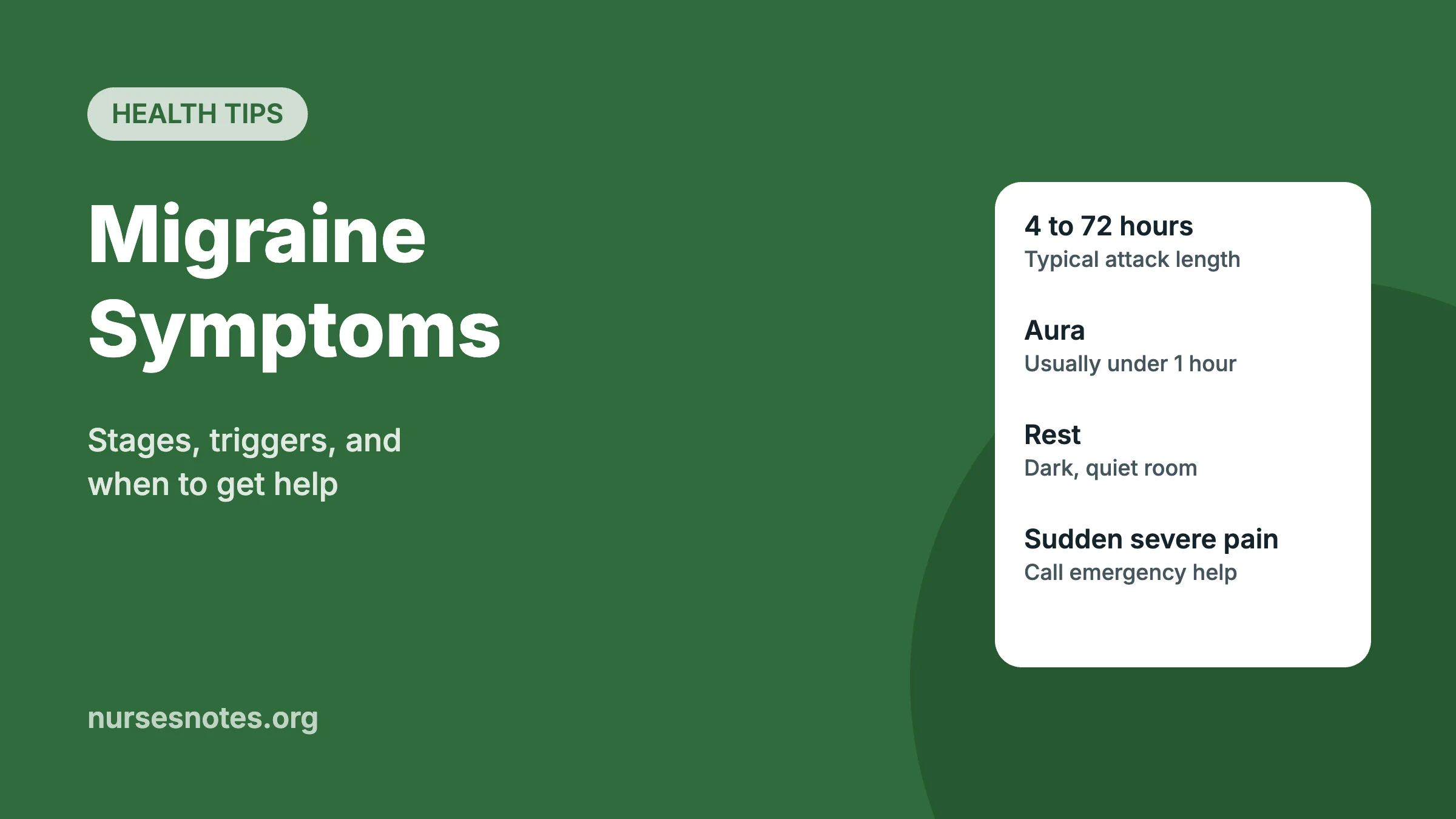
Migraine symptoms usually include a moderate to severe throbbing headache, often on one side of the head, with nausea and sensitivity to light and sound. Some people also notice warning signs hours before the pain or visual changes called an aura, and an attack can last from about 4 hours to 3 days.
Key points
- A migraine can have up to four stages: prodrome, aura, attack, and postdrome, but not everyone has all four.
- Common triggers include stress, poor or irregular sleep, skipped meals, hormonal changes, and too much caffeine or alcohol.
- Taking painkillers too often can cause medication overuse headaches, so speak to a doctor if you need them regularly.
- A sudden, extremely painful headache, weakness on one side, or trouble speaking needs emergency care.
What is a migraine?
A migraine is more than a bad headache. The NHS describes it as a condition linked to changes in the nerves and blood vessels of the brain, and it often runs in families. MedlinePlus and Mayo Clinic both note that women are about three times more likely than men to have migraines.
Migraine symptoms by stage
| Stage | When it happens | Common symptoms |
|---|---|---|
| Prodrome (warning) | Hours to about 2 days before the headache | Tiredness and yawning, food cravings or thirst, mood changes, stiff neck, passing urine more often |
| Aura (not everyone) | Before or during the headache; each symptom builds over minutes and should not last more than 1 hour | Zigzag lines or flashing lights, patches of vision loss, pins and needles, numbness, dizziness, or difficulty speaking |
| Attack | Usually 4 to 72 hours if untreated | Throbbing pain, often one-sided and worse with movement; nausea or vomiting; sensitivity to light, sound, or smells |
| Postdrome | Up to a day after the attack | Feeling drained, weak, or confused |
Common migraine triggers
Not every attack has a clear trigger, but these come up often in the NHS, Mayo Clinic, and MedlinePlus lists:
- Stress, anxiety, and tiredness
- Too little or too much sleep, or a changed sleep pattern
- Skipping meals
- Hormonal changes, such as periods, pregnancy, or menopause
- Too much caffeine, caffeine withdrawal, or alcohol (especially wine)
- Bright or flashing lights, loud noise, or strong smells
- Weather changes or intense physical effort
Shift workers and nurses often meet several of these at once. Our sleep hygiene tips for shift workers can help you protect your sleep between duties.
How to manage a migraine attack at home
- Act early. The NHS advises taking a simple painkiller, such as paracetamol or ibuprofen, as soon as the headache starts, following the label or your pharmacist’s advice.
- Rest somewhere dark and quiet. Lie down or try to sleep with your eyes closed.
- Try a cool cloth or ice pack on your forehead, as MedlinePlus suggests.
- Sip fluids, especially if you have been vomiting.
- Avoid your known triggers while you recover.
Be careful not to rely on painkillers too often. The NHS suggests not taking painkillers for headaches on more than 2 days a week, because overuse can cause more headaches and make migraine harder to treat. A doctor can talk to you about prescription treatment or preventive options.
How to reduce future attacks
- Keep a migraine diary of attacks, possible triggers, and what helped, and take it to your appointment.
- Eat at regular times and keep to a steady sleep routine.
- Stay hydrated and limit caffeine and alcohol.
- Exercise regularly and find ways to manage stress (see how to manage stress).
When to see a doctor
Book a non-urgent appointment if:
- Your attacks are severe, getting worse, or lasting longer than usual.
- You have attacks more than once a week, or they are hard to control.
- Your migraines regularly come before or during your period.
- Your usual headache pattern changes, or the headaches feel different.
Get an urgent appointment or medical advice the same day if an attack has lasted longer than 72 hours, an aura lasts longer than 1 hour, or you have a migraine during pregnancy or just after giving birth.
When to get emergency help
Call your local emergency number or go to the emergency department straight away if you or someone else has a headache with any of these:
- A sudden, extremely painful headache, sometimes described as a “thunderclap”
- Weakness or numbness in the arm, leg, or face on one side, or trouble speaking
- Loss of vision, or blurred or double vision
- Drowsiness, confusion, or a seizure
- A high temperature with a stiff neck or other signs of meningitis
- A recent head injury
These can be signs of a stroke, meningitis, or bleeding in the brain. Learn the warning signs in our guide to the signs of stroke. The NHS advises not to drive yourself to hospital.
Frequently asked questions
How long do migraine symptoms last?
A migraine attack usually lasts between 4 hours and 3 days. Warning signs can start hours or up to two days before the headache, and some people feel drained or confused for up to a day afterwards. An attack lasting more than 72 hours needs urgent medical advice.
What is the difference between a migraine and a normal headache?
A migraine is usually a moderate to severe throbbing pain, often on one side, that gets worse with movement. It commonly comes with nausea, vomiting, or sensitivity to light and sound, and some people have an aura. A doctor can confirm the diagnosis based on your history and an examination.
Can you have a migraine without a headache?
Yes. MedlinePlus notes that migraine can sometimes happen without head pain, for example as aura symptoms on their own. Because new visual changes, numbness, or speech problems can also be signs of a stroke, get medical help urgently if these happen for the first time or feel different from usual.
Related on Nurses Notes
- Signs of stroke: BE FAST and what to do
- Sleep hygiene tips for better sleep
- How to manage stress: signs and coping tips
- More health tips
Sources
- Migraine. NHS, reviewed 10 March 2026.
- Migraine – Symptoms and causes. Mayo Clinic, July 2025.
- Migraine. MedlinePlus, U.S. National Library of Medicine, updated 20 November 2025.
This article is for education only and does not replace advice from your own doctor, nurse, or other qualified health professional.