On this page
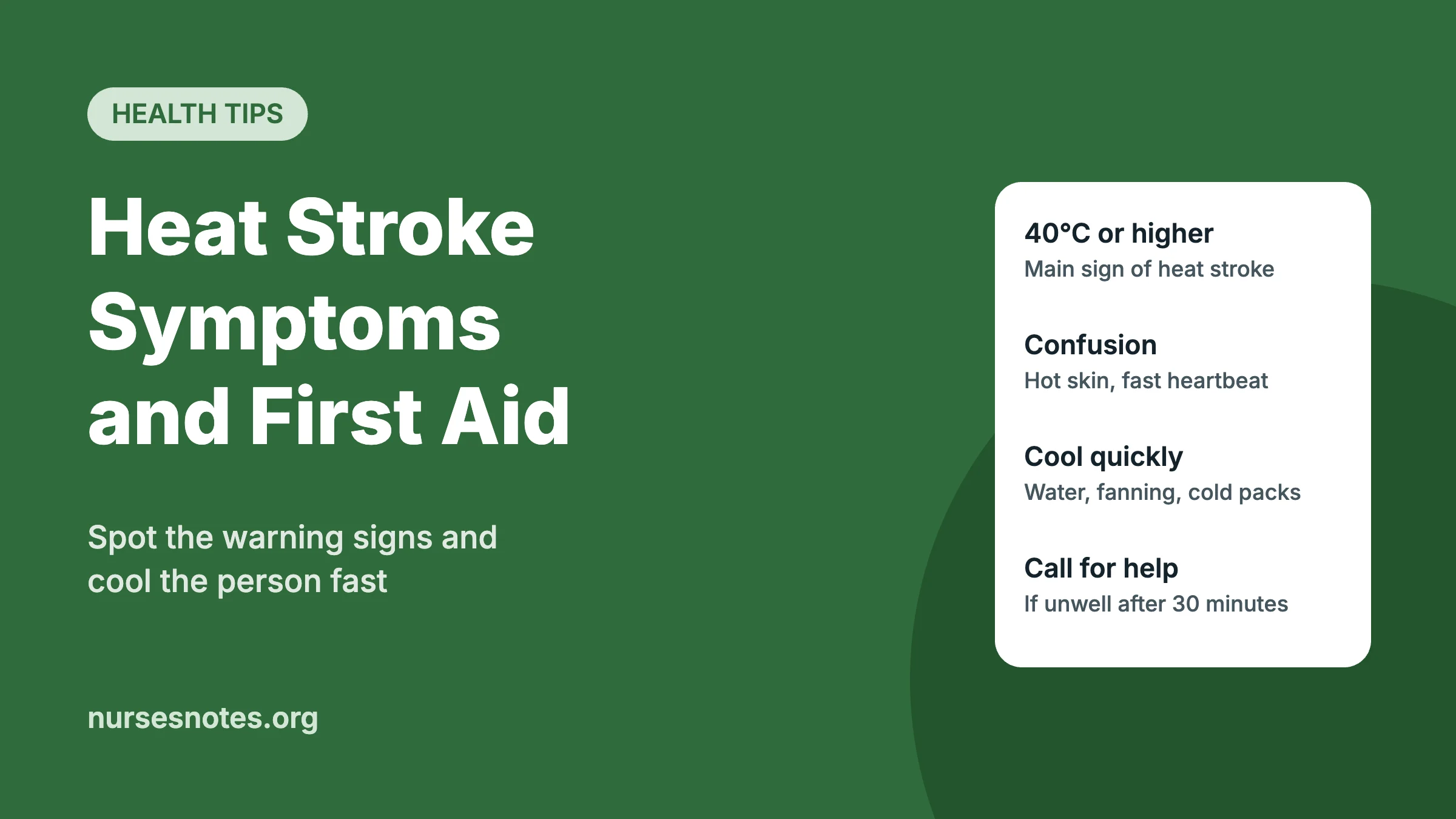
The main heat stroke symptoms are a very high body temperature (40°C or 104°F and above), confusion or strange behaviour, hot skin, fast breathing, and a racing heartbeat, and they can progress to seizures or collapse. Heat stroke is a medical emergency, so call your local emergency number straight away and start cooling the person while you wait.
Key points
- Heat exhaustion comes first: heavy sweating, dizziness, headache, nausea, cramps, and thirst.
- Heat stroke is an emergency: very high temperature, confusion, hot skin, fast breathing, seizures, or loss of consciousness.
- Cool the person quickly with water and fanning, and get emergency help if they are not better within 30 minutes or show heat stroke signs.
- Older adults, babies, young children, outdoor workers, and people with long-term conditions are most at risk.
What is heat stroke?
Heat stroke happens when the body can no longer control its temperature and overheats. Mayo Clinic describes a core body temperature of 40°C (104°F) or higher as its main sign, and the World Health Organization calls it a medical emergency with a high death rate.
It often follows untreated heat exhaustion during hot weather or hard physical work. It can damage the brain, heart, kidneys, and muscles if cooling is delayed.
Heat exhaustion vs heat stroke symptoms
| Heat exhaustion | Heat stroke (emergency) |
|---|---|
| Heavy sweating with pale, clammy skin | Hot skin; may be dry, or sweaty after hard exercise |
| Tiredness, dizziness, and headache | Confusion, agitation, slurred speech, or restlessness |
| Feeling sick or vomiting | Nausea and vomiting with a very high temperature |
| Cramps in the arms, legs, or stomach | Fast breathing and a racing heartbeat |
| High temperature and strong thirst | Seizure (fit) or loss of consciousness |
Heavy sweating, muscle cramps, shortness of breath, and weakness are also warning signs that the body is overheating, according to the CDC. Losing a lot of fluid can lead to dehydration; read our guide to signs of dehydration in adults.
First aid for heat exhaustion
The NHS advises four steps for someone with heat exhaustion:
- Move them to a cool, shaded place.
- Take off unnecessary clothing, such as a jacket or socks.
- Give them plenty of water to drink; a sports drink or oral rehydration solution also helps.
- Cool their skin by spraying or sponging with cool water and fanning them. Cold packs wrapped in cloth under the armpits or on the neck help too.
Stay with the person. They should start to cool down and feel better within 30 minutes.
First aid for heat stroke
- Call your local emergency number first.
- Move the person into shade or indoors, and remove excess clothing.
- Cool them with whatever you have: a cool shower or tub, a hose, sponging with cool water, or fanning while misting with water.
- Put ice packs or cold, wet towels on the head, neck, armpits, and groin, or wrap them in a cool, wet sheet.
- If they lose consciousness, place them in the recovery position and check their breathing. Start CPR if there is no sign of life.
When to get medical help
Call your local emergency number (for example, 999 in the UK or 911 in the USA) if the person:
- Has a very high temperature, hot skin, fast breathing, or a fast heartbeat.
- Is confused, very drowsy, or behaving strangely.
- Has a seizure or loses consciousness.
- Is still unwell after 30 minutes of resting in a cool place, being cooled, and drinking fluids.
Do not let someone with heat stroke symptoms drive themselves to hospital. If you are caring for someone with heat exhaustion who is not improving, contact a doctor or your local health hotline for advice.
Who is most at risk?
- Adults over 65, babies, and young children.
- People with heart, lung, or kidney disease, diabetes, or a disability, and people who live alone.
- Outdoor and manual workers, athletes, and soldiers, especially before they adjust to the heat.
- People taking certain medicines, such as diuretics, beta blockers, some antidepressants or antipsychotics, and ADHD stimulants; ask your doctor or pharmacist if yours raises your risk.
- Anyone without access to a cool place, or who drinks alcohol in hot weather.
How to prevent heat stroke
- Drink water regularly. WHO suggests about 1 cup per hour and at least 2 to 3 litres a day in hot weather, unless your doctor has told you to limit fluids.
- Avoid strenuous activity in the hottest part of the day; the NHS suggests staying out of the sun between 11am and 3pm.
- Spend 2 to 3 hours a day somewhere cool, and take cool showers.
- Wear light-coloured, loose clothing, a hat, and sunscreen.
- Keep curtains or blinds closed during the day when it is hotter outside than inside.
- Never leave children, older adults, or pets in a parked car, even for a few minutes. Mayo Clinic notes the temperature inside can rise by more than 11°C (20°F) in 10 minutes.
- Use fans carefully: WHO says fans can heat the body when the air is above 40°C, and the CDC uses a lower limit of 32°C (90°F) indoors.
Nurses working long shifts in hot wards, tents, or vaccination sites should take regular breaks, drink often, and watch colleagues for early signs.
Frequently asked questions
What temperature is heat stroke?
Mayo Clinic describes a core body temperature of 40°C (104°F) or higher as the main sign of heat stroke. A thermometer may not be at hand, so act on the other signs too: confusion, hot skin, fast breathing, a racing heart, seizures, or collapse. Any of these in hot conditions needs emergency help right away.
What is the difference between heat exhaustion and heat stroke?
Heat exhaustion causes heavy sweating, dizziness, headache, nausea, cramps, and thirst, and usually improves within 30 minutes of cooling and drinking fluids. Heat stroke is more serious: the body cannot cool itself, and the person may become confused, stop sweating, have a seizure, or collapse. Heat stroke needs emergency care.
Can heat exhaustion be treated at home?
Usually, yes. The NHS says heat exhaustion does not normally need emergency help if the person cools down within 30 minutes. Move them somewhere cool, remove extra clothing, give plenty of water, and cool their skin. If they are still unwell after 30 minutes, or show any heat stroke signs, call emergency services.
Related on Nurses Notes
- Signs of dehydration in adults
- Dengue warning signs to watch for
- Signs of a stroke and what to do
- All Health Tips on Nurses Notes
Sources
- Heat exhaustion and heatstroke. NHS, reviewed May 2026.
- Heatstroke – Symptoms and causes. Mayo Clinic, September 2024.
- Heat and health. World Health Organization, July 2026.
- About Heat and Your Health. Centers for Disease Control and Prevention, reviewed July 2026.
This article is for education only and does not replace advice from your own doctor, nurse, or other qualified health professional.