On this page
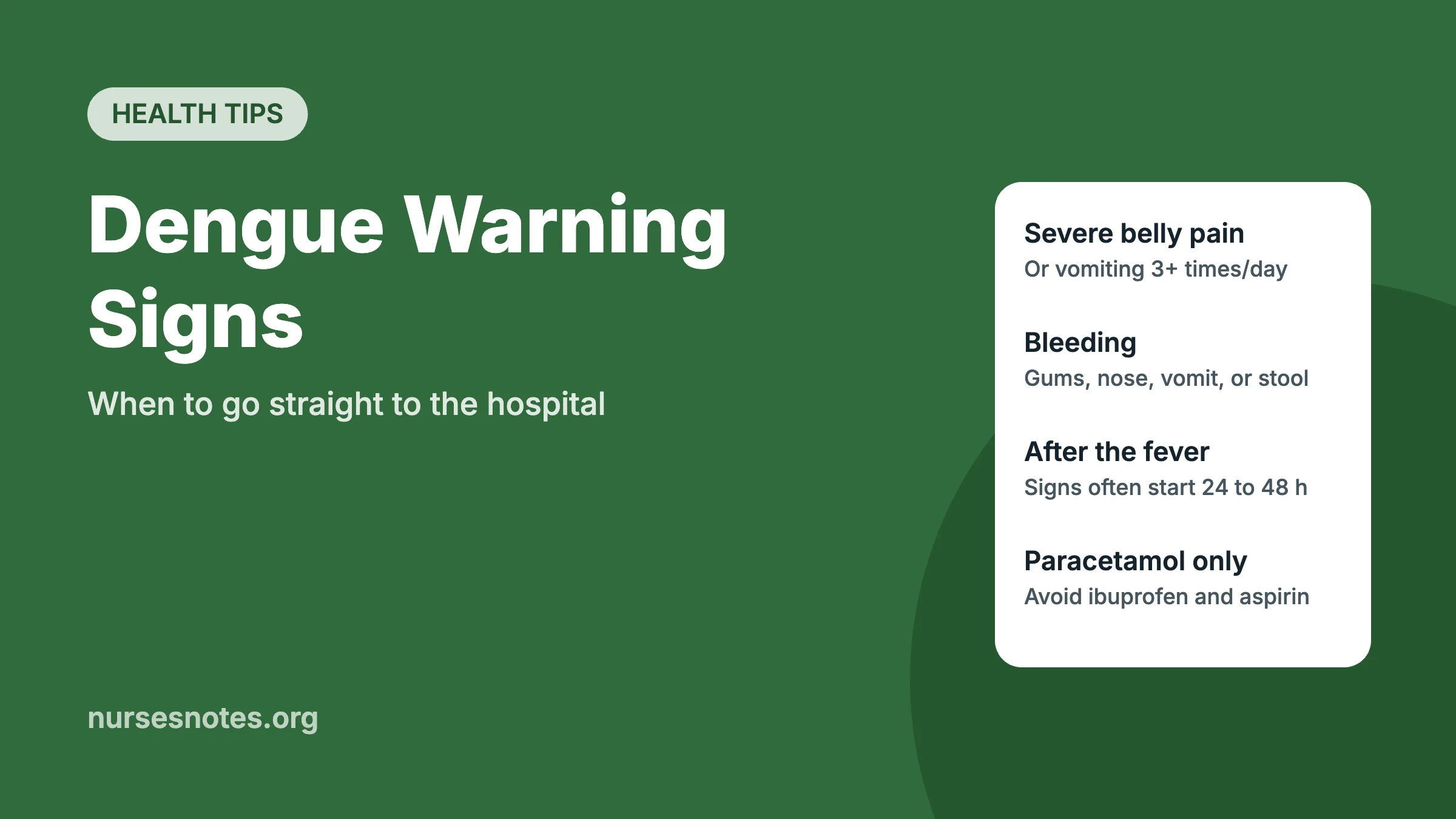
The main dengue warning signs are severe belly pain, vomiting that keeps happening, bleeding from the gums or nose, blood in vomit or stool, and extreme tiredness or restlessness. They often appear just as the fever goes away, so anyone with these signs needs to go to a hospital or emergency room straight away.
Key points
- Dengue usually causes high fever, severe headache, pain behind the eyes, and muscle and joint pain.
- Warning signs often start 24 to 48 hours after the fever ends, which is why the “fever is gone” stage is the most dangerous time.
- Use paracetamol (acetaminophen) for fever and pain; avoid ibuprofen and aspirin because they can increase bleeding.
- Rest, drink plenty of fluids, and go to the hospital at once if any warning sign appears.
What is dengue?
Dengue is a viral infection spread by the bite of infected Aedes mosquitoes, which are most active during the day. It is common in the Philippines and across tropical Asia, and the World Health Organization (WHO) notes that most people have mild symptoms or none and recover within 1 to 2 weeks.
A small number of people develop severe dengue, which can lead to shock, serious bleeding, or organ damage. People who catch dengue for a second time have a higher risk of severe illness. For the latest local numbers, see our report on dengue cases in the Philippines in 2026.
Common symptoms of dengue
Symptoms usually begin 4 to 10 days after the mosquito bite and last 2 to 7 days. They include:
- High fever, often around 40°C (104°F)
- Severe headache and pain behind the eyes
- Muscle, joint, and bone pain
- Nausea and vomiting
- Swollen glands
- A skin rash
Mild dengue can look like many other fever illnesses. A blood test is the only way to confirm it, so see a doctor if you have a fever and live in, or have travelled to, an area with dengue.
Dengue warning signs
These signs suggest the illness may be turning severe. Both WHO and the US Centers for Disease Control and Prevention (CDC) list them, and they are an emergency.
| Warning sign | What it may look like at home |
|---|---|
| Severe belly pain or tenderness | Pain that does not settle, or the belly hurts when touched |
| Persistent vomiting | Vomiting at least 3 times in 24 hours, or unable to keep fluids down |
| Bleeding | Bleeding from the gums or nose, vomiting blood, or blood in the stool |
| Fast breathing | Breathing quickly or with difficulty |
| Changes in alertness | Extreme tiredness, weakness, restlessness, or irritability |
| Signs of poor circulation | Pale, cold, or clammy skin and extreme thirst |
Why the danger time is when the fever goes away
Many families relax once the fever breaks, but CDC explains that warning signs usually begin 24 to 48 hours after the fever ends. Symptoms can become severe within a few hours.
Keep watching closely for at least two days after the fever settles, especially if the person has had dengue before. Do not wait for every sign to appear before seeking help.
How to care for mild dengue at home
- See a doctor to confirm the diagnosis and agree on a follow-up plan.
- Rest as much as possible.
- Drink plenty of fluids, such as water, oral rehydration solution, and soups, to avoid dehydration. See our guide to signs of dehydration in adults.
- Use paracetamol (acetaminophen) for fever and pain. Follow the label or your doctor’s advice. For children, the dose depends on the child’s weight and the product, so check the label or ask a doctor or pharmacist.
- Avoid NSAIDs such as ibuprofen and aspirin, which WHO says can increase the risk of bleeding.
- Check for warning signs every few hours, including after the fever has gone.
- Prevent more bites by using screens and sleeping under a mosquito net, since the mosquitoes that spread dengue bite during the day.
How to prevent dengue
- Wear clothing that covers as much skin as possible during the day.
- Use an insect repellent containing DEET, picaridin, or IR3535, following the label.
- Use window screens, and sleep under a mosquito net when resting in the daytime.
- Each week, cover, empty, and clean water storage containers.
- Dispose of rubbish properly and remove containers that can collect rainwater.
WHO notes that one dengue vaccine (QDenga) is licensed in some countries but is recommended only for certain age groups in high-transmission areas. Ask your local health centre what is available where you live.
When to get medical help
Go to the emergency room now if you or anyone in your family has dengue or a fever and shows any of these:
- Severe belly pain, or vomiting 3 or more times in 24 hours
- Bleeding from the nose or gums, vomiting blood, or blood in the stool
- Fast or difficult breathing
- Cold, pale, or clammy skin or extreme thirst
- Unusual sleepiness, confusion, restlessness, or irritability
See a doctor soon if you have a fever with headache, eye pain, body aches, or rash and you live in or recently travelled to a dengue area.
Frequently asked questions
What day of dengue is the most dangerous?
The riskiest time is usually just after the fever drops, not while it is at its highest. CDC says warning signs usually begin 24 to 48 hours after the fever ends. Keep checking for belly pain, vomiting, bleeding, and drowsiness during this time rather than assuming recovery has started.
Can I take ibuprofen for dengue fever?
No. WHO advises avoiding non-steroidal anti-inflammatory drugs such as ibuprofen and aspirin because they can increase the risk of bleeding. Paracetamol (acetaminophen) is the recommended medicine for fever and pain. Follow the label, and ask a doctor or pharmacist about the right dose for a child.
Can you get dengue more than once?
Yes. A person can have dengue more than once, and WHO notes that people infected for a second time are at higher risk of severe dengue. If you have had dengue before, tell your doctor when you have a new fever, watch closely for warning signs, and seek care early if any appear.
Related on Nurses Notes
- Dengue cases in the Philippines in 2026
- Signs of dehydration in adults and what to do
- How to bring down a child’s fever safely at home
- All Health Tips on Nurses Notes
Sources
- Dengue and severe dengue. World Health Organization fact sheet, 21 August 2025.
- Symptoms of Dengue and Testing. US Centers for Disease Control and Prevention, updated October 2026.
- Guidelines for Classifying Dengue. US Centers for Disease Control and Prevention, 2025.
This article is for education only and does not replace advice from your own doctor, nurse, or other qualified health professional.