On this page
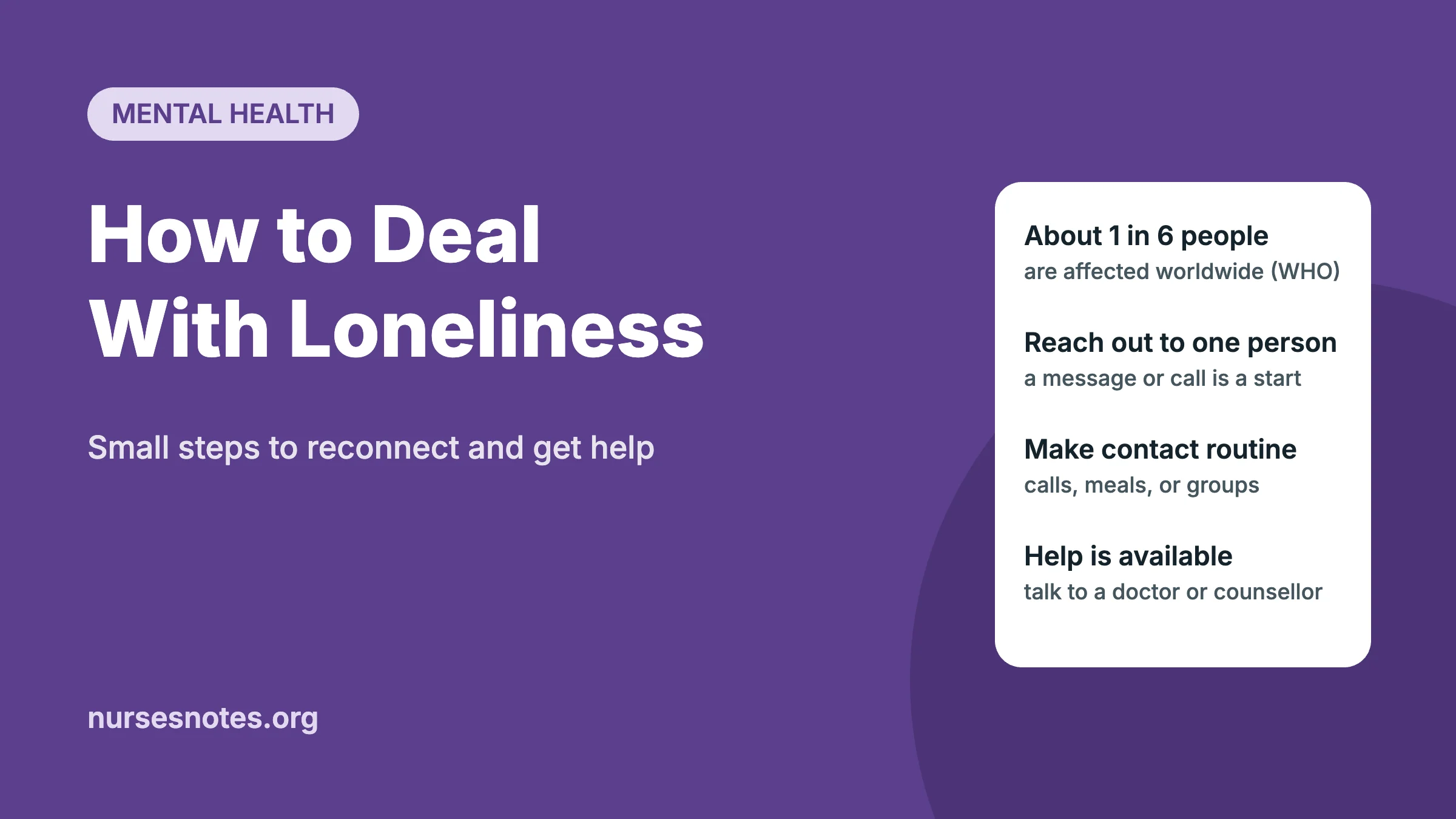
To deal with loneliness, start small: reach out to one person, build regular contact into your week, and join an activity where you meet people who share your interests. Loneliness is common and nothing to be ashamed of, and if it lasts or affects your mood, sleep, or daily life, talking to a doctor or counsellor can help.
Key points
- Loneliness is the painful gap between the connection you want and the connection you have; you can feel lonely even when surrounded by people.
- The World Health Organization (WHO) estimates that about 1 in 6 people worldwide are affected by loneliness.
- Long-lasting loneliness is linked to depression, anxiety, poor sleep, heart disease, and stroke.
- Small, regular steps to connect help, and support is available if loneliness feels overwhelming.
What is loneliness?
Loneliness is a feeling: the distress that comes when your relationships do not match what you need. Social isolation is different. It means having few relationships or little contact with others.
The two often overlap, but not always. You can live alone and feel content, or have a busy family and workplace and still feel lonely. Loneliness is not a mental health condition in itself, but it can affect your mental and physical health.
How common is loneliness?
Loneliness is very common. A 2025 WHO report estimates that about 1 in 6 people worldwide are affected, with the highest rates among teenagers and young adults and in lower-income countries. In the United States, the CDC reports that about 1 in 3 adults say they feel lonely.
Why loneliness affects your health
Loneliness that lasts can keep the body in a prolonged stress response. Research summarised by the WHO, the CDC, and the US National Institute on Aging links it to:
- Depression and anxiety (WHO reports lonely people are twice as likely to become depressed)
- Poor sleep and a weaker immune system
- High blood pressure, heart disease, and stroke
- Type 2 diabetes and memory decline
- A higher risk of early death
How to deal with loneliness: practical steps
- Reach out to one person. Send a message to an old friend, call a relative, or check on someone who may also be alone. Connection often starts with one small step.
- Make contact a routine. Schedule a regular call, video chat, or meal with someone, so connection does not depend on having spare energy.
- Join something you enjoy. A class, faith or community group, sports team, choir, or volunteering puts you around people with shared interests, in person or online.
- Start small and go at your pace. If socialising feels hard, begin with short chats with neighbours or shop staff, or simply spend time in busy public places.
- Be present. Put your phone away during conversations, and notice if scrolling social media leaves you comparing yourself with others.
- Look after your body. Move every day, ideally with others, and protect your sleep. Our guide to sleep hygiene tips can help.
- Plan for hard times. Holidays, anniversaries, and the period after a move or loss can be lonelier, so line up plans or company ahead of time.
- Talk about it. Telling someone you trust that you feel lonely can ease the weight and often brings people closer.
Loneliness in nurses and shift workers
Long hours, nights, and weekends can leave little time for family and friends, and many nurses work far from home. CDC training materials for nurses suggest protecting at least one shared meal on most days, keeping in touch by phone or message during breaks, leaving notes for family, and planning time together after a run of shifts.
If you are working abroad, build links with colleagues and local community groups, and keep regular, scheduled calls with loved ones across time zones. Feeling drained and disconnected at work can also be a sign of compassion fatigue or burnout.
When to get help
Talk to your doctor, a counsellor, or a mental health professional if:
- Loneliness has lasted for weeks or keeps coming back
- You feel low, hopeless, or anxious most days, or have lost interest in things you used to enjoy
- Your sleep, appetite, work, or studies are affected
- Social anxiety or fear keeps you from connecting with people
- You have thoughts of harming yourself or that life is not worth living (please reach out now using the numbers below)
Talking therapies such as cognitive behavioural therapy (CBT) can help, especially when anxiety keeps you isolated. In older adults, untreated hearing loss can also lead to withdrawal, so a hearing check is worth asking about.
Where to get help
If you are struggling, you do not have to cope alone. Help is available now:
- Philippines: NCMH Crisis Hotline, call 1553, 0917 899 8727, or (02) 7989 8727
- USA: 988 Suicide & Crisis Lifeline, call or text 988, 24/7
- UK: Samaritans, call 116 123 free, 24 hours a day
- Anywhere: if you or someone else is in immediate danger, call your local emergency number or go to the nearest emergency department
You can also talk to your doctor, a nurse, or a mental health professional, or reach out to someone you trust today.
Frequently asked questions
Is it normal to feel lonely even around people?
Yes. Loneliness is about how connected you feel, not how many people are around you. You can feel lonely in a busy household, a crowded hospital ward, or a group chat if those relationships do not meet your need for closeness or understanding. Naming the feeling is a helpful first step toward changing it.
Can loneliness cause depression?
Long-lasting loneliness is strongly linked to depression. The WHO reports that lonely people are about twice as likely to become depressed, and loneliness is also linked to anxiety. If low mood, hopelessness, or loss of interest do not lift, talk to a doctor or mental health professional. Read more about the signs of depression.
How can I make friends as an adult?
Start with places where you will see the same people regularly, such as a class, hobby group, gym, faith community, or volunteer role. Repeated, low-pressure contact builds friendships over time. Say yes to small invitations, suggest a follow-up coffee or call, and reconnect with old friends, who are often glad to hear from you.
Related on Nurses Notes
- Signs of depression and when to get help
- How to manage stress: coping tips that work
- Compassion fatigue in nurses: signs and recovery
- More mental health articles
Sources
- Social connection linked to improved health and reduced risk of early death, World Health Organization, 30 June 2025
- WHO Commission on Social Connection, World Health Organization, 2025
- Health Effects of Social Isolation and Loneliness, CDC, 2024
- Loneliness and Social Isolation — Tips for Staying Connected, National Institute on Aging (NIH), 2024
- Dealing with loneliness, NHS Every Mind Matters, updated 2026
- Loneliness, Mind, 2023
- Module 3. Impacts on Families, NIOSH Work Schedules training for nurses, CDC, 2020
- World Suicide Prevention Day, National Center for Mental Health (Philippines), accessed November 2026
- Get Help, 988 Suicide & Crisis Lifeline, accessed November 2026
- Samaritans, Samaritans, accessed November 2026
This article is for education only and does not replace advice from your own doctor, nurse, or other qualified health professional.