On this page
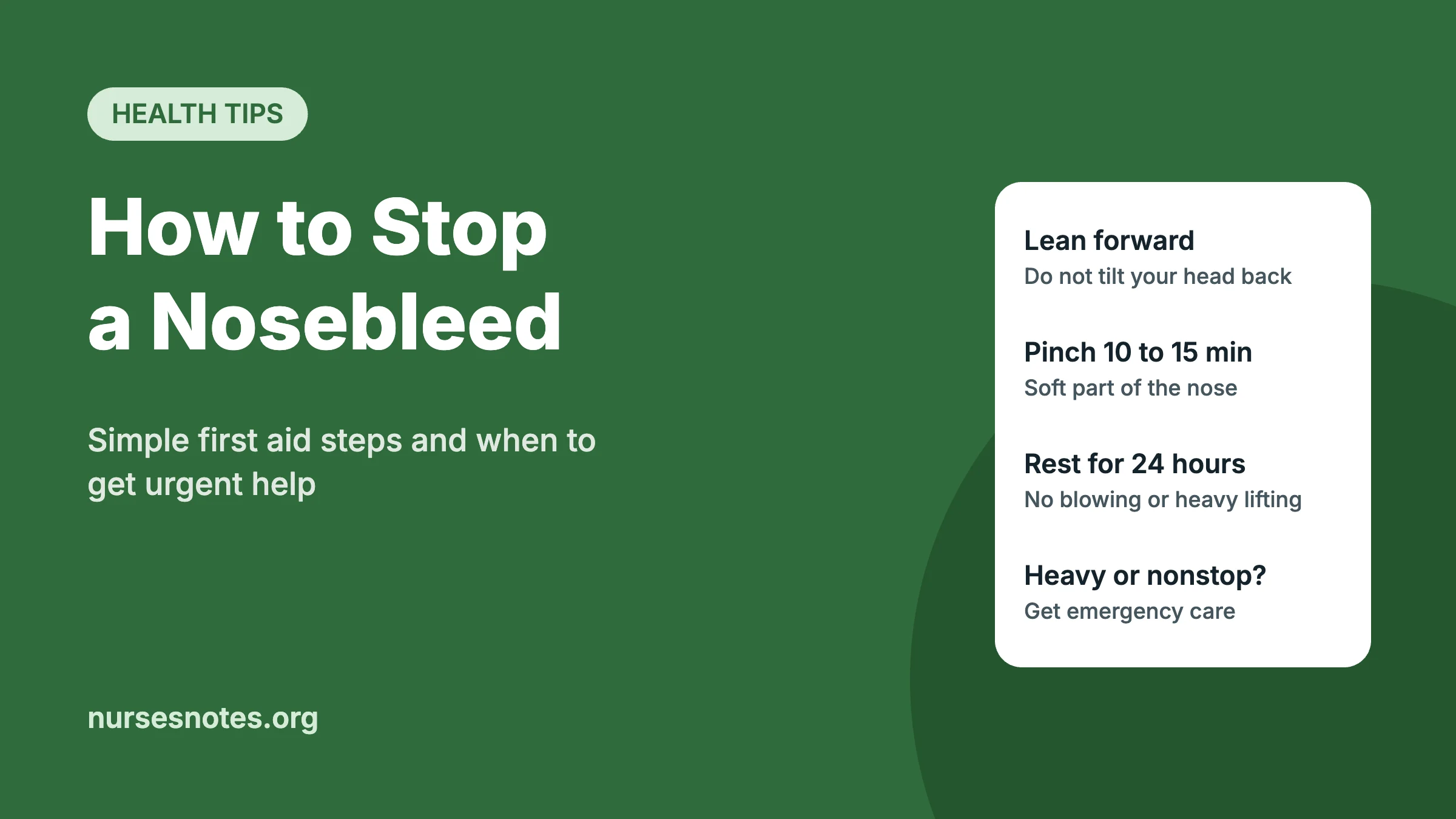
To stop a nosebleed, sit down, lean forward, and pinch the soft part of your nose firmly for 10 to 15 minutes while breathing through your mouth. Most nosebleeds come from the front of the nose, look worse than they are, and can be managed safely at home.
Key points
- Lean forward, not back, so blood does not run down your throat.
- Pinch the soft part of the nose (just above the nostrils) without letting go for 10 to 15 minutes.
- For the next 24 hours, avoid blowing your nose, heavy lifting, and hot drinks.
- Get emergency help if bleeding will not stop, is heavy, or follows a head injury.
Why do nosebleeds happen?
The inside of the nose has many tiny blood vessels close to the surface. Cleveland Clinic says about 6 in 10 people will have at least one nosebleed in their lifetime, and most are minor.
Most bleeds start at the front of the nose (anterior nosebleeds) and can usually be treated at home. Less often, bleeding comes from larger vessels deep inside the nose (posterior nosebleeds), which can be heavy and need prompt medical care.
Common causes include:
- Dry air, including air-conditioned or heated rooms
- Picking the nose or blowing it too hard
- Colds, sinus infections, and allergies that cause frequent sneezing or nose blowing
- Blood-thinning medicines such as aspirin or warfarin
- Overuse of decongestant or other nasal sprays
- An injury to the nose or face
Children, adults over 45, pregnant women, and people with high blood pressure are more likely to get nosebleeds, according to the NHS. If high blood pressure is part of your picture, our guide on how to lower blood pressure naturally may help.
How to stop a nosebleed: step by step
- Stay calm and sit down. Sit upright and lean your body and head slightly forward.
- Pinch the soft part of your nose. Use your thumb and index finger to press both nostrils closed, just above the nostrils (not on the bony bridge).
- Breathe through your mouth and spit out any blood that reaches your mouth instead of swallowing it.
- Hold for 10 to 15 minutes without letting go. Use a clock. Releasing early to “check” can restart the bleeding.
- Add a cold compress if you like. A cold pack or ice wrapped in a cloth on the bridge of the nose may help, although the NHS notes the evidence is weak.
- If it is still bleeding, pinch again for another 10 to 15 minutes. Mayo Clinic advises getting emergency care if bleeding continues after this second try.
What not to do
- Do not tilt your head back or lie flat. Blood can run down your throat and cause choking, coughing, or vomiting.
- Do not stuff tissue or cotton wool deep into the nose.
- Do not keep stopping to look; constant pressure is what works.
Aftercare: the next 24 hours
Once the bleeding stops, the clot inside your nose is fragile. The NHS advises that for 24 hours you should avoid:
- Blowing or picking your nose, or picking at scabs
- Hot drinks and alcohol
- Heavy lifting and strenuous exercise
- Lying flat
Mayo Clinic also suggests not bending down with your head below your heart for several hours.
How to prevent nosebleeds
- Use a humidifier, especially at night, if your room air is dry, and gently discourage nose picking in children.
- Keep the inside of your nose moist with saline spray or drops, or a thin layer of saline gel or petroleum jelly.
- Blow your nose gently and sneeze with your mouth open.
- Manage allergies, avoid overusing nasal sprays, and stop smoking.
- Talk to your doctor before changing any prescribed medicine, including blood thinners.
Dry indoor air, such as in air-conditioned wards and offices, is a common trigger. For more practical advice on looking after yourself, see our guide to the signs of dehydration in adults.
When to get medical help
Go to the emergency department or call your local emergency number if:
- Bleeding does not stop after 10 to 15 minutes of firm pressure, or after a second round of pinching
- The bleeding is heavy or you are losing a lot of blood
- You are swallowing so much blood that you vomit
- The nosebleed started after a fall, a blow to the head, or a facial injury
- You feel weak, faint, or dizzy
- You have difficulty breathing
Do not drive yourself; ask someone to take you, and bring a list of your medicines.
See a doctor (non-urgent) if:
- You get nosebleeds often
- A child under 2 has a nosebleed
- You take a blood thinner such as warfarin or aspirin
- You have a bleeding or clotting condition, such as haemophilia
- You have signs of anaemia, such as tiredness, pale skin, palpitations, or shortness of breath
- You bruise easily, or the nosebleeds began around the time you started a new medicine
Frequently asked questions
Should you tilt your head back during a nosebleed?
No. Tilting your head back lets blood run down the back of your throat, which can make you cough, choke, or vomit, and it hides how much you are bleeding. Instead, sit up, lean forward, and pinch the soft part of your nose for 10 to 15 minutes.
How long is too long for a nosebleed?
Most nosebleeds stop with 10 to 15 minutes of steady pressure. If bleeding continues after that, or after a second round of pinching, get emergency care. The NHS and Mayo Clinic both advise urgent help when bleeding is heavy, prolonged, or follows a head injury.
Are frequent nosebleeds a sign of something serious?
Usually not. Dry air, nose picking, and allergies are the most common reasons. However, frequent nosebleeds can sometimes be linked to blood-thinning medicines, bleeding disorders, or other conditions, so see a doctor if they keep happening, are hard to stop, or come with easy bruising.
Related on Nurses Notes
- How to treat a burn at home: first aid steps
- How to lower blood pressure naturally: 9 evidence-based steps
- Signs of dehydration in adults: what to do and when to worry
- All Health Tips on Nurses Notes
- Choking first aid: what to do when an adult is choking
Sources
- Nosebleed – NHS, reviewed December 2023
- Nosebleeds: First aid – Mayo Clinic, 2024
- Nosebleeds (Epistaxis) – Cleveland Clinic, December 2024
This article is for education only and does not replace advice from your own doctor, nurse, or other qualified health professional.