On this page
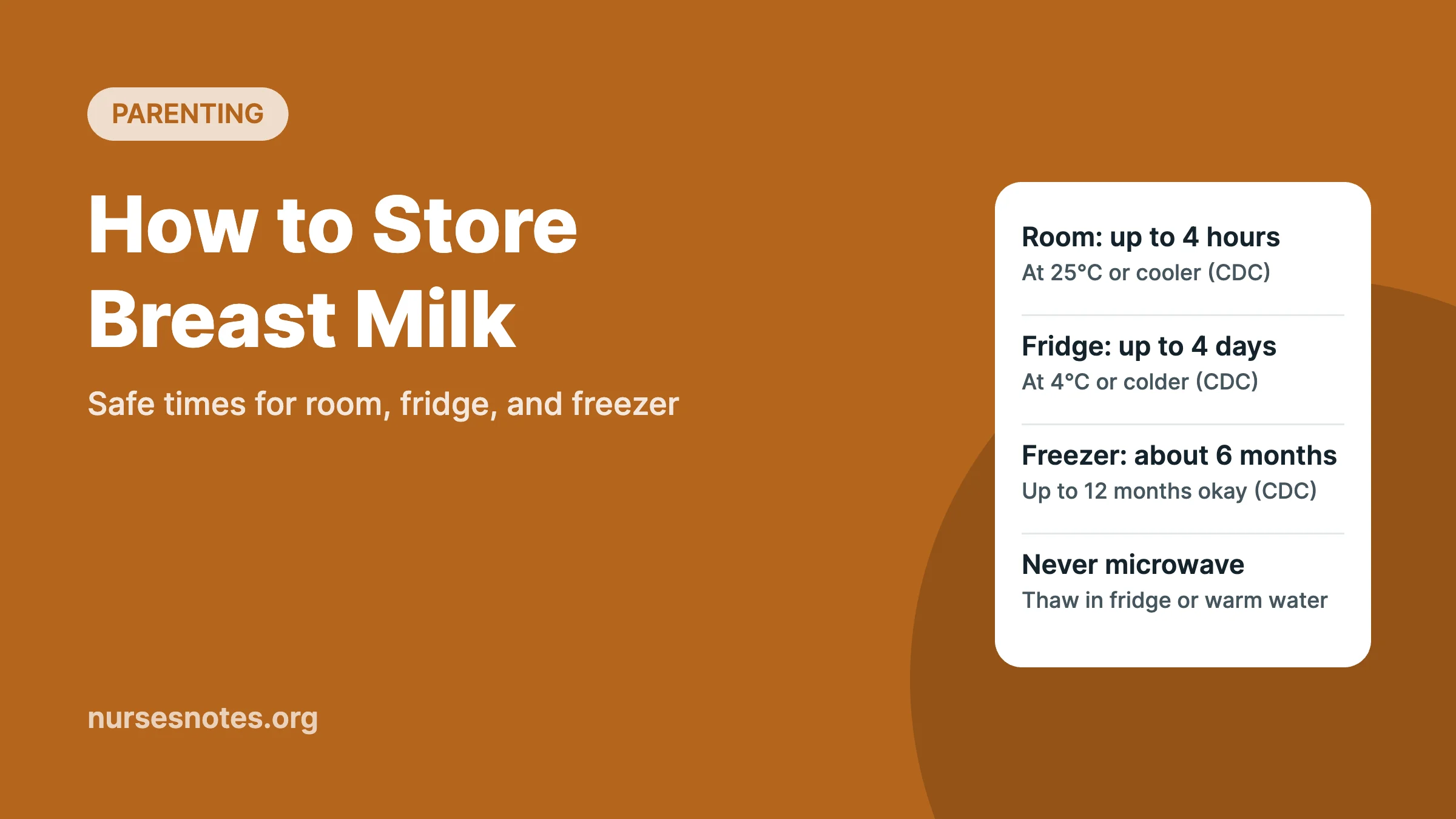
To store breast milk safely, the US CDC advises using freshly expressed milk within 4 hours at room temperature, within 4 days in the fridge, and within about 6 months in the freezer (up to 12 months is acceptable). The UK NHS gives slightly different limits, so this guide sets out both, plus how to thaw, warm, and carry milk without wasting a drop.
Key points
- Wash your hands and use clean, food-grade containers or breast milk storage bags with tight lids.
- Label each container with the date it was expressed, and use the oldest milk first.
- Thaw milk in the fridge or in warm water, never in a microwave, and never refreeze thawed milk.
- Throw away milk left in the bottle after a feed: within 2 hours (CDC) or 1 hour (NHS).
Breast milk storage times at a glance
Guidelines differ a little between countries because they are based on different fridge temperatures and evidence reviews. Choose one set of rules and follow it consistently, or ask your midwife, nurse, or doctor which one your local service uses.
| Where | CDC (USA) | NHS (UK) |
|---|---|---|
| Room temperature, 25°C (77°F) or cooler | Up to 4 hours | Not specified; cool or refrigerate soon after expressing |
| Fridge | Up to 4 days at 4°C (40°F) or colder | Up to 8 days at 4°C or colder; up to 3 days if your fridge runs at 5 to 10°C or you are unsure |
| Ice compartment of a fridge | Not specified | Up to 2 weeks |
| Freezer, -18°C (0°F) or colder | Best within 6 months; up to 12 months acceptable | Up to 6 months |
| Thawed in the fridge | Use within 24 hours of being fully thawed | Use straight away once defrosted |
| Leftover after a feed | Use within 2 hours, then discard | Use within 1 hour, then discard |
Room temperature limits assume a room at 25°C or cooler. Many homes and workplaces in the Philippines, Asia, and the Middle East are warmer than that, so chill or refrigerate milk soon after expressing.
How to store breast milk step by step
- Wash your hands with soap and water before expressing. If you cannot, use hand sanitiser with at least 60% alcohol.
- Use the right container: breast milk storage bags, or clean glass or BPA-free hard plastic containers with tight-fitting lids. Do not use disposable bottle liners or ordinary plastic bags.
- Store small amounts, about 60 to 120 mL (2 to 4 oz), or what your baby takes at one feed, to reduce waste.
- Label each container with the date. For daycare or a caregiver, add your baby’s name.
- Put milk at the back of the fridge or freezer, not in the door, where the temperature changes more.
- Leave space at the top (about 2.5 cm or 1 inch) when freezing, because milk expands.
Adding fresh milk to stored milk
You can combine milk from different sessions, but cool freshly expressed milk in the fridge first. Adding warm milk to frozen milk can partly thaw it. Base the storage time on the oldest milk in the container.
How to thaw and warm breast milk
- Thaw the oldest milk first, ideally overnight in the fridge.
- For faster thawing, hold the sealed container under warm running water or stand it in a bowl of warm water.
- Breast milk does not have to be warmed. Many babies take it cold or at room temperature.
- If you warm it, keep the lid on, use warm (not hot) water, and test a few drops on your wrist.
- Swirl gently to mix any fat that has separated.
- Never heat or thaw milk in a microwave or on the stove. It can create hot spots that burn a baby’s mouth and may damage some of the milk’s protective properties.
Thawed milk may smell or look a little different from fresh milk. According to Mayo Clinic, it is still safe to use. Once thawed, do not refreeze it.
Carrying milk, work, and power cuts
- Travel: an insulated cooler bag with frozen ice packs keeps milk safe for up to 24 hours. At your destination, use it, refrigerate it, or freeze it.
- At work: the CDC says milk can go in any food-safe fridge, including a shared one.
- Power cuts: a full, unopened freezer stays cold for about 48 hours and a half-full one for about 24 hours. Milk that still has ice crystals can be refrozen; fully thawed milk that is still cold should be refrigerated and used within a day, or thrown away.
Keeping pump parts clean
Clean, dry, and store your breast pump parts, bottles, and containers somewhere clean. Check the tubing and replace it straight away if you see mould. If you share a pump, wipe the dials, switch, and countertop with a disinfectant wipe before use.
When to get medical help
- If your baby was born early or is in hospital, ask the neonatal team for storage advice, as their rules may differ.
- If you are unsure whether milk has been stored safely, throw it away rather than risk it.
- If your baby seems unwell, is not feeding well, or you are worried about how much they are taking, contact your doctor, midwife, or health centre promptly. Our guide on how much a newborn should eat explains normal feeding patterns.
- For problems with pumping, sore breasts, or milk supply, ask a midwife, lactation consultant, or breastfeeding counsellor.
Frequently asked questions
How long can breast milk stay out at room temperature?
The CDC says freshly expressed breast milk can stay at room temperature of 25°C (77°F) or cooler for up to 4 hours. Mayo Clinic says up to 6 hours is acceptable but advises using or chilling it within 4 hours, especially in a warm room. In hot climates, refrigerate it sooner to be safe.
Can I refreeze breast milk after it has thawed?
No. Once breast milk has fully thawed, do not refreeze it. Use thawed milk within 24 hours if it stays in the fridge (CDC), or straight away (NHS). Once it reaches room temperature or has been warmed, use it within 2 hours. Milk that still contains ice crystals after a power cut can be refrozen.
Can I reuse breast milk my baby did not finish?
Only for a short time. The CDC advises using leftover milk within 2 hours after your baby finishes feeding, and the NHS advises within 1 hour. After that, throw it away. Offering smaller amounts at a time helps reduce waste.
Related on Nurses Notes
- How much should a newborn eat? A feeding guide
- Oral thrush in babies: signs and treatment
- When to start solid foods for baby
- All Parenting articles
Sources
- Breast Milk Storage and Preparation, Centers for Disease Control and Prevention (CDC), 2026
- Breast Milk Storage Questions and Answers, Centers for Disease Control and Prevention (CDC), 2023
- Expressing and storing breast milk, NHS, reviewed August 2026
- Breast milk storage: Do’s and don’ts, Mayo Clinic, 2025
This article is for education only and does not replace advice from your own doctor, nurse, or other qualified health professional.