On this page
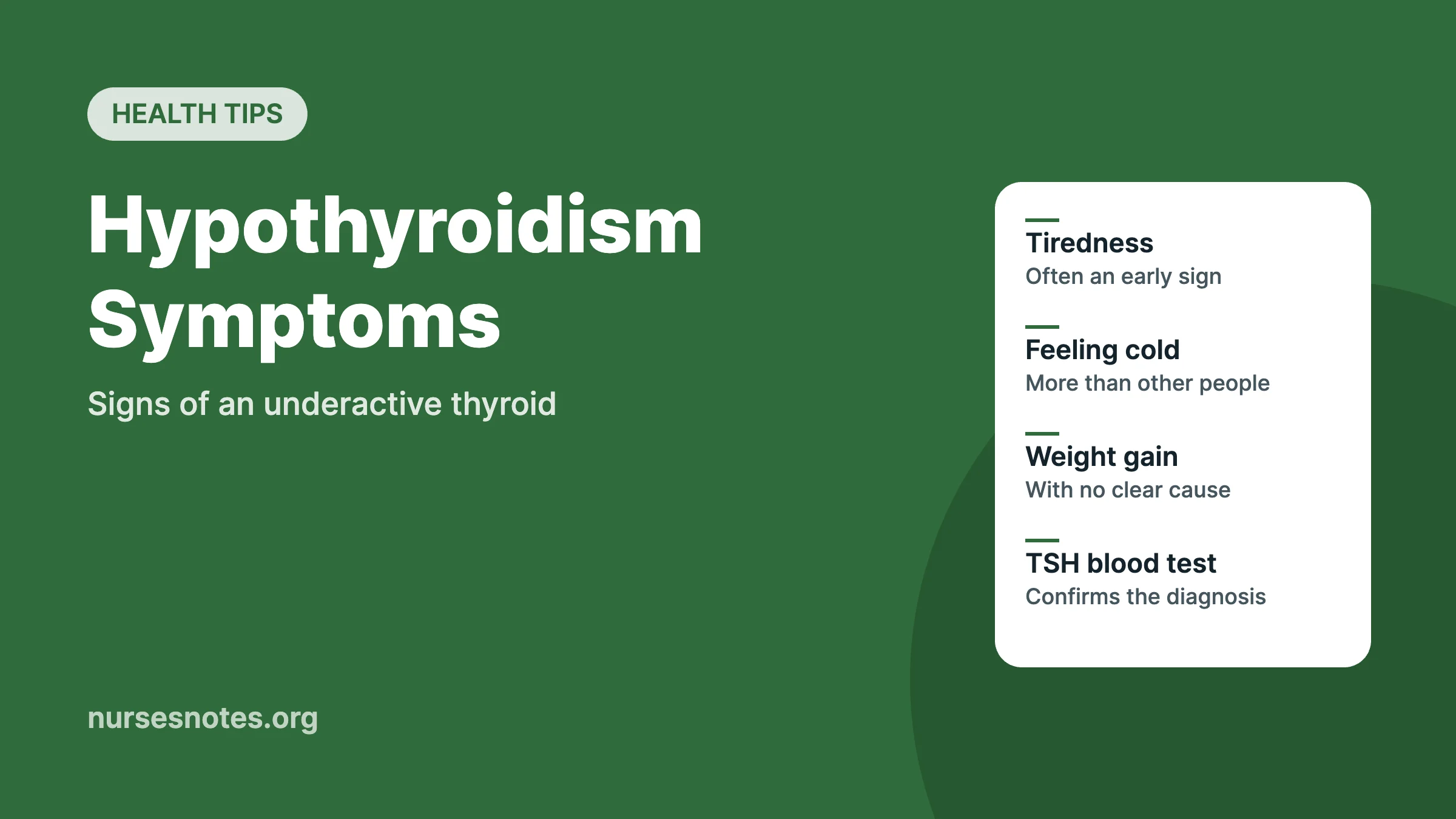
The most common hypothyroidism symptoms are tiredness, feeling cold, weight gain, constipation, dry skin, and low mood, and they usually develop slowly over months or years. Because these signs are easy to blame on stress or ageing, a simple blood test is the only way to know if an underactive thyroid is the cause.
Key points
- Hypothyroidism means the thyroid gland does not make enough thyroid hormone, so many body processes slow down.
- Symptoms creep up gradually and can be mild, so many people do not notice them for a long time.
- It is diagnosed with blood tests (TSH and T4) and is usually treated with daily levothyroxine tablets.
- Treated well, most people live a normal life. Untreated, it can affect the heart, pregnancy, and, rarely, cause a medical emergency.
What is hypothyroidism?
The thyroid is a small, butterfly-shaped gland in the front of the neck. Its hormones help control how your body uses energy. In hypothyroidism, also called an underactive thyroid, the gland makes too little of these hormones.
Common hypothyroidism symptoms
The NHS, Mayo Clinic, and MedlinePlus list these as the usual signs:
- Extreme tiredness and low energy
- Feeling cold more than other people
- Unexplained weight gain
- Constipation
- Dry skin and dry, coarse, or thinning hair
- A puffy face, including around the eyes
- A hoarse or croaky voice
- Muscle aches, stiffness, or weakness
- Heavy or irregular periods, and sometimes fertility problems
- Low mood, poor memory, or trouble concentrating (“brain fog”)
- A slow heart rate
Cleveland Clinic also mentions numbness or tingling in the hands and raised cholesterol. Some people develop a goitre, a swelling in the neck, which can rarely make swallowing or breathing harder.
Symptoms in babies and children
Babies can be born with an underactive thyroid, called congenital hypothyroidism. Mayo Clinic notes that most affected babies look well at first, which is why newborn screening matters. Without treatment, signs can include feeding problems, poor weight gain, jaundice, constipation, floppiness, a hoarse cry, and a large tongue.
Early treatment gives babies an excellent chance of normal development. In older children, look out for slow growth, late teeth, and delayed puberty.
What causes an underactive thyroid?
- Hashimoto’s disease: the most common cause, where the immune system attacks the thyroid. The NHS says it is most common in women and usually starts between ages 30 and 50.
- Thyroid surgery or radiotherapy to the neck, or treatment for an overactive thyroid.
- Thyroiditis: inflammation of the thyroid, which can follow a viral illness or pregnancy.
- Certain medicines, such as lithium and amiodarone.
- Too little or too much iodine. Iodine deficiency is rare in places that use iodised salt but is still common in some parts of the world.
- Pituitary problems (rare).
Who is more at risk?
You are more likely to develop hypothyroidism if you are female, over 60, pregnant or have had a baby in the past six months, or have a family history of thyroid disease. Other autoimmune conditions, such as type 1 diabetes, coeliac disease, and rheumatoid arthritis, also raise the risk.
How is it diagnosed and treated?
Your doctor will ask about your symptoms and family history, check your neck, and order blood tests for TSH (thyroid-stimulating hormone) and T4. A high TSH with a low T4 usually means hypothyroidism. Mayo Clinic notes that biotin supplements can affect results, so tell your doctor about any vitamins you take.
Treatment is usually a daily levothyroxine tablet that replaces the missing hormone. Your doctor sets the dose and checks blood tests regularly, often 6 to 8 weeks after starting and then about once a year when stable. Practical tips from Mayo Clinic:
- Take it the way your doctor or pharmacist tells you, usually on an empty stomach in the morning with water.
- Ask about timing if you take calcium or iron supplements, antacids, or a lot of soy or fibre, as these can reduce absorption.
- Do not stop or skip doses because you feel better. Treatment is usually lifelong.
- Tell your doctor if you are pregnant or planning a pregnancy, as your dose will likely need to change.
Why treatment matters
Untreated hypothyroidism raises the risk of heart disease, heart failure, nerve damage, and fertility problems. In pregnancy, it is linked to miscarriage, pre-eclampsia, and premature birth. Treatment usually prevents these problems.
When to get medical help
See your doctor if you have ongoing tiredness or several of the symptoms above, especially if thyroid problems run in your family. Many symptoms have other causes, so a check-up is worthwhile either way. If you already take thyroid medicine and symptoms return, your dose may need adjusting.
Go to emergency care straight away if someone with known or suspected hypothyroidism has:
- Extreme drowsiness or confusion, or is hard to wake
- A very low body temperature or feels intensely cold
- Difficulty breathing
- A very slow heartbeat or low blood pressure
These can be signs of myxoedema coma, a rare but life-threatening complication that is more common in older adults and can be triggered by infection or sedatives.
Frequently asked questions
What are the first signs of an underactive thyroid?
Early signs are often vague: tiredness, feeling cold, mild weight gain, constipation, and dry skin. Because they build slowly over months or years, many people blame stress, busy shifts, or getting older. If several of these signs appear together and do not go away, ask your doctor about a thyroid blood test.
Can hypothyroidism cause weight gain?
Yes. Unexplained weight gain is one of the classic symptoms listed by the NHS, Mayo Clinic, and Cleveland Clinic, because the body’s processes slow down when thyroid hormone is low. Treatment helps correct the hormone level, but healthy eating and activity still matter. Hypothyroidism is rarely the only cause of large weight changes, so discuss them with your doctor.
Is hypothyroidism curable?
In most cases it is a lifelong condition, but it is very manageable. Daily levothyroxine replaces the missing hormone, and symptoms usually start improving within a few weeks. Cleveland Clinic notes that some mild (subclinical) cases settle on their own within a few months. Regular blood tests help your doctor keep the dose right.
Related on Nurses Notes
- Iron deficiency anaemia symptoms: another common cause of tiredness
- Vitamin D deficiency symptoms and who is at risk
- Signs of depression and when to get help
- All Health Tips
Sources
- Underactive thyroid (hypothyroidism), NHS, reviewed 2025
- Hypothyroidism (underactive thyroid): Symptoms and causes, Mayo Clinic, 2026
- Hypothyroidism (underactive thyroid): Diagnosis and treatment, Mayo Clinic, 2026
- Hypothyroidism (Underactive Thyroid), Cleveland Clinic, 2024
- Hypothyroidism, MedlinePlus, U.S. National Library of Medicine, 2026
This article is for education only and does not replace advice from your own doctor, nurse, or other qualified health professional.