
On this page
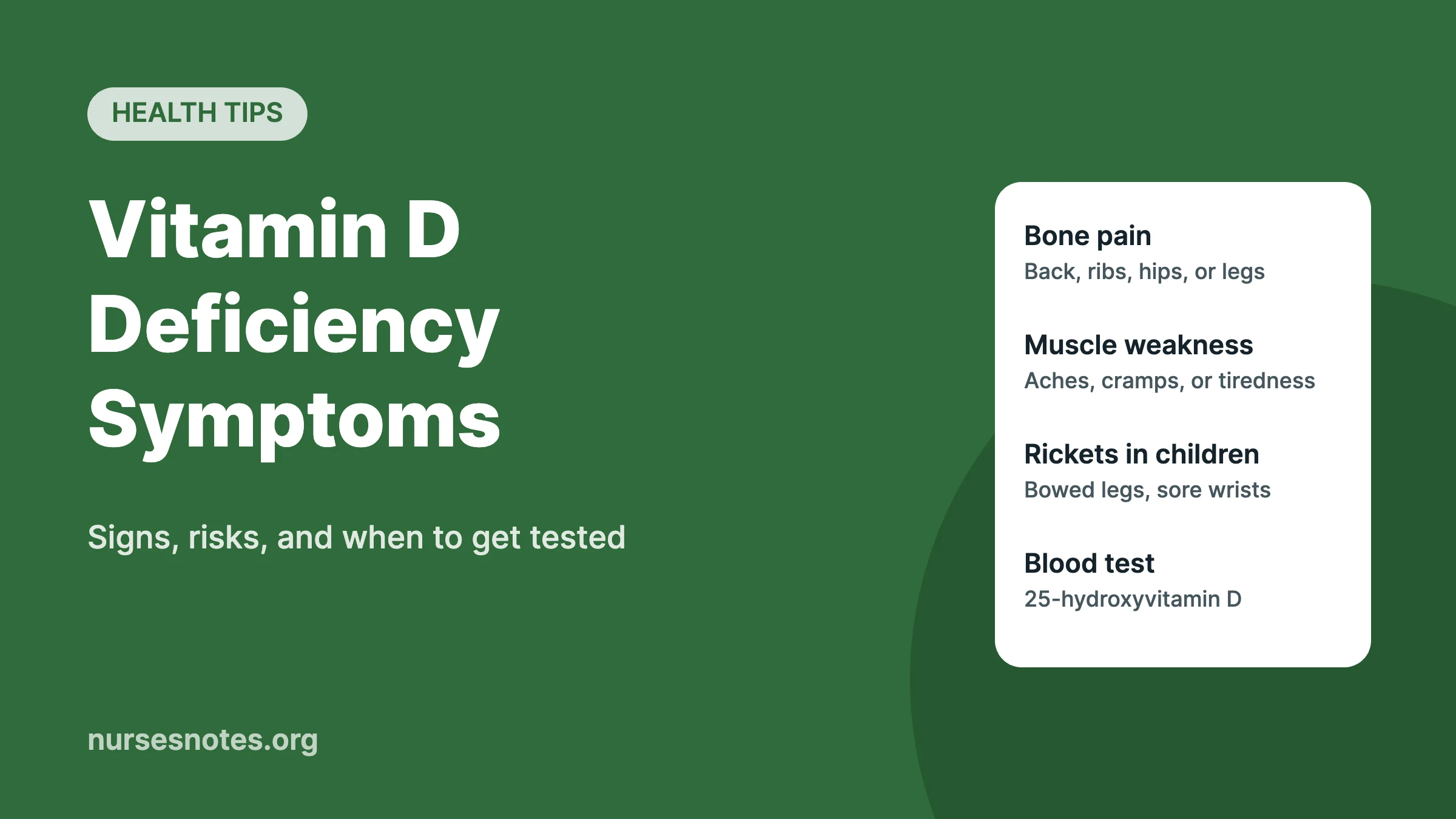
Vitamin D deficiency symptoms are often mild or absent at first, but low levels over time can cause bone pain, muscle weakness, aches or cramps, tiredness, and bones that break more easily. In children, long-term deficiency can lead to rickets, so it is worth knowing who is at risk and when to ask for a simple blood test.
Key points
- Many people with low vitamin D have no symptoms at all; others notice bone pain, muscle weakness, or tiredness.
- Severe deficiency softens bones: rickets in children and osteomalacia in adults.
- People who stay indoors, cover most of their skin, have darker skin, or are older are at higher risk, even in sunny countries.
- A blood test for 25-hydroxyvitamin D confirms the diagnosis; do not self-treat with high-dose supplements.
What does vitamin D do?
Vitamin D helps your body absorb calcium and control calcium and phosphate levels, which keep bones, teeth, and muscles healthy. Your muscles, nerves, and immune system also need it to work normally.
Your skin makes vitamin D when bare skin is exposed to sunlight. Only a few foods contain it naturally, so diet alone rarely covers your needs.
Vitamin D deficiency symptoms in adults
Cleveland Clinic notes that you may have no signs at all. When symptoms do appear, they can include:
- Bone pain, especially in the back, ribs, hips, pelvis, or legs
- Muscle weakness, aches, or cramps
- Tiredness (fatigue)
- Mood changes, such as feeling low
- Difficulty climbing stairs or getting up from a chair
- Bones that break after a minor fall
In adults, severe and long-lasting deficiency can cause osteomalacia, a condition where bones become soft and painful. Many of these symptoms have other causes too, which is why a blood test matters.
Signs of vitamin D deficiency in children
Long-term deficiency in children can cause rickets, where bones become soft, weak, and deformed. The NHS lists these signs:
- Bowed legs, which is the main sign
- Swollen, painful wrists
- Bone pain and muscle weakness
- Changes in the way a child walks, or tiring easily when walking
- Growing more slowly or being small for their age
- Teeth coming through later than usual
Who is at risk of low vitamin D?
- People who stay indoors most of the day, including night-shift workers, older adults, and people who are housebound
- People who cover most of their skin when outdoors
- People with darker skin, which makes less vitamin D from the same amount of sun
- Adults aged 65 and over, because the skin makes less vitamin D with age
- People with obesity
- Babies who are only breastfed, because breast milk contains little vitamin D
- People with Crohn’s disease, celiac disease, ulcerative colitis, kidney disease, or liver disease, or who have had weight-loss surgery
- People taking some medicines, such as steroids or certain anti-seizure drugs
How is vitamin D deficiency diagnosed?
A blood test measures 25-hydroxyvitamin D. According to the NIH Office of Dietary Supplements, levels of 50 nmol/L (20 ng/mL) or above are adequate for most people, while levels below 30 nmol/L (12 ng/mL) are too low and may weaken bones.
Levels above 125 nmol/L (50 ng/mL) are too high and might cause health problems. Cut-off points vary by laboratory and country, so ask your doctor to explain your own result.
How to get enough vitamin D
1. Get some safe sunlight
Short periods outdoors with bare arms or legs help your skin make vitamin D. Sunlight through a window does not count. Avoid sunburn, and use sunscreen when you will be outside for longer, as too much sun raises skin cancer risk.
2. Eat vitamin D foods
- Oily fish such as salmon, sardines, mackerel, and tuna
- Egg yolks
- Liver (avoid liver if you are pregnant)
- Fortified foods, such as some milks, breakfast cereals, and spreads (check the label)
- Mushrooms, especially those exposed to UV light
3. Take supplements only as advised
Your doctor may prescribe a higher dose for a short time to correct a deficiency. For everyday use, the NIH recommends 15 mcg (600 IU) a day for adults aged 19 to 70 and 20 mcg (800 IU) for adults over 70, and lists 100 mcg (4,000 IU) a day as the upper limit for adults.
Children and babies need different amounts depending on age. If you are unsure whether your child needs vitamin D drops, follow the product label and ask your doctor or pharmacist.
Can you take too much vitamin D?
Yes, and it almost always comes from taking too many supplements, not from the sun. Very high levels raise calcium in the blood, which can cause nausea, vomiting, weakness, confusion, extreme thirst, frequent urination, and kidney stones.
When to get medical help
See a doctor if you have ongoing bone pain, muscle weakness, or tiredness that does not improve, or if you belong to a risk group and have never been tested. Ask about testing before starting high-dose supplements.
Get medical help promptly if:
- A child has bowed legs, painful wrists, delayed walking, or is not growing as expected
- You break a bone after a minor fall
- You take vitamin D supplements and develop vomiting, confusion, extreme thirst, or passing a lot of urine
Go to emergency care if anyone has a seizure or becomes severely confused.
Frequently asked questions
What are the first signs of vitamin D deficiency?
Early deficiency often causes no symptoms. When signs appear, they are usually vague: tiredness, aching bones, muscle weakness, or cramps. Because these are common with many other conditions, the only reliable way to know is a 25-hydroxyvitamin D blood test arranged by your doctor, particularly if you are in a risk group.
Can you have low vitamin D in a sunny country like the Philippines?
Yes. Sunshine only helps if it reaches bare skin. People who work indoors or on night shifts, cover most of their skin, always avoid the sun, or have darker skin can still have low levels. Older adults and people with gut, kidney, or liver conditions are also at higher risk.
How long does it take to correct vitamin D deficiency?
It depends on how low your level is and the treatment your doctor chooses. Doctors sometimes prescribe a higher dose for a set period and then a lower maintenance dose, and they may repeat the blood test to check progress. Do not take high doses on your own, as too much vitamin D can be harmful.
Related on Nurses Notes
- Iron deficiency anemia symptoms and when to see a doctor
- How much should a newborn eat? A feeding guide for parents
- Seasonal affective disorder symptoms, causes, and help
- All health tips
Sources
- Vitamin D – Consumer, NIH Office of Dietary Supplements, updated November 2022
- Vitamin D, NHS
- Rickets and osteomalacia: symptoms, NHS, reviewed July 2025
- Vitamin D Deficiency, Cleveland Clinic, 2022
- Vitamin D Test, MedlinePlus, updated December 2024
This article is for education only and does not replace advice from your own doctor, nurse, or other qualified health professional.