
On this page
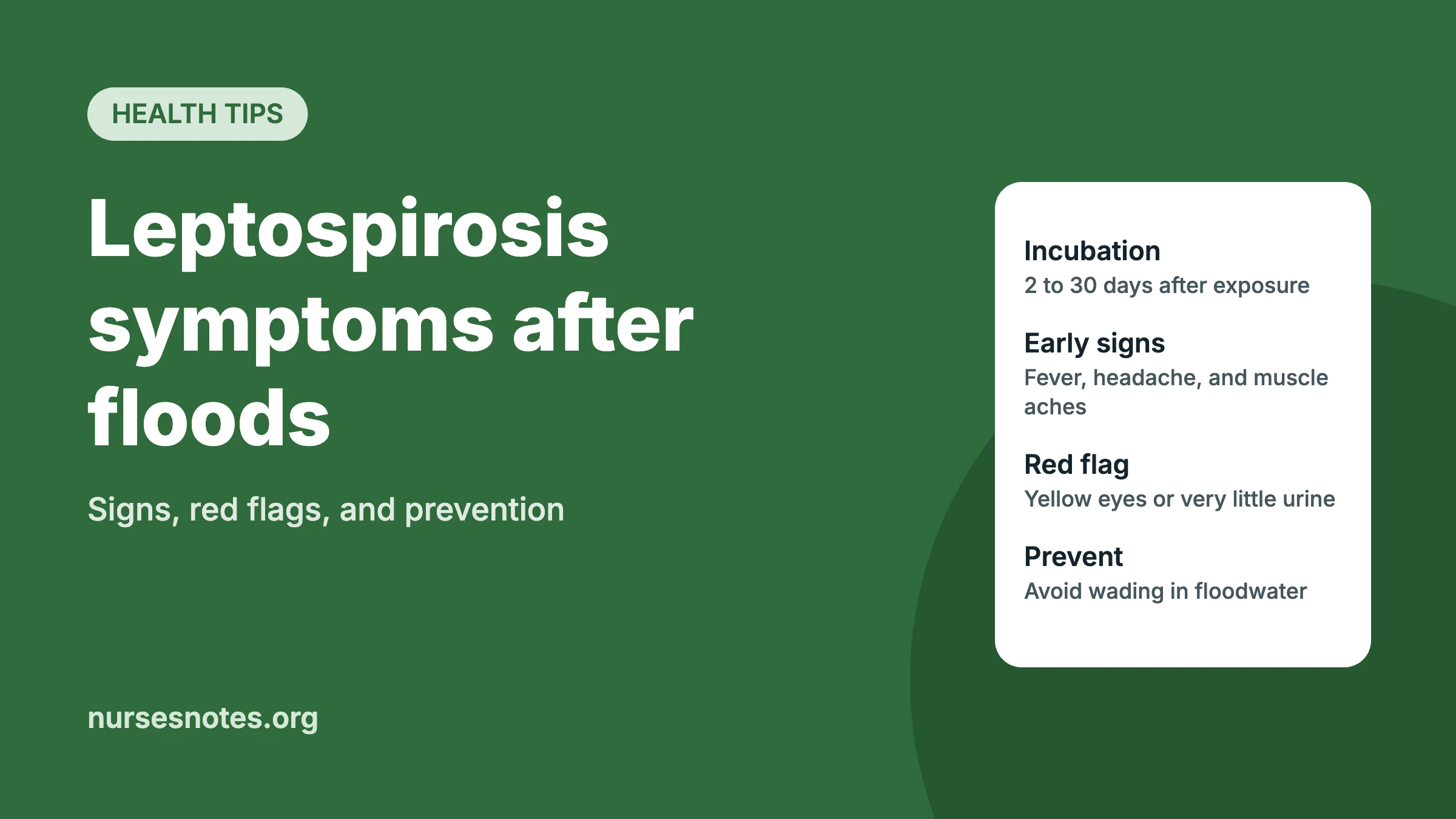
Leptospirosis symptoms usually start like the flu, with fever, headache, muscle aches, and chills, anywhere from 2 to 30 days after contact with water or soil contaminated by animal urine. Because it can progress to kidney, liver, or lung problems, anyone who gets a fever after wading through floodwater should see a doctor early and mention the exposure.
Key points
- Leptospirosis is a bacterial infection spread through the urine of infected animals, especially rats.
- Floodwater, mud, and wet soil are the main risks during the rainy and typhoon season.
- Early antibiotics prescribed by a doctor can prevent severe illness, so do not wait to see if a fever settles.
- Avoid wading in floodwater, cover cuts with waterproof plasters, and wear boots when you cannot avoid it.
What is leptospirosis?
Leptospirosis is an infection caused by Leptospira bacteria. Infected animals, including rats, mice, dogs, pigs, cows, and other livestock, pass the bacteria in their urine. The bacteria can survive in water or soil for weeks to months.
The CDC estimates about 1 million human cases and nearly 60,000 deaths worldwide each year. Outbreaks are common after floods and heavy rain, which is why cases rise in the Philippines and other tropical countries during the wet season.
How do you get leptospirosis?
You can be infected when contaminated water or soil gets into your mouth, your eyes, or a cut or scratch on your skin. Common ways this happens include:
- Wading, swimming, or working in floodwater or muddy water.
- Cleaning up homes, canals, or drains after a flood.
- Drinking water or eating food contaminated with animal urine.
- Touching the urine, blood, or tissue of an infected animal, for example in farming or veterinary work.
Spread from person to person is very rare.
Leptospirosis incubation period
Symptoms generally appear 2 to 30 days after exposure. MedlinePlus gives an average of about 10 days. This long window means a fever two or three weeks after a flood can still be leptospirosis, so always tell your doctor about any floodwater contact.
Signs and symptoms
Some people have no symptoms or only a mild illness. When symptoms do appear, the most common are:
- High fever and chills.
- Headache.
- Muscle aches and body pain.
- Nausea, vomiting, or diarrhea.
- Stomach pain and tiredness.
- Red eyes.
- Yellow skin or eyes (jaundice).
- A rash.
Many of these signs look like dengue, flu, or other fevers, so it is hard to tell them apart at home. Our guide to dengue warning signs explains another common rainy-season fever.
The illness can come back in two phases
The CDC describes leptospirosis as sometimes happening in two phases. After the first flu-like phase, a person may feel better for a while and then become ill again. The second phase can be more severe.
Severe leptospirosis (Weil’s disease)
Weil’s disease is the severe form of leptospirosis. Without prompt treatment, the infection can cause kidney damage, liver failure, meningitis, severe bleeding, trouble breathing, and even death. People who are treated early generally recover well.
How to prevent leptospirosis
- Avoid floodwater. Do not wade, swim, or let children play in floodwater or water that may contain animal urine.
- Protect your skin. If you must go through floodwater, wear waterproof boots and protective clothing.
- Cover wounds. Clean cuts and scratches, and cover them with waterproof plasters or bandages.
- Wash afterwards. Shower and wash your hands with soap and clean water as soon as possible after exposure.
- Drink safe water. Do not drink untreated water from rivers, canals, or floods; boil or treat it first.
- Avoid infected animals. Keep away from rats and other animals that may carry the infection, and wash your hands after handling animals.
- Ask about preventive medicine. After a high-risk exposure, a doctor may prescribe an antibiotic to lower your risk. Take it only if it is prescribed for you.
Treatment
Leptospirosis is treated with antibiotics, such as doxycycline or penicillin, chosen and prescribed by a doctor. Treatment works best when started early, and people with severe illness may need hospital care with IV antibiotics.
Do not buy antibiotics without a prescription or stop a course early. For fever and aches, ask a doctor or pharmacist which pain reliever is safe for you, and drink plenty of fluids. See signs of dehydration in adults to know when fluid loss is becoming a problem.
When to get medical help
See a doctor promptly if you develop fever, headache, muscle aches, red eyes, vomiting, or diarrhea within a month of contact with floodwater, mud, or animals. Go to the nearest emergency department straight away if you notice any of these red flags:
- Yellow skin or yellow eyes.
- Passing very little urine or none at all.
- Swollen ankles, feet, or hands.
- Chest pain, shortness of breath, or trouble breathing.
- Bleeding, such as coughing up blood, or a new rash.
Frequently asked questions
How soon do leptospirosis symptoms appear after wading in floodwater?
Symptoms usually appear between 2 and 30 days after contact with contaminated water or soil, with an average of about 10 days. Because the window is long, a fever up to a month after a flood still counts. Tell your doctor about the floodwater exposure so they can consider leptospirosis and start treatment early.
Is leptospirosis contagious from person to person?
Spread between people is very rare. Leptospirosis is almost always caught from the urine of infected animals, usually through floodwater, wet soil, or contaminated food and water. You do not need to isolate a family member who has it, but everyone exposed to the same floodwater should watch for fever.
Can leptospirosis go away on its own?
Mild cases sometimes improve without treatment, but there is no way to know at home which cases will become severe. Untreated leptospirosis can damage the kidneys and liver, and recovery can take months. Early antibiotics from a doctor shorten the illness and lower the chance of serious complications, so get checked promptly.
Related on Nurses Notes
- Dengue warning signs: when to go to the hospital
- Flu vs cold symptoms: how to tell the difference
- Signs of dehydration in adults
- All Health Tips on Nurses Notes
Sources
- About Leptospirosis. Centers for Disease Control and Prevention (CDC), updated 10 February 2026.
- Leptospirosis (Weil’s disease). NHS, page last reviewed 28 June 2023.
- Leptospirosis. MedlinePlus Medical Encyclopedia, U.S. National Library of Medicine, reviewed 29 August 2024.
This article is for education only and does not replace advice from your own doctor, nurse, or other qualified health professional.