On this page
Pinworms in children are tiny white worms that live in the gut and cause an itchy bottom, especially at night. They are very common, are not dangerous, and are easy to treat with medicine plus a few weeks of careful hygiene for the whole household.
Key points
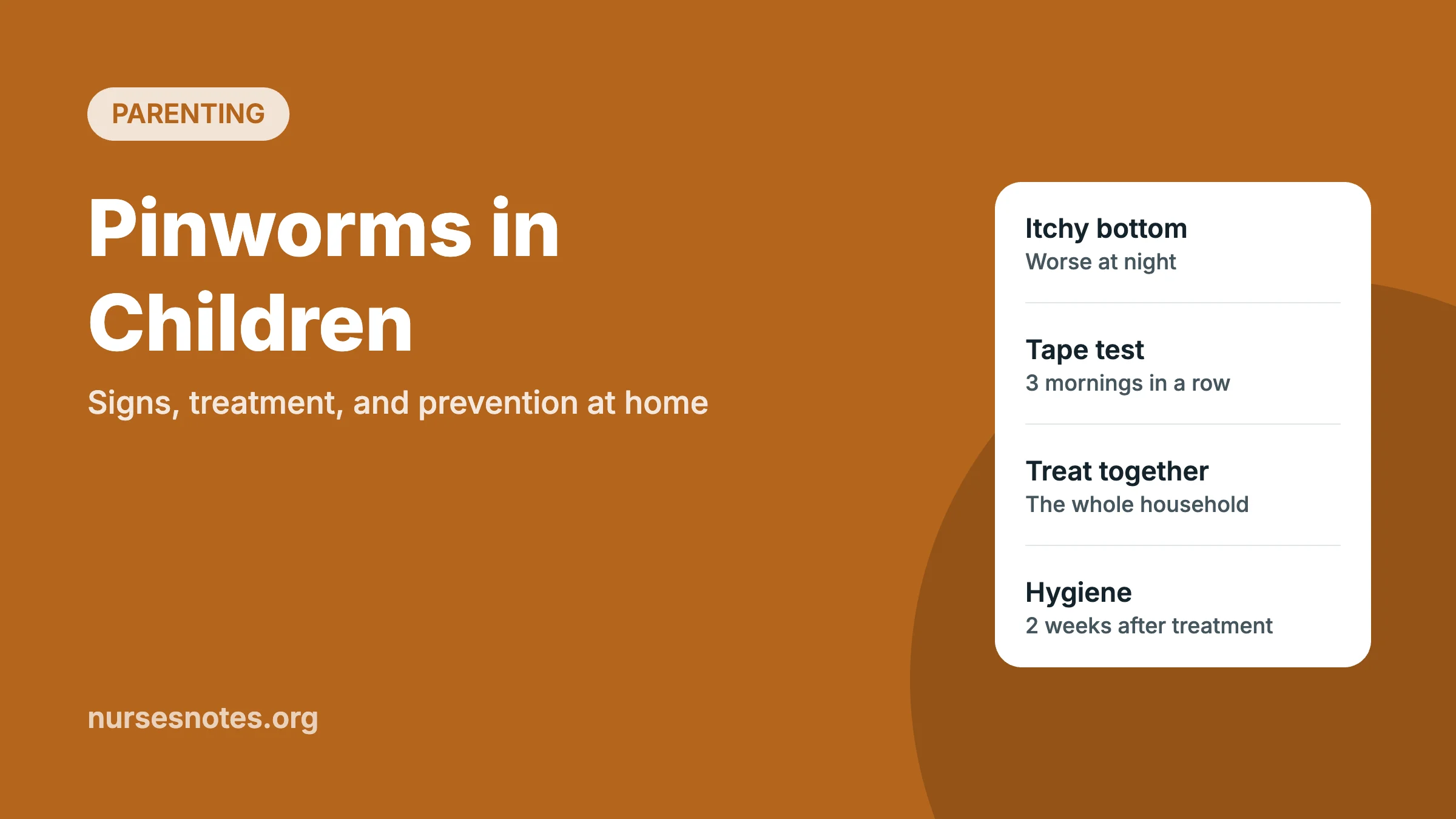
- The main sign is an itchy bottom (or vaginal itching in girls) that is worse at night.
- Pinworms spread when eggs on fingers, bedding, or toys are swallowed, and the eggs can survive on surfaces for 2 to 3 weeks.
- Medicine from a pharmacy or doctor usually works, but everyone in the home may need treatment at the same time.
- Check with a doctor or pharmacist before treating a baby under 2 years old or anyone who is pregnant or breastfeeding.
What are pinworms?
Pinworms, also called threadworms, are small parasitic roundworms about the size of a staple. They look like short pieces of white thread and live in the intestines.
They are one of the most common worm infections in the world. Children aged 5 to 10 are most often affected, and the infection easily passes to brothers, sisters, parents, and carers.
How do children get pinworms?
At night, female worms crawl out of the bottom and lay eggs on the surrounding skin. This causes itching, so the child scratches and the eggs get stuck on the fingers and under the nails.
The eggs then spread to food, toys, bedding, towels, and taps, and are swallowed by the child or by other people. The CDC says eggs can survive for 2 to 3 weeks on surfaces that are not properly cleaned, which is why reinfection is common.
Signs and symptoms of pinworms
- Itching around the bottom, especially at night
- Itching or soreness around the vagina in girls
- Restless sleep, waking at night, or irritability
- Tiny white threads seen in the poo or around the bottom, usually at night
- Less often: tummy ache, bedwetting, or sore, irritated skin from scratching
Many children have no symptoms at all, so a worm may be found by chance.
How to check your child for pinworms
- About 2 to 3 hours after your child falls asleep, gently look at the skin around the bottom with a torch. You may see small white worms moving.
- For the tape test, press clear sticky tape against the skin around the bottom first thing in the morning, before your child washes, uses the toilet, or gets dressed.
- Repeat the tape test for three mornings in a row, put each piece in a sealed bag, and take them to your doctor or clinic.
- Wash your hands well afterwards.
How are pinworms treated?
Pinworms are treated with anti-worm medicines such as mebendazole, albendazole, or pyrantel pamoate, depending on what is available where you live. Some are sold in pharmacies and others need a prescription.
- The dose depends on your child’s age and weight and on the product, so follow the label or ask your doctor or pharmacist.
- Everyone in the household is often treated at the same time, even people without symptoms.
- A second dose is often given about 2 weeks later, because the medicine kills the worms but not the eggs.
- Ask a doctor or pharmacist before treating a child under 2 years old, or anyone who is pregnant or breastfeeding, as some medicines may not be suitable.
Hygiene steps to stop pinworms coming back
Medicine works best with good hygiene. The NHS advises keeping these habits for 2 weeks after treatment, or for 6 weeks if medicine cannot be used.
- Wash hands with soap and warm water, and scrub under the nails, after using the toilet, after changing nappies, and before eating.
- Keep fingernails short, and discourage nail biting and thumb sucking.
- Have your child shower or wash their bottom every morning to remove eggs laid overnight.
- Put clean underwear on every morning, and wear underwear at night.
- Wash pyjamas, sheets, towels, and soft toys in hot water, and do not shake them first.
- Vacuum and wipe surfaces, toilet seats, and taps with a damp cloth, and do not share towels.
Children do not need to stay home from school or daycare because of pinworms. For another common, itchy problem that spreads in schools, see how to get rid of head lice.
When to get medical help
Pinworms are usually mild, but see a doctor if:
- Your child is under 2 years old
- The itching is severe, or your child is losing sleep night after night
- The skin around the bottom or vagina looks red, swollen, or infected
- Your child has pain when passing urine, tummy pain, or weight loss
- The worms keep coming back after treatment
Frequently asked questions
Are pinworms dangerous for children?
Pinworms are usually harmless and do not cause serious illness. The main problems are itching and poor sleep. Rarely, scratching can lead to a skin infection, and in girls the worms can cause vaginal irritation or urinary infection. See a doctor if the skin looks infected or your child seems unwell.
Can pinworms go away on their own?
Pinworms often keep coming back without treatment, because children easily swallow new eggs from their fingers, bedding, or toys and become reinfected. That is why medicine plus strict hygiene is usually advised. If medicine cannot be used, the NHS recommends continuing hygiene measures for 6 weeks to break the cycle of infection completely.
Should the whole family be treated for pinworms?
Often, yes. The CDC advises treating household members and caregivers at the same time, and the NHS suggests treating everyone aged 2 and over, even without symptoms. Ask your doctor or pharmacist which medicine suits each person, especially babies under 2 and anyone pregnant or breastfeeding.
Related on Nurses Notes
- How to get rid of head lice in children
- Constipation in children: causes and home care
- Diarrhoea in children: fluids, care, and warning signs
- More parenting guides
Sources
- Threadworms. NHS (page last reviewed 1 December 2023).
- About Pinworm Infection. Centers for Disease Control and Prevention (2024).
- Diagnosing Pinworms. Centers for Disease Control and Prevention (2024).
- Pinworm infection – Symptoms and causes. Mayo Clinic (2025).
- Pinworm infection – Diagnosis and treatment. Mayo Clinic (2025).
This article is for education only and does not replace advice from your own doctor, nurse, or other qualified health professional.