On this page
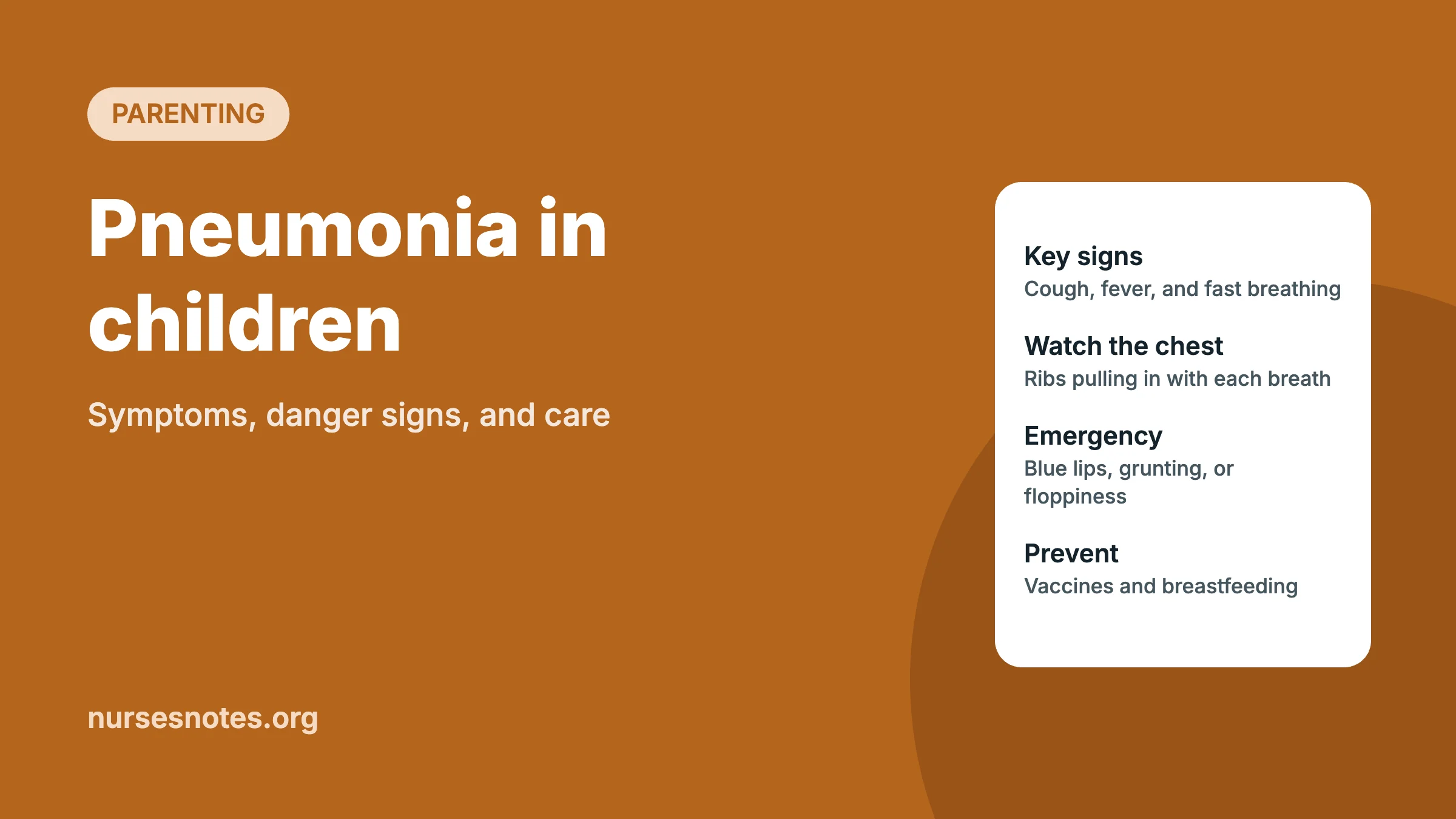
Pneumonia in children symptoms usually include cough, fever, and fast or difficult breathing, and a young child may also have the lower chest pulling in with each breath. A child with pneumonia needs to be seen by a doctor, and a child who is struggling to breathe, has blue lips, or is hard to wake needs emergency care straight away.
Key points
- Pneumonia is an infection of the lungs caused by viruses, bacteria, or, rarely, fungi.
- Fast breathing and chest indrawing are key warning signs in children under 5.
- Blue or gray lips, grunting, floppiness, or being unable to drink are emergencies.
- Vaccines, breastfeeding, handwashing, and smoke-free air all help prevent pneumonia.
What is pneumonia?
Pneumonia is an infection that inflames the lungs. The tiny air sacs (alveoli) fill with pus and fluid, which makes breathing painful and lowers the oxygen the body can take in.
It is one of the most serious childhood illnesses worldwide. UNICEF reports that pneumonia claims more than 725,000 children under 5 every year, including around 190,000 newborns. Most of these deaths are preventable with vaccines and early treatment.
What causes pneumonia in children?
- Viruses, such as respiratory syncytial virus (RSV), flu, and COVID-19. RSV is the most common viral cause in children. Many cases follow a cold.
- Bacteria, such as Streptococcus pneumoniae (pneumococcus), the most common bacterial cause, and Haemophilus influenzae type b (Hib).
- Fungi, which are rare and mostly affect children with weak immune systems.
Newborns, babies born early, and children who are undernourished or have weakened immunity are at higher risk.
Signs and symptoms of pneumonia in children
- Cough, which may be dry or bring up mucus.
- Fever, with sweating, chills, or flushed skin.
- Fast breathing or breathing that looks like hard work.
- The skin between or below the ribs sucking in with each breath (chest indrawing).
- Flaring of the nostrils, or grunting noises in babies.
- Wheezing, which is more common with viral pneumonia.
- Chest pain, especially when coughing or breathing in.
- Eating or feeding less, low energy, and in babies, paleness, limpness, or more crying than usual.
How to check your child’s breathing
When your child is calm or asleep, lift their top and watch the chest and tummy rise. Count the breaths for one full minute and look for the ribs pulling in. Normal breathing rates depend on age, but as UNICEF explains, a 5-month-old taking 50 breaths a minute is breathing too fast. Tell the doctor the number you counted.
Danger signs: go to emergency care now
Call your local emergency number or go to the nearest emergency department straight away if your child:
- Is struggling to breathe, or breathing is very fast or noisy.
- Has blue, gray, pale, or blotchy skin, lips, tongue, or nail beds.
- Is unable to drink or breastfeed.
- Has a seizure (convulsion).
- Is floppy, very sleepy, or hard to wake.
- Is a baby who feels cold to the touch or makes grunting sounds with each breath.
How pneumonia is treated
A doctor usually diagnoses pneumonia by examining the child and listening to the chest. Sometimes a chest X-ray, blood tests, or a pulse oximeter to check oxygen levels is needed.
- Bacterial pneumonia is treated with antibiotics prescribed by the doctor. Give every dose and finish the full course, even if your child seems better.
- Viral pneumonia does not respond to antibiotics. It usually improves after a few days with rest and fever control, although the cough can last several weeks.
- Severe pneumonia may need hospital care, including oxygen.
Caring for your child at home
- Let your child rest, and offer fluids often. Breastfeed more often if your baby is breastfed.
- For fever or pain, use only medicines your doctor or pharmacist recommends. Children’s doses depend on the child’s weight and the product, so follow the label or ask the doctor or pharmacist. See our guide on how to bring down a child’s fever.
- Do not give cough medicines, especially those containing codeine or dextromethorphan, unless a doctor tells you to.
- Keep your home smoke-free, and wash hands often to protect other family members.
- Go back to the doctor if the fever lasts more than a few days on antibiotics, goes away and comes back, or your child becomes more tired or has more trouble breathing.
How to prevent pneumonia in children
- Vaccines: keep up to date with pneumococcal (PCV), Hib, measles, and whooping cough (pertussis) vaccines on your national schedule. WHO calls immunization the most effective way to prevent pneumonia.
- Breastfeeding: exclusive breastfeeding for the first 6 months helps protect babies.
- Handwashing: wash hands with soap, especially before feeding and after coughing or wiping noses.
- Clean air: avoid smoking near children and cook with cleaner stoves or in well-ventilated areas.
- Good nutrition and less crowding at home also lower the risk.
Frequently asked questions
How can I tell if my child’s cough is pneumonia?
A simple cold usually causes a runny nose and cough, while pneumonia often adds fever with fast or difficult breathing. Watch for the lower chest sucking in, nostril flaring, grunting, or unusual tiredness. Only a doctor can confirm pneumonia, so have your child checked if a cough comes with any breathing changes.
Is pneumonia in children contagious?
The germs that cause pneumonia, such as viruses and some bacteria, can spread through coughs, sneezes, and unwashed hands. Pneumonia itself does not always follow. Keep a sick child home from school or daycare, teach them to cough into a tissue or elbow, and wash hands often to protect brothers, sisters, and other children.
How long does pneumonia last in children?
Many children start to feel better within a few days of treatment, but tiredness can linger and the cough may last several weeks. Recovery is slower in babies and in severe cases. Return to the doctor if your child is not improving, the fever comes back, or breathing becomes harder at any point.
Related on Nurses Notes
- RSV in babies: symptoms and when to worry
- How to bring down a child’s fever safely
- Croup in children: barking cough and breathing signs
- All Parenting articles on Nurses Notes
- Measles symptoms in children: rash, timeline, and vaccine
Sources
- Pneumonia in children. World Health Organization fact sheet, 11 November 2022.
- Pneumonia in Children: Causes, Symptoms, Treatment & Prevention. American Academy of Pediatrics, HealthyChildren.org, updated 20 November 2024.
- Pneumonia. NHS, page last reviewed 17 July 2026.
- Pneumonia in children: What you need to know. UNICEF, 11 November 2025.
This article is for education only and does not replace advice from your own doctor, nurse, or other qualified health professional.