
On this page
Croup in children is a viral infection of the voice box and windpipe that causes a barking, seal-like cough, a hoarse voice, and sometimes a harsh, high-pitched sound when breathing in. Most cases are mild and get better on their own within about two days, but you should know the warning signs that mean your child needs emergency care.
Key points
- Croup mostly affects babies and young children, especially those under 3, and is usually caused by viruses.
- Symptoms are often worse at night and are usually worst on the first night or two.
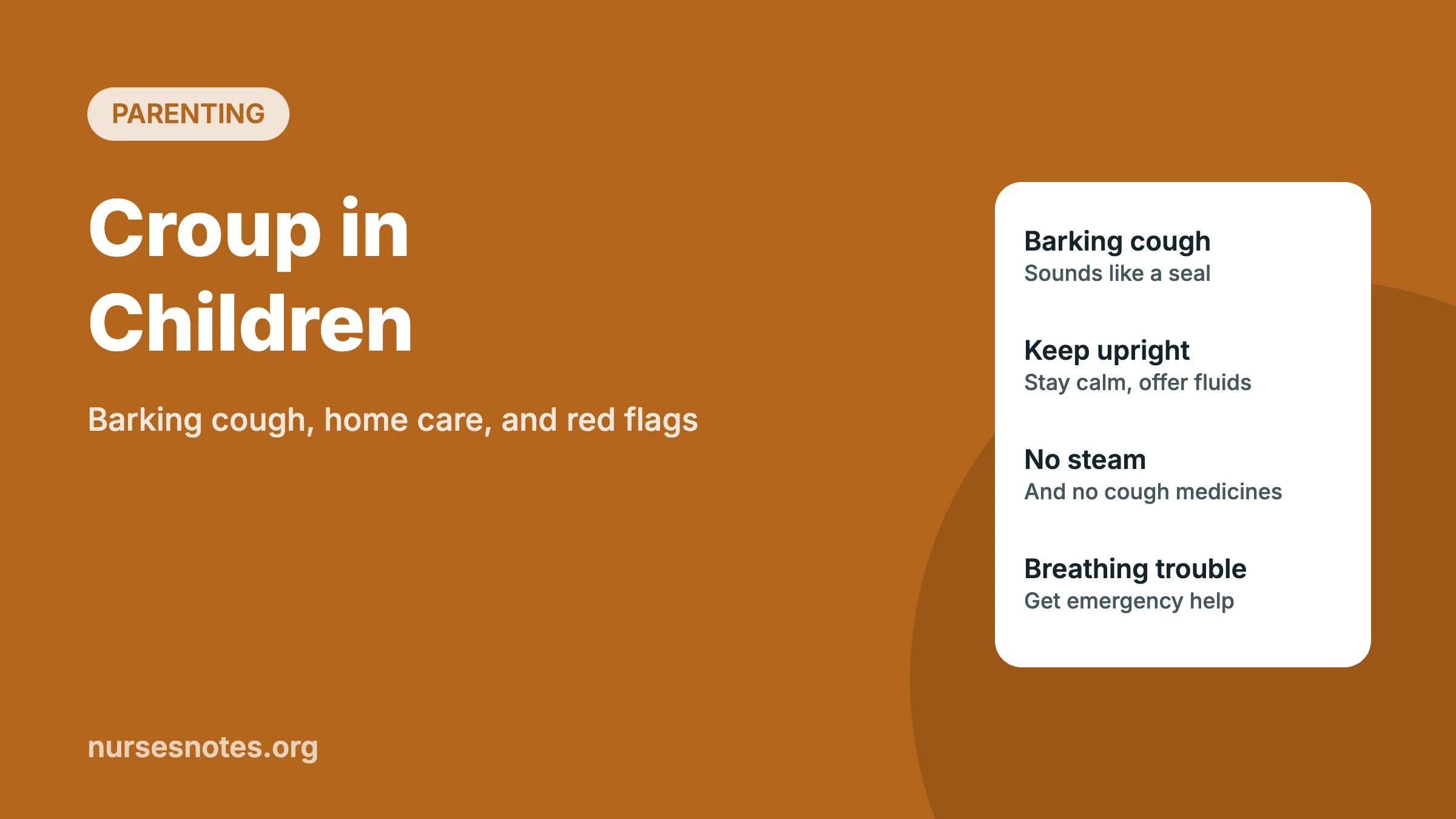
- Keep your child calm and upright, offer fluids, and do not use steam or cough medicines.
- Struggling to breathe, blue or grey lips, drooling, or unusual sleepiness need emergency help.
What is croup?
Croup is swelling of the upper airway, mainly the larynx (voice box) and trachea (windpipe). The swelling narrows the airway, which causes the typical cough and noisy breathing.
MedlinePlus explains that croup mainly affects children aged 3 months to 5 years. It is most often caused by viruses such as parainfluenza, influenza, and RSV, and it can happen at any time of year.
Croup symptoms in children
Croup usually starts like a cold, with a runny nose and a mild fever, before the cough changes. Look for:
- A barking cough that sounds like a seal
- A hoarse or croaky voice
- Stridor: a harsh, high-pitched or rasping sound when breathing in
- Difficulty breathing, which is often worse at night
- Fever, aches, and a runny nose
Symptoms usually last up to 3 nights and occasionally up to 7. Crying and being upset can make the noisy breathing worse, which is why comfort matters so much.
How to care for a child with croup at home
If a doctor has checked your child and says the croup is mild, these steps help:
- Stay calm and comfort your child. Hold and reassure them; distress makes breathing harder.
- Keep them upright. Sit your child up on your lap or propped up rather than lying flat.
- Offer plenty of fluids, such as water or usual breast or formula feeds.
- Check on them regularly, including during the night, because symptoms often worsen after dark.
- Ease fever or discomfort if needed with paracetamol or ibuprofen made for children. The dose depends on your child’s weight and the product, so follow the label exactly or ask your doctor or pharmacist. Ibuprofen is not for babies younger than 6 months unless a doctor advises it.
- Let everyone rest. Nights can be disrupted, so share the load if you can.
What not to do
- Do not put your child in a steamy bathroom or make them breathe in steam; the NHS and HSE both advise against it.
- Do not give cough or cold medicines; MedlinePlus notes they do not help and may be harmful.
- Do not give any medicine that a doctor, nurse, or pharmacist has not advised.
If your child also has a high temperature, see our guide on how to bring down a child’s fever for safe comfort measures.
How doctors treat croup
A doctor may prescribe a medicine, usually a steroid, to reduce airway swelling and shorten the illness. Children with severe croup may need hospital care, which can include nebulised medicine, oxygen, or fluids through a drip.
Babies younger than 3 months with croup may be referred to hospital. Contact your doctor if you think your child has croup, because symptoms can get worse quickly.
When to get medical help
Contact your doctor if:
- You think your child has croup
- Your child is getting worse, or is not improving after seeing a doctor
- Croup lasts more than a week or keeps coming back
Call your local emergency number or go to the nearest emergency department now if your child:
- Is struggling to breathe, for example the skin between the ribs or at the neck sucks in with each breath, or they are grunting
- Has stridor that is getting worse or can be heard even when resting
- Has blue, grey, pale, or blotchy skin, lips, or tongue
- Is drooling, has trouble swallowing, or wants to sit up rather than lie down
- Is unusually quiet, still, floppy, or hard to wake
- Is very upset or restless and cannot be calmed
- May have breathed in an object or been stung by an insect
If possible, have someone else drive, or call an ambulance, so you can watch your child on the way.
Can croup be prevented?
- Wash hands often and keep children away from people with coughs and colds where possible.
- Keep your child’s vaccines up to date. MedlinePlus notes that immunisations against diphtheria, influenza, and measles protect against some of the most dangerous forms of croup.
Frequently asked questions
How long does croup last in children?
Most croup gets better within about two days, and the first night or two are usually the worst. Some children have symptoms for up to a week. If croup lasts longer than a week, keeps coming back, or your child seems to be getting worse instead of better, contact your doctor for a review.
What causes croup?
Croup is usually caused by a viral infection, most often parainfluenza, influenza, or RSV, which inflames the voice box and windpipe. Less often, a bacterial infection causes a more serious illness. Because these germs spread from person to person, frequent handwashing and avoiding close contact with people who have respiratory infections help protect your child.
Why is croup worse at night?
Croup symptoms are often worse at night, and the first night or two are usually the hardest. Lying flat and crying can make breathing feel more difficult, so sit your child upright and keep them calm. Check on them regularly overnight, and call for emergency help straight away if they struggle to breathe.
Related on Nurses Notes
- How to bring down a child’s fever safely
- Febrile seizure: what to do if your child has a fever fit
- Hand, foot, and mouth disease in children: signs and care
- More parenting and child health guides
- RSV in babies: symptoms, warning signs, and care
Sources
- Croup – NHS, reviewed 2023
- Croup – MedlinePlus Medical Encyclopedia, U.S. National Library of Medicine, reviewed 2026
- Croup in babies and children: signs, symptoms, causes and treatments – Health Service Executive (HSE) Ireland, reviewed 2022
This article is for education only and does not replace advice from your own doctor, nurse, or other qualified health professional.