On this page
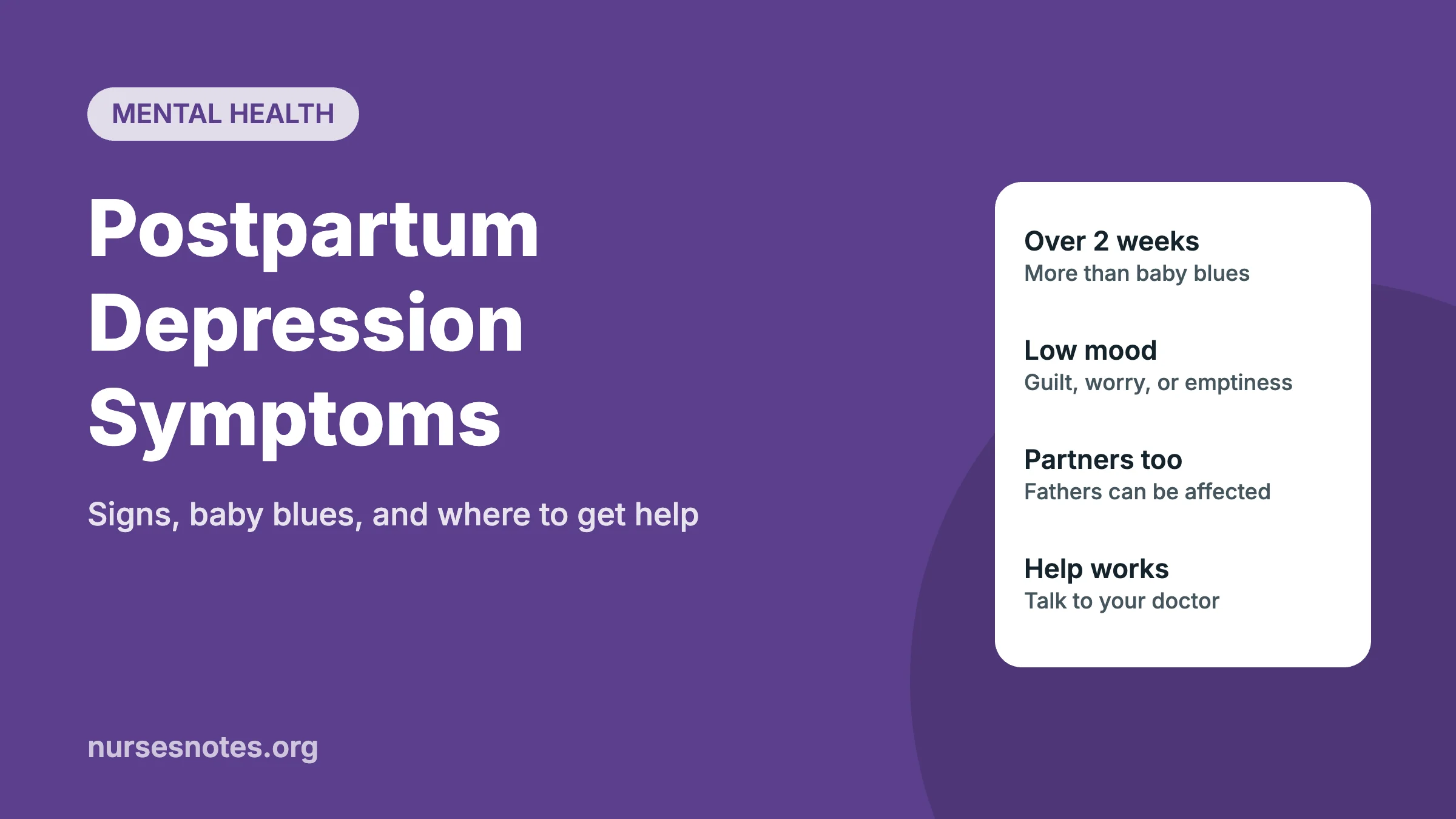
Postpartum depression symptoms include persistent sadness, anxiety, or emptiness, losing interest in things, feeling hopeless or guilty, sleep and appetite changes, and trouble bonding with your baby, lasting longer than two weeks after birth. It is common, it is not your fault, and with the right support and treatment most parents get better.
Key points
- The baby blues are mild mood changes that usually pass within about two weeks of birth; postpartum depression is stronger or lasts longer.
- Symptoms can start during pregnancy or at any time in the first year after birth.
- Partners and fathers can also develop depression after a baby arrives.
- Talking therapies, medicine, or both work well, and many antidepressants can be used while breastfeeding.
Baby blues or postpartum depression?
Many new mothers feel tearful, anxious, or irritable in the first days after birth. These baby blues are very common and usually ease within about two weeks.
| Baby blues | Postpartum depression | |
|---|---|---|
| When it starts | In the first few days after birth | During pregnancy or any time in the first year, most often within 4 to 8 weeks after birth |
| How long it lasts | Usually passes within about 2 weeks | Lasts longer than 2 weeks and does not usually improve without support |
| How strong it feels | Mild ups and downs | Harder to cope with daily life and caring for the baby |
| What helps | Rest, practical help, and reassurance | Professional assessment, talking therapy, medicine, or a combination |
Postpartum depression symptoms
Symptoms vary from person to person. The NIMH and NHS list signs such as:
- Feeling sad, anxious, or empty most of the day, for at least two weeks
- Feeling hopeless, irritable, or restless
- Feeling guilty, worthless, or unable to cope
- Losing interest or pleasure in things you used to enjoy
- Feeling very tired, having sleep problems, or noticing changes in appetite
- Trouble concentrating or making decisions
- Aches, pains, or stomach problems with no clear cause
- Finding it hard to bond with your baby, or doubting you can care for them
- Thoughts of harming yourself or your baby, or thoughts of death
If you have thoughts of harming yourself or your baby, you are not a bad parent, and help works. Please contact a doctor or a crisis line today; the numbers are in the box below.
Who can get postpartum depression?
NIMH stresses that perinatal depression can affect any mother, whatever her age, income, education, or background, and that it is not caused by anything she did or did not do. The risk is higher if you have had depression or bipolar disorder before, if it runs in your family, or if you had depression in a previous pregnancy.
Stress, the physical demands of birth and newborn care, and hormone changes may all play a part. The NHS also notes that fathers and partners can become depressed after a baby arrives, so check on each other.
How postpartum depression is treated
- Talking therapies, such as cognitive behavioural therapy (CBT) and interpersonal therapy (IPT), help you manage thoughts, feelings, and relationships.
- Antidepressants can help and may take several weeks to work. Many are safe while breastfeeding, so tell your doctor if you breastfeed.
- Newer medicines approved specifically for postpartum depression are available in some countries; your doctor can tell you what is suitable.
- Support groups for parents connect you with others who understand.
The NHS says postnatal depression usually improves within 3 to 6 months, and treatment makes recovery more likely.
Self-care steps that help
- Tell someone. Talk to your partner, a friend, your midwife, or your doctor about how you really feel.
- Accept practical help with meals, shopping, housework, and baby care.
- Rest when you can. Sleep whenever the chance comes; our sleep hygiene tips may help.
- Move a little each day, even a short walk outdoors with the baby.
- Do one small thing you enjoy each day.
- Avoid alcohol and drugs as a way of coping.
If you are supporting a new parent, our guide on how to help someone with depression has practical ideas.
When to get medical help
Speak to your doctor, midwife, or health centre if low mood or anxiety lasts more than two weeks, or if you are finding it hard to cope, even if you only have some of the signs. Ask for help sooner if symptoms are getting worse.
Call your local emergency number straight away if a mother becomes confused, sees or hears things others cannot, has unusual beliefs, or seems extremely high or agitated soon after birth. These can be signs of postpartum psychosis, a rare but serious emergency that responds to urgent treatment. Get the same urgent help for anyone at immediate risk of harming themselves or their baby.
Where to get help
If you are struggling, feel unable to keep yourself or your baby safe, or are worried about someone else, please reach out now. You do not have to cope alone.
- Philippines: NCMH Crisis Hotline – call 1553 (nationwide landline, toll-free); Globe/TM 0966-351-4518 or 0917-899-8727; Smart/Sun/TNT 0908-639-2672
- USA: 988 Suicide & Crisis Lifeline – call or text 988, or chat at chat.988lifeline.org (free, 24/7). National Maternal Mental Health Hotline – call or text 1-833-852-6262
- UK: Samaritans – call 116 123 (free, 24 hours a day)
- Anywhere: if someone is in immediate danger, call your local emergency number or go to the nearest emergency department
Frequently asked questions
How long does postpartum depression last?
It varies. The NHS says postnatal depression usually improves within 3 to 6 months, although it can last longer, especially without treatment. Getting help early with talking therapy, medicine, or both makes recovery more likely. Keep in touch with your doctor and tell them if you feel worse or are not improving.
Can postpartum depression start months after birth?
Yes. Most cases begin within 4 to 8 weeks after delivery, but the NHS notes that symptoms can start during pregnancy or at any point in the first year after birth. If your mood changes months later, it is still worth speaking to your doctor or health centre.
Can fathers get postpartum depression?
Yes. The NHS explains that fathers and partners can also develop depression after having a baby. The signs can be similar to those listed above, such as low mood and losing interest in things. Partners should look after their own mental health too and seek help from a doctor or support service if symptoms last.
Related on Nurses Notes
- Signs of depression: symptoms to know and when to get help
- How to help someone with depression: a practical guide
- Postpartum psychosis study: mothers sought help 7 times
- More mental health articles
Sources
- Perinatal Depression – National Institute of Mental Health (NIMH), 2023
- Postnatal depression – NHS, reviewed 2026
- World Suicide Prevention Day – Department of Health Philippines, Cordillera (NCMH Crisis Hotline numbers)
- Get Help – 988 Suicide & Crisis Lifeline
- Contact Us – Samaritans
This article is for education only and does not replace advice from your own doctor, nurse, or other qualified health professional.