On this page
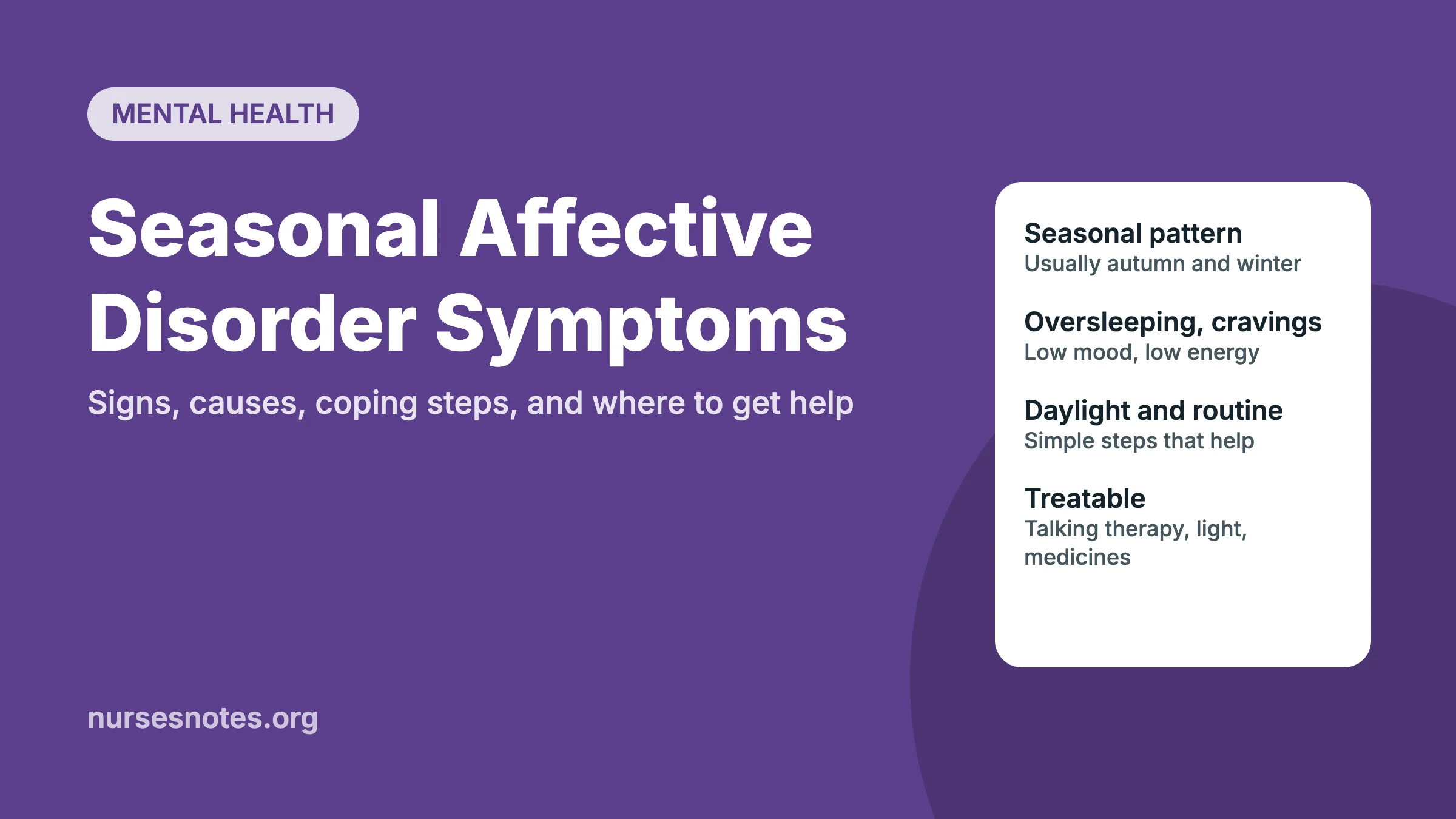
Seasonal affective disorder symptoms include low mood, loss of interest, tiredness, oversleeping, and craving carbohydrates that come back at the same time each year, usually in autumn and winter. Seasonal affective disorder (SAD) is a type of depression, not a weakness, and it responds well to treatment.
Key points
- SAD is depression that follows a seasonal pattern, most often starting as days get shorter and easing in spring.
- It is more than the “winter blues”: symptoms last for weeks and affect work, sleep, and relationships.
- Living far from the equator raises the risk, which matters for nurses and caregivers who move abroad.
- Daylight, routine, exercise, talking therapy, light therapy, and antidepressants can all help.
What is seasonal affective disorder?
Seasonal affective disorder is a type of depression that comes and goes with the seasons. The US National Institute of Mental Health describes it as more than the winter blues, because it can interfere with daily life.
Most people with SAD have a winter pattern. A less common summer pattern also exists, with symptoms starting in late spring or summer.
Seasonal affective disorder symptoms
SAD shares the core symptoms of depression:
- Persistent low mood most of the day
- Losing interest or pleasure in things you usually enjoy
- Feeling hopeless, guilty, or worthless
- Low energy and trouble concentrating
- Irritability or restlessness
- Changes in sleep and appetite
| Winter pattern (more common) | Summer pattern (less common) |
|---|---|
| Oversleeping and feeling tired all day | Trouble sleeping (insomnia) |
| Craving carbohydrates and sugary foods | Poor appetite |
| Weight gain | Weight loss |
| Withdrawing from friends and family (“hibernating”) | Agitation, anxiety, or irritability |
Low days happen to everyone. The difference with SAD is that symptoms last for weeks, return around the same time each year, and make it harder to cope at home or work. Doctors may diagnose SAD when depression symptoms appear at the same time of year for at least 2 years.
What causes seasonal depression?
The exact cause is not known. Experts think reduced daylight in autumn and winter may upset the body clock (circadian rhythm) and affect two brain chemicals: serotonin, which helps regulate mood, and melatonin, which affects sleep.
Who is more at risk?
- People living far north or south of the equator, where winter days are short
- Women and younger adults, who are diagnosed more often
- People with a family history of SAD or other depression
- People who already live with depression or bipolar disorder
This is especially relevant for Filipino and other nurses and caregivers who move from the tropics to countries like the UK, Ireland, Canada, or the northern United States. A first dark winter far from family, combined with the pressures of shift work and burnout, can hit harder than expected.
How to cope with SAD: practical steps
- Get daylight every day. Go outside in the morning or at lunch, even when it is cloudy. Sit near a window at home and work.
- Keep a regular sleep schedule. Go to bed and get up at the same times, and put screens away before bed. Our sleep hygiene tips can help, including after night shifts.
- Move your body. Regular exercise, especially outdoors, can lift mood.
- Stay connected. Plan calls with family back home and time with friends, even when you feel like withdrawing.
- Keep doing things you enjoy. Small, planned activities help break the cycle of low mood.
- Eat well and go easy on alcohol. Limit sugary foods and avoid using alcohol to cope.
Treatment for seasonal affective disorder
If self-care is not enough, a doctor can help. Treatment options include:
- Talking therapy, such as cognitive behavioural therapy (CBT)
- Antidepressant medicines, prescribed and monitored by a doctor
- Light therapy with a special light box. The NHS advises speaking to a doctor first, because it may not suit people with certain eye conditions or medicines.
- Vitamin D, which NIMH lists among treatments; ask your doctor whether it is right for you
Many people need treatment each winter. Starting early, before your usual symptoms begin, can help keep them from building.
When to get medical help
See a doctor or mental health professional if:
- Low mood or loss of interest lasts more than two weeks
- Your sleep or appetite has changed a lot
- You are relying on alcohol to get through the day
- You are struggling to work, study, or look after yourself or others
- You have been diagnosed with SAD and treatment is not helping
Get help right away if you feel hopeless or have thoughts of harming yourself or ending your life. These feelings can be treated, and support is available now.
Where to get help
If you are in crisis or worried about someone, reach out now. You do not have to face this alone.
- Philippines: NCMH Crisis Hotline 1553 (nationwide landline, toll-free), Globe/TM 0966-351-4518 or 0917-899-8727, Smart/Sun/TNT 0908-639-2672
- USA: call or text 988, or chat at 988lifeline.org (988 Suicide & Crisis Lifeline, free and available 24/7)
- UK and Ireland: Samaritans, call 116 123 (free, any time, day or night)
- Anywhere: if someone is in immediate danger, call your local emergency number
Frequently asked questions
Is seasonal affective disorder a real condition?
Yes. Seasonal affective disorder is a recognised type of depression with a seasonal pattern. Health bodies such as NIMH, the NHS, and Mayo Clinic describe it as more than the winter blues because it can affect sleep, appetite, energy, work, and relationships. Doctors usually look for symptoms returning at the same time of year for at least two years.
Can you get seasonal affective disorder in the Philippines?
SAD is linked to short winter days, so it is more common far from the equator. The Philippines lies close to the equator, with fairly steady day length all year, which makes classic winter SAD less likely there. Filipinos who move to countries with long, dark winters, however, may notice symptoms for the first time after relocating.
Does light therapy work for SAD?
Light therapy using a bright light box is one of the recognised treatments for SAD, along with talking therapy and antidepressants. The NHS suggests choosing a UV-free device of about 10,000 lux if buying one. Speak to a doctor before trying it, because light therapy may not be suitable for people with certain eye conditions or who take certain medicines.
Related on Nurses Notes
- Signs of depression: symptoms to know and when to get help
- Sleep hygiene tips for better rest
- Signs of nurse burnout and how to recover
- All Mental Health articles on Nurses Notes
Sources
- Seasonal Affective Disorder (SAD): More Than the Winter Blues. National Institute of Mental Health. Accessed October 2026.
- Seasonal affective disorder (SAD). NHS. Reviewed 17 December 2025.
- Seasonal affective disorder (SAD): Symptoms and causes. Mayo Clinic. 14 December 2021.
- Get Help. 988 Suicide & Crisis Lifeline. Accessed 31 October 2026.
- Contact Us. Samaritans. Accessed 31 October 2026.
- World Suicide Prevention Day. Department of Health – Cordillera Center for Health Development, Philippines. Accessed 31 October 2026.
This article is for education only and does not replace advice from your own doctor, nurse, or other qualified health professional.