On this page
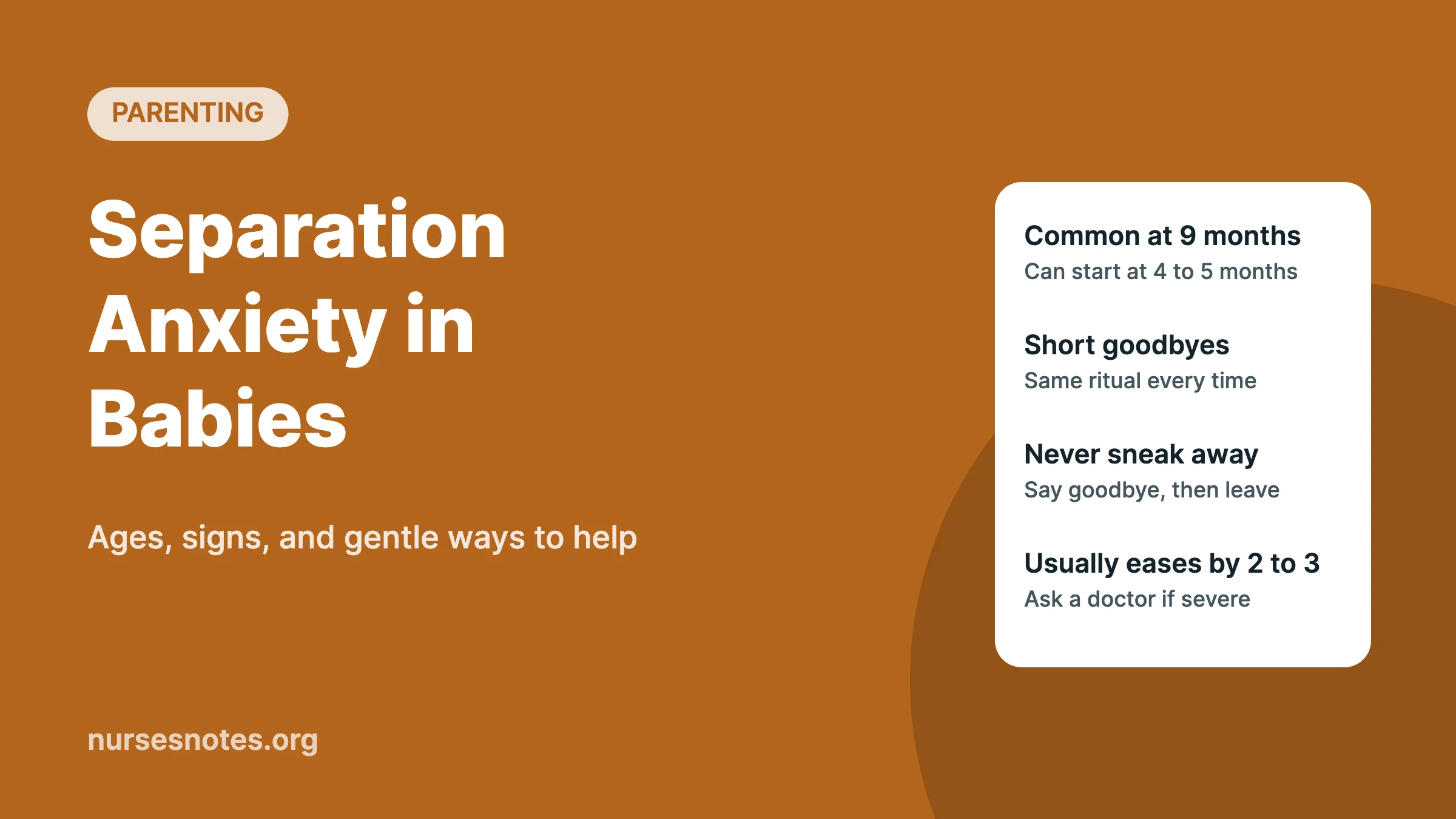
Separation anxiety in babies is the crying, clinging, and distress a baby shows when a parent or main carer leaves, and it is a normal stage of development. It often becomes noticeable around 8 to 9 months and usually eases by the toddler and preschool years, especially when goodbyes are short, calm, and predictable.
Key points
- Separation anxiety is normal and is usually a sign of a strong bond with you.
- It can start as early as 4 to 5 months, is common from about 9 months, and may also appear for the first time at 15 to 18 months.
- Short, loving, consistent goodbyes work better than sneaking away or lingering.
- Talk to your doctor or health worker if the distress is severe, lasts a long time after you leave, or continues for more than a few weeks.
What is separation anxiety in babies?
As babies grow, they learn that people and things still exist when they cannot see them, a skill called object permanence. Once your baby understands that you have gone, but not yet that you will come back, being apart can feel frightening.
The NHS describes separation anxiety as a sign that your baby now realises they are a separate person from you and depends on a small group of trusted carers. It is not a sign that you have done anything wrong.
When does separation anxiety start and end?
Sources describe slightly different ages, because every child is different:
| Age | What you may notice |
|---|---|
| 4 to 5 months | A few babies start showing separation anxiety this early (AAP). |
| About 8 to 14 months | Many babies become wary of new people and places; the AAP says most develop stronger separation anxiety at around 9 months. |
| 15 to 18 months | Some toddlers who were relaxed as babies start struggling with goodbyes now (AAP). |
| Around 2 years | MedlinePlus says it usually ends at about this age, as toddlers learn you will return. |
| Up to 3 years and beyond | The NHS says it is common between 6 months and 3 years and can return at times of stress. |
Separations are usually harder when a child is hungry, tired, or unwell. The AAP notes that daily separation anxiety rarely continues after the preschool years.
Signs of separation anxiety
- Crying, screaming, or clinging when you leave, even for a short time
- Wanting to be held or to follow you from room to room
- Becoming upset around unfamiliar people (stranger anxiety)
- Not wanting to go to sleep without you nearby
- Settling within a few minutes after you have gone, which is very common
How to help a baby with separation anxiety
- Play peek-a-boo. Games where you disappear and come back teach your baby that you always return. Talk to your baby when you are out of sight so they can hear your voice.
- Practise short separations. Leave your baby with a familiar person for a few minutes, then gradually try longer times and new places.
- Create a quick goodbye ritual. A hug, a kiss, and a wave, done the same way each time, helps your baby know what comes next. Lingering makes it harder.
- Do not sneak away. Always say goodbye, even if your baby cries. Slipping out can make your baby more anxious next time.
- Stay calm and positive. Babies pick up on your feelings, so smile and leave confidently even if you feel sad.
- Leave a comfort item. A favourite toy or something that smells of you can help your baby settle.
- Keep your promise. Come back when you said you would, and explain timing in ways your child understands, such as “after your nap.”
Tips for daycare, lola, or a new carer
- Arrange a few short visits with the new carer before the first full day, and practise your goodbye there.
- Keep drop-off at the same time with the same routine each day.
- Try to leave your baby with someone they know well, such as a grandparent or regular helper.
- Once you have said goodbye, leave; do not return to the room because your baby is crying.
If bedtime is a struggle, keep the routine calm and consistent, and always follow our safe sleep guidance for babies.
When to get medical help
Talk to your baby’s doctor, nurse, or health worker if:
- The distress is severe or your child stays upset for a long time after you leave
- It has been going on for more than a few weeks
- It stops your child from playing, socialising, or settling at nursery or daycare
- Severe separation anxiety continues after about age 2, or starts suddenly in an older child or teenager
Not all crying is separation anxiety. See a doctor promptly if your baby cries inconsolably even in your arms, or seems unwell, for example with fever, poor feeding, or unusual sleepiness. Go to emergency care if your baby has difficulty breathing, is floppy or hard to wake, or has a seizure.
Frequently asked questions
At what age is separation anxiety worst in babies?
Many babies show the strongest separation anxiety at around 9 months, according to the AAP, although some start at 4 to 5 months and others not until 15 to 18 months. MedlinePlus says it usually ends around age 2, while the NHS notes it is common up to 3 years and can come back during stressful times.
Should I sneak out to avoid tears?
No. Sneaking away can make your baby feel less secure and more clingy next time. A short, warm goodbye ritual, done the same way every time, helps your baby learn that you leave and then come back. Many children stop crying within minutes of a confident goodbye.
Does separation anxiety mean my baby is insecure?
Usually it means the opposite. The NHS says separation anxiety is often a sign of how well you have bonded with your baby. It shows your baby recognises you as their safe person. With gentle practice, consistent routines, and keeping your promises, most children grow out of it without any treatment.
Related on Nurses Notes
- Baby milestones by month: what to expect from 2 to 12 months
- Safe sleep for babies: how to reduce the risk of SIDS
- Colic in babies: signs and soothing tips
- All parenting articles
Sources
- Separation anxiety, NHS, reviewed June 2026
- Separation anxiety in children, MedlinePlus Medical Encyclopedia, reviewed April 2026
- How to Ease Your Child’s Separation Anxiety, American Academy of Pediatrics (HealthyChildren.org), updated May 2026
This article is for education only and does not replace advice from your own doctor, nurse, or other qualified health professional.