On this page
Insomnia symptoms include regularly finding it hard to fall asleep, waking during the night or too early, and still feeling tired and irritable during the day. Insomnia is common and usually improves with changes to sleep habits, and when it lasts for months, a talking treatment called CBT for insomnia (CBT-I) is the recommended first step.
Key points
- Insomnia means you regularly struggle to get to sleep, stay asleep, or feel refreshed, even when you have the chance to sleep.
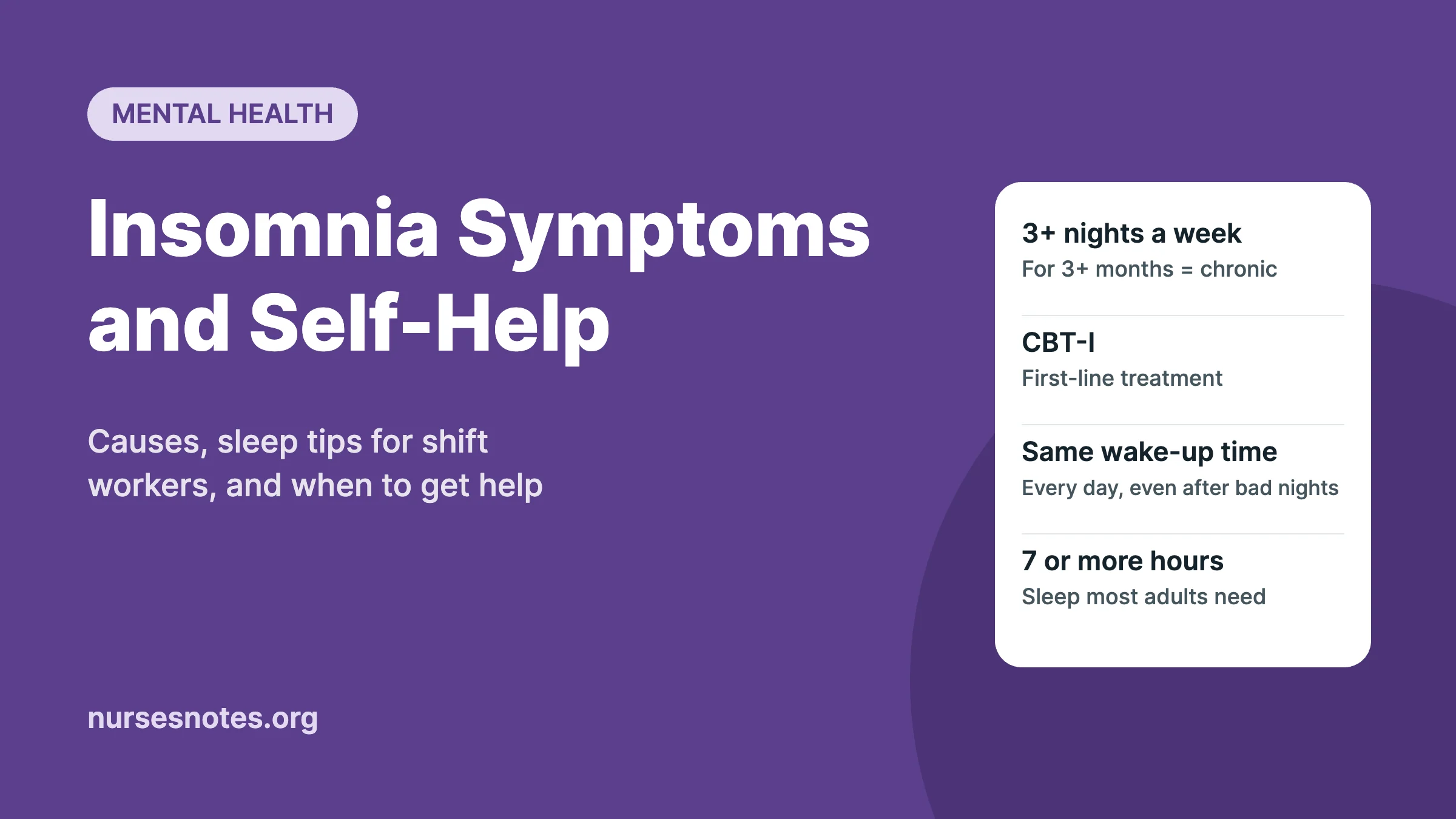
- Chronic insomnia is defined as sleep problems on 3 or more nights a week for more than 3 months.
- Stress, anxiety, depression, caffeine, alcohol, and shift work are among the most common causes.
- CBT-I is the first-line treatment; sleeping pills are only for short-term use, if at all.
What is insomnia?
The NHS describes insomnia as regularly having problems sleeping. The NIH’s National Heart, Lung, and Blood Institute (NHLBI) adds that it happens even when you have the time and a suitable place to sleep.
Most adults need 7 or more hours of sleep a night (CDC), so even a few weeks of poor sleep can take a toll on mood and work performance.
Common insomnia symptoms
According to the NHS and Mayo Clinic, you may have insomnia if you regularly:
- find it hard to fall asleep or lie awake for long periods
- wake up several times during the night
- wake up early and cannot get back to sleep
- still feel tired after waking up
- feel irritable, low, or anxious during the day
- find it hard to concentrate, focus, or remember things
Short-term vs chronic insomnia
| Type | How long it lasts | Typical triggers |
|---|---|---|
| Short-term (acute) | A few days or weeks | Stress, a distressing event, or a change in schedule or surroundings |
| Chronic (long-term) | 3 or more nights a week for more than 3 months | Ongoing stress, mental health conditions, pain, medicines, or long-term shift work |
What causes insomnia?
The NHS lists stress, anxiety, or depression as some of the most common causes. Others include:
- caffeine, alcohol, or nicotine, especially later in the day
- shift work, jet lag, or irregular sleep times
- a noisy, bright, hot, or cold bedroom, or an uncomfortable bed
- long-term pain and health conditions such as an overactive thyroid, menopause, or restless legs syndrome
- some medicines, including products that contain caffeine or stimulants
Insomnia and mental health often go together. If worry keeps you awake, our guide on signs of anxiety may help you spot the link.
How to manage insomnia: self-help steps
These steps come from the NHS, CDC, and the American Academy of Sleep Medicine (AASM):
- Keep a regular schedule. Wake up at the same time every day, even after a bad night, and go to bed only when you feel sleepy.
- Use your bed for sleep. If you cannot fall asleep after about 20 minutes, get up and do something quiet in dim light, then return when sleepy (AASM).
- Cut back on stimulants. The NHS advises no caffeine, alcohol, or smoking for at least 6 hours before bed.
- Wind down. Relax for an hour before bed and turn off screens at least 30 minutes beforehand (CDC).
- Make your room sleep-friendly. Keep it dark, quiet, and cool.
- Move during the day. Regular exercise helps, but avoid hard exercise within 4 hours of bedtime.
For more ideas, read our sleep hygiene tips.
Insomnia tips for nurses and shift workers
Night shifts work against the body clock. The CDC’s NIOSH training for nurses on shift work suggests:
- Go straight to bed when you get home, and save errands for later.
- Make the room very dark with blackout curtains or an eye mask, and use ear plugs or white noise.
- Take a nap before your next shift if you can.
- On days off, try a “compromise” schedule that keeps some sleep hours the same every day.
Ongoing poor sleep is also a warning sign of burnout; see our article on signs of nurse burnout.
Insomnia treatment: CBT-I and medicines
Cleveland Clinic calls CBT for insomnia the first-line treatment, and the AASM gives it a strong recommendation for chronic insomnia. It is usually completed in four to eight sessions, in person or online.
The NHS says GPs now rarely prescribe sleeping pills. When they do, it is only for a few days or weeks, because the pills can have serious side effects and people can become dependent on them.
When to get medical help
See a doctor if:
- changing your sleep habits has not helped
- you have had trouble sleeping for months
- poor sleep is making work, study, family life, or driving difficult or unsafe
- low mood, anxiety, or hopeless thoughts are keeping you awake
If you ever feel unable to keep yourself safe, seek help straight away using the numbers below.
Where to get help
If you or someone you care about is in danger or may not be safe, call your local emergency number now or go to the nearest emergency department. You can also contact these free crisis lines:
- Philippines: NCMH Crisis Hotline – 1553 (nationwide landline, toll-free), 1800-1888-1553, 0917-899-8727, or 0908-639-2672
- USA: 988 Suicide & Crisis Lifeline – call or text 988, or chat at 988lifeline.org
- UK: Samaritans – call 116 123, free, day or night
- Anywhere else: your local emergency number, or a doctor, nurse, or mental health service near you
Crisis numbers were checked on official sources on 14 November 2026.
Frequently asked questions
How do I know if I have insomnia?
You may have insomnia if you regularly struggle to fall asleep, wake often in the night, wake too early, or feel unrefreshed, and it affects how you feel or function during the day. If this happens on 3 or more nights a week for over 3 months, it is called chronic insomnia and is worth discussing with a doctor.
What is the best treatment for insomnia?
For long-term insomnia, cognitive behavioural therapy for insomnia (CBT-I) is the recommended first-line treatment. It teaches practical ways to reset your sleep habits and calm the worries that keep you awake. Good sleep habits help everyone, while sleeping pills are usually only considered for short periods when other options have not worked.
Can stress cause insomnia?
Yes. The NHS lists stress, anxiety, and depression among the most common causes of insomnia. Worry about work, money, relationships, or sleep itself can keep the mind alert at night. Relaxing before bed, keeping a regular schedule, and talking to someone you trust or a professional can all help break the cycle.
Related on Nurses Notes
- Sleep hygiene tips for better rest
- Signs of nurse burnout and what to do
- How to manage stress: practical steps
- All mental health articles on Nurses Notes
Sources
- Insomnia. NHS, 2024.
- What Is Insomnia?. National Heart, Lung, and Blood Institute, NIH, 2022.
- Insomnia – Causes and Risk Factors. National Heart, Lung, and Blood Institute, NIH, 2022.
- Insomnia – Symptoms and causes. Mayo Clinic, 2024.
- Cognitive Behavioral Therapy for Insomnia (CBT-I). Cleveland Clinic, 2026.
- About Sleep. Centers for Disease Control and Prevention, 2024.
- Healthy Sleep Habits. American Academy of Sleep Medicine, Sleep Education, 2020.
- Module 9. Coping with the Night and Evening Shifts, Sleep. NIOSH Training for Nurses on Shift Work and Long Work Hours, CDC, 2020.
- New Year, New You: 7 Game-Changing Healthy Habits for A Brighter 2024. Department of Health Philippines, 2024 (crisis hotline numbers).
- 988 Suicide & Crisis Lifeline. 988lifeline.org, accessed November 2026.
- Contact a Samaritan. Samaritans, accessed November 2026.
This article is for education only and does not replace advice from your own doctor, nurse, or other qualified health professional.