On this page
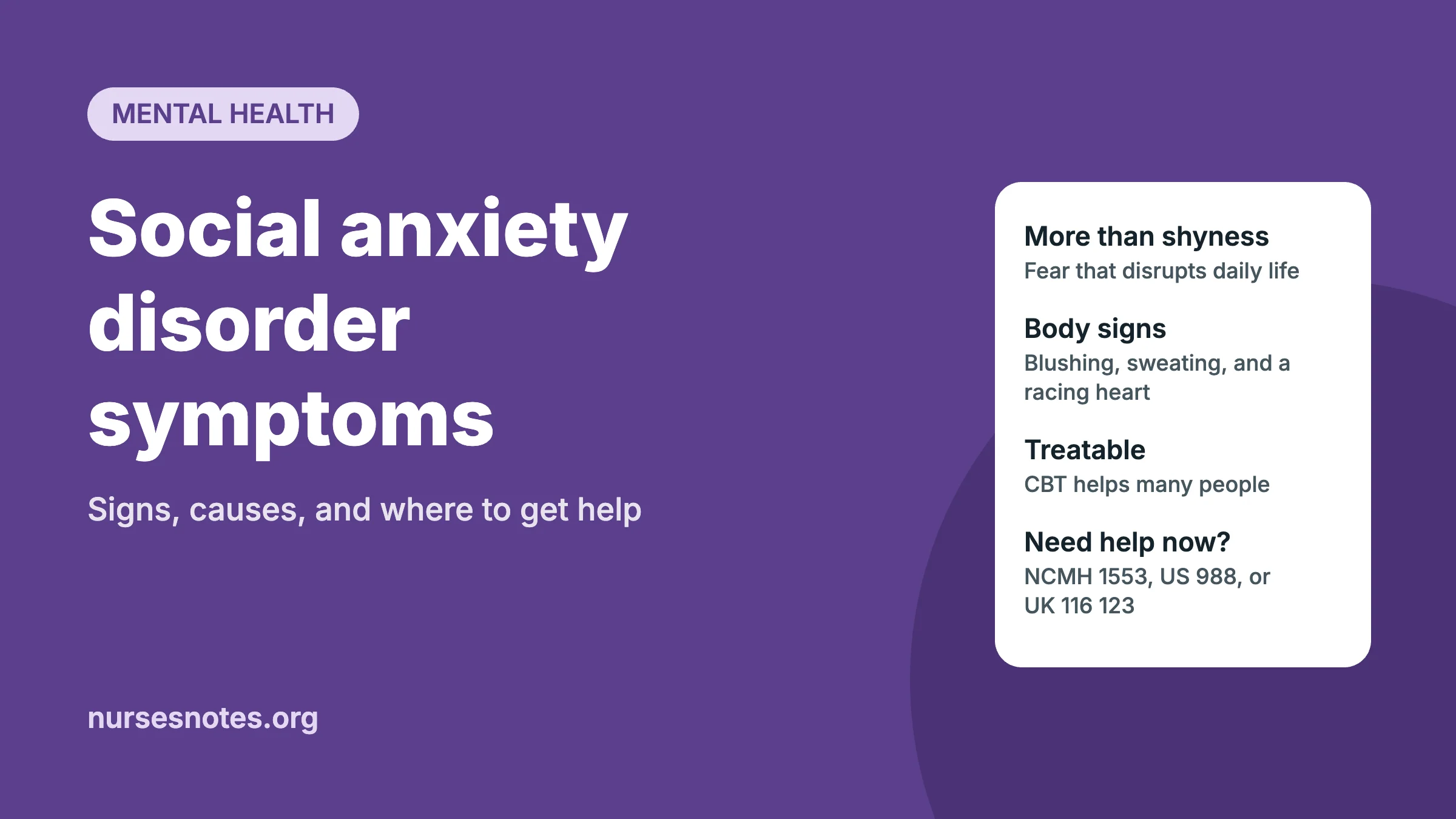
Social anxiety disorder symptoms include an intense, lasting fear of being judged, embarrassed, or rejected in social situations, often with blushing, sweating, a racing heart, or a mind that goes blank. It is more than shyness, it is common, and it responds well to treatment such as cognitive behavioural therapy.
Key points
- Social anxiety disorder is a common anxiety disorder that usually begins in childhood or the teenage years.
- The fear is strong enough to disrupt work, school, relationships, or everyday tasks like eating in front of others.
- Cognitive behavioural therapy (CBT) is considered the leading talking therapy, and medicines can help some people.
- Avoiding feared situations brings short-term relief but tends to make anxiety stronger over time.
What is social anxiety disorder?
Social anxiety disorder, sometimes called social phobia, is a type of anxiety disorder. A person feels anxiety or fear in situations where they might be watched, evaluated, or judged by others. NIMH notes that it occurs more often in women than in men.
Many people feel nervous before a big presentation. With social anxiety disorder, though, the fear feels hard to control, may start weeks before an event, and leads people to avoid places or activities they would otherwise enjoy.
Social anxiety vs shyness
| Shyness | Social anxiety disorder |
|---|---|
| Feeling a little awkward at first, then warming up | Intense fear that does not go away and may start weeks before an event |
| Does not stop you from doing things you want to do | Leads to avoiding work, school, parties, phone calls, or shops |
| Little effect on daily life | Affects confidence, relationships, studies, or work |
Signs and symptoms of social anxiety disorder
Emotional and behavioural signs
- Strong fear of being judged negatively, or of embarrassing or humiliating yourself.
- Worry about everyday activities such as meeting strangers, starting conversations, talking on the phone, or shopping.
- Avoiding eye contact, group conversations, eating with others, or parties.
- Feeling that everyone is watching you.
- Going over a conversation afterwards and picking out your “mistakes”.
- Expecting the worst possible outcome from social situations.
Physical symptoms
- Blushing, sweating, or trembling.
- A fast or pounding heartbeat.
- Feeling sick or having an upset stomach.
- Feeling that your mind has gone blank.
- Shortness of breath, dizziness, or muscle tension.
- Speaking very softly or holding your body stiffly.
Some people have panic attacks in social situations. If that sounds familiar, our guide to panic attack symptoms explains what is happening in the body.
Signs in children and teens
Children may cry, have tantrums, cling to parents, or refuse to speak. They may also avoid school, struggle to make friends, or complain of stomachaches or headaches.
What causes social anxiety?
There is usually no single cause. Experts believe a mix of factors plays a part, including:
- Family history, since anxiety disorders tend to run in families.
- Differences in how the brain responds to fear.
- Painful experiences such as teasing, bullying, rejection, or humiliation.
- A naturally shy or cautious temperament in childhood.
- New social or work demands, such as starting a job or giving presentations.
How social anxiety disorder is treated
- Cognitive behavioural therapy (CBT): teaches new ways of thinking about and reacting to feared situations, and helps people practise social skills.
- Exposure therapy: a CBT method of facing feared situations step by step, often with relaxation exercises. Group CBT can also help.
- Acceptance and commitment therapy (ACT): uses mindfulness and goal setting to reduce distress.
- Medicines: a doctor may prescribe antidepressants such as SSRIs or SNRIs, beta-blockers, or other anti-anxiety medicines. Antidepressants may take several weeks to work, so do not stop them without speaking to your doctor.
Finding the right treatment can take time, and many people use therapy and medicine together.
Self-help tips you can start today
- Write it down. Keep a diary of situations, thoughts, and feelings to spot patterns.
- Breathe slowly. Practise relaxation and slow breathing so your body has a tool to calm down. The 5-4-3-2-1 grounding technique is one quick option.
- Take small steps. Break a hard situation into smaller parts and try the easiest one first.
- Shift your focus. Pay attention to what the other person is saying rather than how you seem.
- Limit caffeine, alcohol, and nicotine, which can trigger or worsen anxiety.
- Make time for things you enjoy, and reach out to people you trust.
When to get help
See your doctor or a mental health professional if you fear or avoid ordinary social situations and it is affecting your work, studies, relationships, or happiness. Getting help early makes a real difference, and recovery is very possible.
If you ever feel unable to cope, are having thoughts of ending your life, or feel unsafe, contact a crisis line or your local emergency number straight away. You do not have to face this alone.
Where to get help
- Philippines: NCMH Crisis Hotline, 1553 (nationwide landline, toll-free); Globe/TM 0917 899 8727 or 0966 351 4518; Smart/Sun/TNT 0908 639 2672.
- USA: 988 Suicide & Crisis Lifeline, call or text 988, or chat at 988lifeline.org.
- UK: Samaritans, call 116 123 free, any time.
- Anywhere: if you or someone else is in immediate danger, call your local emergency number.
Frequently asked questions
Can social anxiety go away on its own?
For some people social anxiety eases with age, but the NHS notes that for many it does not go away without treatment. The good news is that therapies such as CBT work well. Talking to a doctor or counsellor early can stop avoidance from shrinking your life and help you build confidence step by step.
What is the difference between social anxiety and introversion?
Introversion is a personality trait: introverts may prefer quiet time or small groups but do not fear them. Social anxiety disorder involves real fear and distress about being judged, often with physical symptoms and avoidance. An introvert can enjoy a party and leave early; a person with social anxiety may dread it for weeks.
How can I help a friend with social anxiety?
Be patient and avoid pushing them into situations or making jokes about their nerves. Offer to go with them to smaller events, listen without judging, and celebrate small steps. Gently encourage them to see a doctor or therapist, and share crisis numbers if they ever feel overwhelmed or unsafe.
Related on Nurses Notes
- Signs of anxiety: symptoms to watch for
- Panic attack symptoms and what to do
- The 5-4-3-2-1 grounding technique for anxiety
- How to manage stress: practical tips
- All Mental Health articles on Nurses Notes
Sources
- Social Anxiety Disorder: What You Need to Know. National Institute of Mental Health (NIMH), revised 2025.
- Social anxiety (social phobia). NHS, page last reviewed 17 May 2023.
- Social anxiety disorder (social phobia): Symptoms and causes. Mayo Clinic, 2021.
- 988 Suicide & Crisis Lifeline. 988 Lifeline, accessed 7 November 2026.
- Contact Samaritans. Samaritans, accessed 7 November 2026.
- World Suicide Prevention Day. Quezon City Government (listing of NCMH Crisis Hotline numbers), accessed 7 November 2026.
This article is for education only and does not replace advice from your own doctor, nurse, or other qualified health professional.