On this page
- Update, 7 November 2026: flu-like illness cases up 31% in early October
- Update, 30 October 2026: flu-like illness cases rise 35% as DOH flu vaccine rollout begins
- Who gets the DOH flu vaccine first?
- Why flu-like illness cases are rising
- DOH advice for the public
- What it means for nurses
- Frequently asked questions
Update, 7 November 2026: flu-like illness cases up 31% in early October
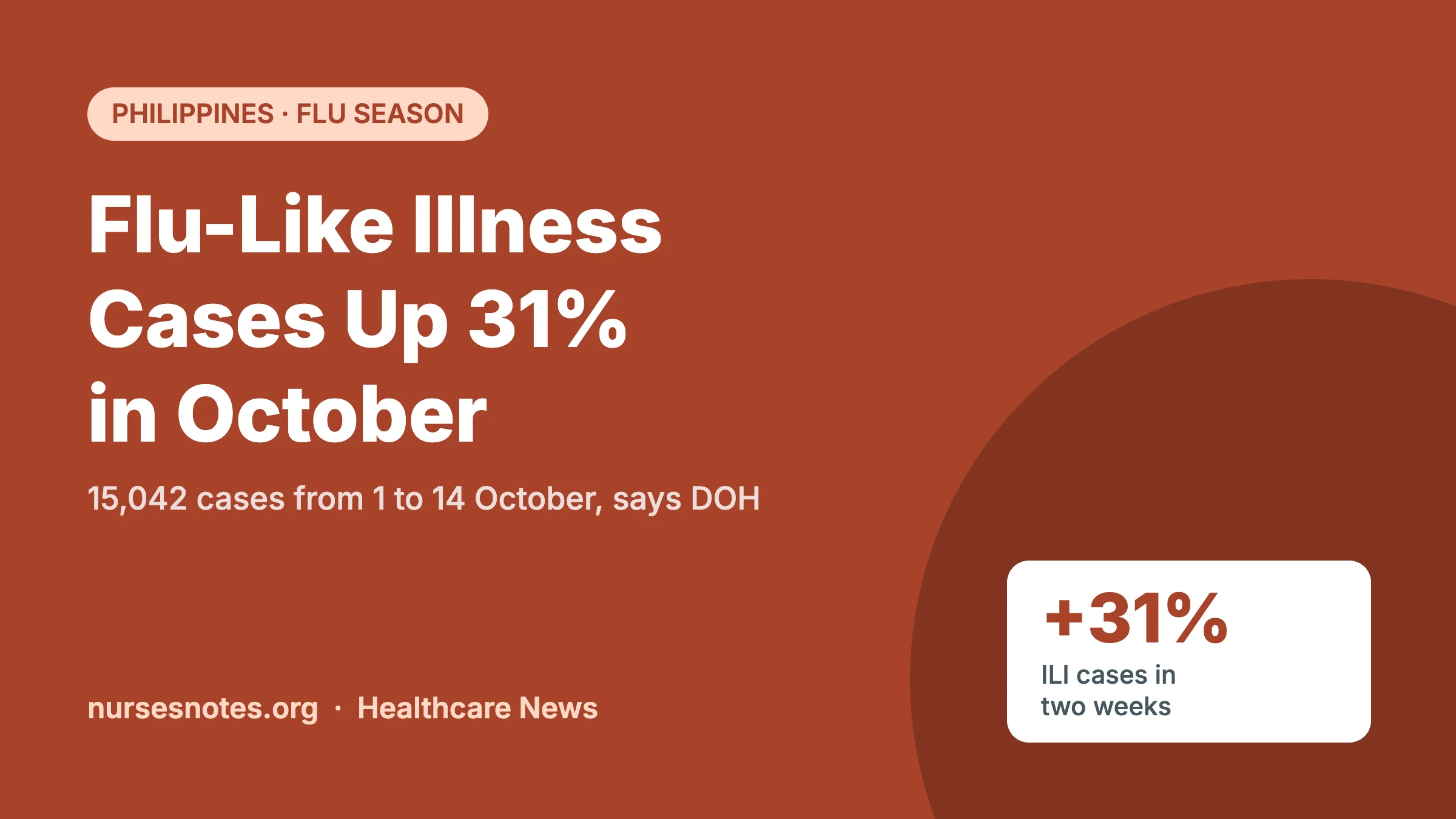
Flu-like illness (ILI) cases in the Philippines rose 31% to 15,042 from 1 to 14 October, up from 11,517 from 17 to 30 September, the Department of Health (DOH) said on 4 November, the Daily Tribune reported. The DOH said it has seen a continuous increase in ILI cases over the past weeks, which keeps the DOH flu vaccine 2026 drive timely.
- Where: Western Visayas, Central Visayas, and MIMAROPA had the largest percentage increases, and 17 provinces and highly urbanized cities, many in Metro Manila, reported local increases.
- Year to date: 139,031 ILI cases, 19% fewer than the 171,506 cases in the same period of 2025, with a case fatality rate of 0.06%.
- Other diseases: dengue cases rose 6% to 23,842 from 1 to 14 October, while leptospirosis cases fell 54% to 554.
For nurses, the rise is a cue to screen patients with fever and cough early, reinforce hand hygiene and masking in waiting areas, and remind high-risk patients about flu vaccination. See our 5 Moments for Hand Hygiene guide and the latest dengue cases in the Philippines.
Update, 30 October 2026: flu-like illness cases rise 35% as DOH flu vaccine rollout begins
Flu-like illness (ILI) cases in the Philippines rose 35% to 13,321 between 24 September and 7 October, from 9,896 in the previous two weeks, the Department of Health (DOH) said in a report as of 21 October, BusinessWorld reported on 28 October. This makes the DOH flu vaccine 2026 drive more timely for high-risk groups.
- Total ILI cases reached 130,591 as of 21 October, still 20% lower than the 163,304 cases in the same period of 2025; the ILI case fatality rate stayed below 1%.
- Cumulative cases crossed the national alert threshold in morbidity week 39 (27 September to 3 October), and 15 areas across seven regions are under heightened surveillance.
- The biggest percentage increases were in MIMAROPA, Western Visayas, and Central Visayas.
- Leptospirosis cases this year reached 13,785, up 46% on 2025, with a case fatality rate of 5.43%; dengue cases totalled 217,625, down 19%.
The DOH is urging hand hygiene, cough etiquette, masks for people with symptoms, and influenza vaccination. See our guide to dengue warning signs for the other rainy-season infection nurses are watching.
The DOH flu vaccine rollout for 2026 starts this week and runs through December, with senior citizens, young children, and people with existing medical conditions first in line. The Department of Health (DOH) announced the drive after logging an 8% rise in influenza-like illness (ILI) cases in recent weeks, the Daily Tribune reported on 25 October.
Key points
- Latest update: ILI cases rose 31% to 15,042 from 1 to 14 October; year-to-date cases (139,031) are still 19% below 2025 (DOH, 4 November).
- The DOH Epidemiology Bureau recorded 11,137 ILI cases in the latest monitoring period, up from 10,378 cases on 3 to 16 September.
- Year to date, ILI cases total 122,514, about 20% fewer than the 152,972 recorded in the same period of 2025.
- The two-month flu vaccination campaign prioritises senior citizens, children below preschool age, and people with pre-existing conditions.
Who gets the DOH flu vaccine first?
Acting Health Secretary Edwin Mercado said the influenza vaccine would be released the week after his 25 October briefing. The campaign will run for about two months, through December.
- Senior citizens
- Toddlers and children below preschool age
- People with underlying or pre-existing medical conditions
The DOH has not published dose numbers or a list of vaccination sites in these reports. Ask your local health centre or barangay health station when doses arrive in your area.
Why flu-like illness cases are rising
Mercado said, “Cases rise during the cold season because people tend to gather indoors.” He warned that Christmas and New Year gatherings could speed up transmission.
He said most ILI cases are caused by common respiratory viruses, with some linked to seasonal allergies. The DOH described the situation as manageable and said it has not reached epidemic levels.
| Measure | Figure |
|---|---|
| ILI cases, 3 to 16 September 2026 | 10,378 |
| ILI cases, latest monitoring period | 11,137 |
| ILI cases, 2026 year to date | 122,514 |
| ILI cases, same period of 2025 | 152,972 |
| COVID-19 cases, latest week | 291 (up from 245) |
Note: the two ILI counts above work out to an increase of about 7%; the DOH described it as an 8% rise. The DOH also recorded 291 COVID-19 cases in the latest week, up from 245, but said this does not indicate an outbreak.
DOH advice for the public
- Get enough rest and sleep.
- Drink plenty of fluids.
- Eat nutritious meals.
- Get vaccinated if you are in a priority group once doses reach your area.
What it means for nurses
- Expect more patients with fever, cough, and colds through the holidays. Screen for danger signs in older adults, young children, and patients with chronic illness.
- Help identify and refer priority patients, especially seniors and people with diabetes, heart, or lung disease, as soon as vaccines arrive at your facility.
- Teach families home care basics, including how to bring down a child’s fever safely and how to spot signs of dehydration.
- Protect yourself: hand hygiene, masks for symptomatic patients, and your own flu shot reduce spread to colleagues and vulnerable patients.
Frequently asked questions
When does the DOH flu vaccine rollout start in 2026?
Acting Health Secretary Edwin Mercado said on 25 October 2026 that flu vaccines would be released the following week, which means the rollout begins in the last week of October. The vaccination campaign is expected to run for about two months, through December, ahead of holiday gatherings.
Who is prioritised for the flu vaccine in the Philippines?
The DOH is prioritising senior citizens, toddlers and children below preschool age, and people with underlying medical conditions. These groups face a higher risk of complications from influenza. Others who want a flu shot should ask their local health centre, doctor, or pharmacy about availability and cost.
Is there a flu outbreak in the Philippines?
According to the DOH, no. Influenza-like illness cases rose by about 8% in recent weeks, but the year-to-date total of 122,514 cases is about 20% lower than in 2025. The DOH said the situation is manageable and has not reached epidemic levels, though holiday gatherings could increase spread.
Related on Nurses Notes
- Dengue cases in the Philippines in 2026
- How to bring down a child’s fever safely at home
- Signs of dehydration in adults
- Latest healthcare news for nurses
Sources
- Daily Tribune: Flu-like illnesses jump 31% in two weeks, DOH reports (4 November 2026)
- DOH reports rise in influenza-like illnesses, plans vaccine rollout (Daily Tribune, 25 October 2026)
- DoH rolls out flu vaccines as seasonal cases rise (Daily Tribune, 25 October 2026)
- Influenza-like illnesses spike to 13,000 in latest two-week monitoring period, BusinessWorld, 28 October 2026.
This summary is for information only and does not replace official guidance or advice from a qualified professional.