On this page
To cope with exam anxiety, prepare with a realistic study plan, look after your sleep, food, and movement, and use a simple breathing exercise to calm your body before and during the test. Feeling nervous before a big exam such as the nursing board or NCLEX is normal, and with the right habits most people can keep anxiety at a level that does not get in the way.
Key points
- Exam anxiety can affect your body, your emotions, and your concentration.
- A study timetable, regular breaks, and enough sleep reduce stress more than last-minute cramming.
- Slow belly breathing for a few minutes can calm a racing heart before or during an exam.
- If anxiety does not ease, or you feel unable to cope, talk to someone and get support.
What is exam anxiety?
Exam anxiety (also called test anxiety or exam stress) is more than feeling nervous on the morning of a test. Mind explains that it can build up in the weeks before exams, during them, and while you wait for results.
Stress is the body’s response to a pressure such as an upcoming exam. Anxiety is the body’s reaction to that stress, and it can carry on even when there is no immediate threat, according to the NIMH.
Signs of exam anxiety
Exam anxiety shows up in different ways for different people. You might notice:
- Body: shaking, sweating, a churning stomach, headaches, dizziness, fast breathing, tense muscles, or tiredness
- Feelings: worry, panic, frustration, fear of failure, or feeling overwhelmed
- Thinking and behaviour: trouble concentrating, forgetting things, avoiding review, studying for hours without breaks, or constantly comparing yourself with classmates
Why nursing students feel exam anxiety
Common triggers include feeling behind with your review, worrying about what will come up, pressure from family or yourself, and a bad experience in a past exam. Money worries, caring responsibilities, work shifts, and problems at home can add to the load, which many nursing students and working nurses will recognise.
How to cope with exam anxiety before the exam
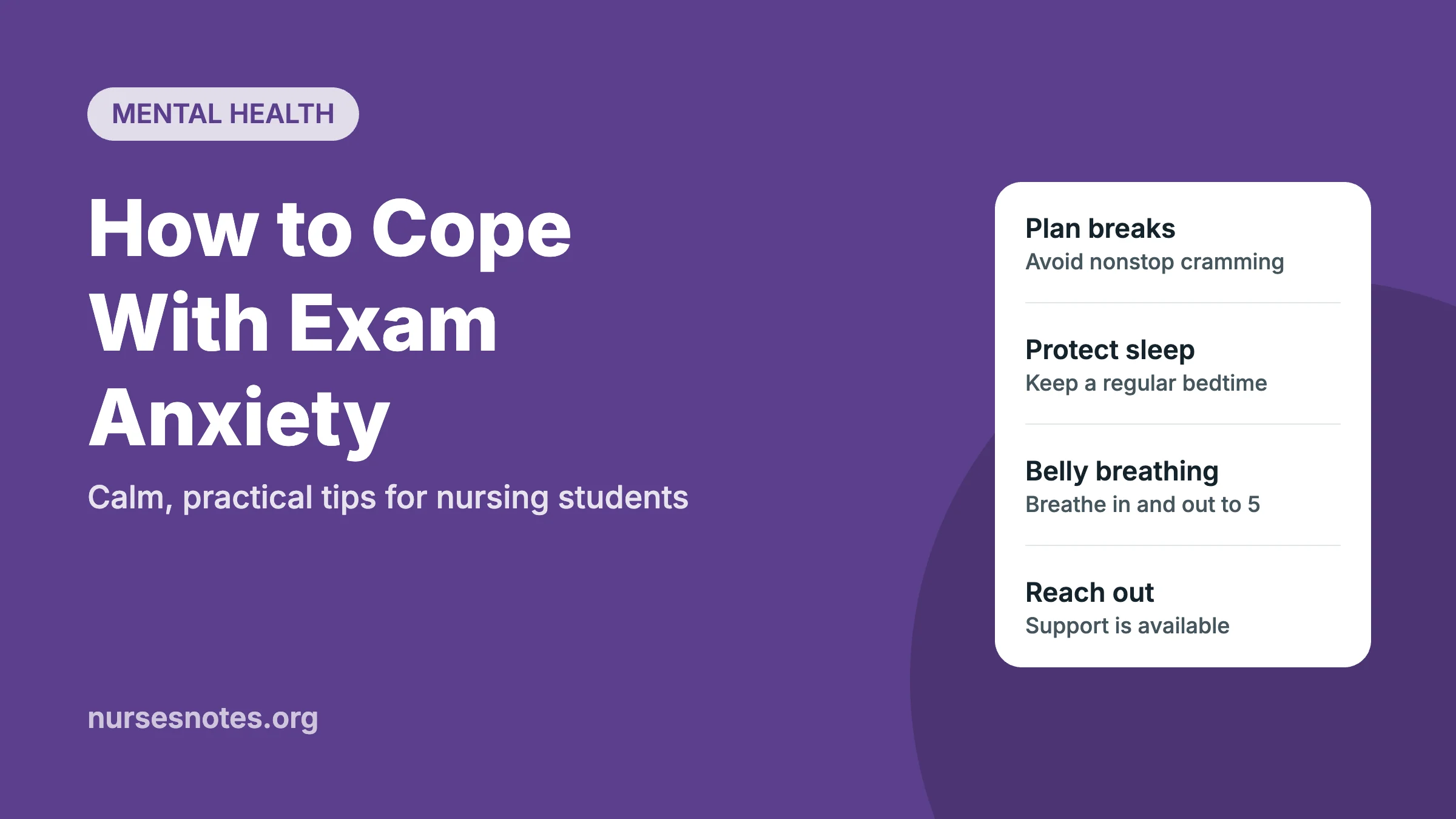
- Make a realistic timetable. Break topics into small blocks and plan rest days. Study in the place and style that works for you, such as a review group or practice questions.
- Take regular breaks. Working for hours without a break is a common sign of exam stress, and Mind notes that burnout is a signal you need rest.
- Protect your sleep. Keep a regular bedtime and avoid too much caffeine. Our sleep hygiene tips can help you rest before the big day.
- Eat regular meals and move your body. Regular exercise and meals help your body handle stress.
- Challenge unhelpful thoughts. Write worries down, then ask yourself whether they are facts or fears. Limit comparing yourself with others online.
- Keep doing things you enjoy. Time with friends, family, or hobbies is part of a healthy study plan, not a reward for later.
A breathing exercise for exam stress
The NHS suggests this simple exercise, which you can use at home or quietly in the exam room:
- Get comfortable, sitting or standing.
- Breathe in gently through your nose, letting the breath go deep into your belly without forcing it. Count steadily from 1 to 5 if that helps.
- Breathe out gently through your mouth, counting from 1 to 5 again.
- Keep going for at least 5 minutes when you have time, or for a few breaths during the exam.
If you like a counting method, you can also try our guide to the box breathing technique.
On exam day
- Pack what you need, such as your ID, permit, and pens, the night before.
- Eat breakfast and leave early so you are not rushing.
- Read each question carefully, and plan before you answer.
- If your mind goes blank, pause, breathe slowly, and move on to the next question, then come back.
- Afterwards, avoid picking apart answers with others, and do something kind for yourself.
When to get help
Talk to someone you trust, such as a friend, a family member, a clinical instructor, or your school’s guidance counsellor, if exam stress is affecting your sleep, eating, or daily life. See a doctor or mental health professional if anxiety does not go away or you are struggling to cope, because talking therapies and other treatments can help.
If you feel unable to keep yourself safe, or you have thoughts of ending your life, contact a crisis line or your local emergency number straight away. You do not have to go through this alone.
Where to get help
- Philippines: NCMH Crisis Hotline, open 24/7. Call 1553 or 1800-1888-1553, or mobile 0919-057-1553, 0966-351-4518, or 0917-899-8727 (0917-899-USAP).
- USA: 988 Suicide & Crisis Lifeline. Call or text 988, or chat at 988lifeline.org. Free, confidential, and available 24/7.
- UK: Samaritans. Call 116 123 for free, 24 hours a day, 365 days a year.
- Anywhere else, or in an emergency: call your local emergency number or go to the nearest hospital.
Frequently asked questions
Is it normal to have anxiety before a board exam?
Yes. Feeling nervous before an important exam such as the nursing board or NCLEX is very common, and you are far from alone. It becomes a problem when worry stops you from studying, sleeping, or eating well, or when it does not ease after the exam. That is the time to seek support.
How can I calm down quickly during an exam?
Pause, put your pen down, and breathe slowly into your belly, breathing in through your nose and out through your mouth for a few breaths. Then reread the question calmly. If you are stuck, move to the next item and come back later. Reminding yourself that the exam will be over soon can also help.
When should I see a professional about exam anxiety?
See a doctor, counsellor, or mental health professional if anxiety keeps coming back, does not improve after exams, causes panic attacks, or stops you from coping with daily life. The NIMH notes that talk therapy and medicine are the two main treatments for anxiety, and many people feel better with support.
Related on Nurses Notes
- Signs of anxiety and how to manage them
- Box breathing technique for stress
- How to stop overthinking
- Sleep hygiene tips for better rest
- More mental health articles
Sources
- Exam stress – for 11-18 year olds. Mind (published March 2025).
- How to cope with exam stress. Mind (2023).
- Breathing exercises for stress. NHS (page last reviewed 12 June 2026).
- I’m So Stressed Out! Fact Sheet. National Institute of Mental Health.
- DOH: Mental health programs, crisis hotlines available this Undas. Philippine Information Agency (28 October 2025).
- 988 Suicide & Crisis Lifeline. 988 Lifeline (accessed November 2026).
- Samaritans. Samaritans (accessed November 2026).
This article is for education only and does not replace advice from your own doctor, nurse, or other qualified health professional.