On this page
Liver function test normal values are the reference ranges for a panel of blood tests, usually ALT, AST, ALP, GGT, bilirubin, albumin, total protein, and PT, that show how well the liver is working and whether liver cells or bile ducts are injured. This study guide gives typical ranges from NCBI StatPearls and MedlinePlus, explains what each result means, and covers the nursing points that come up in NCLEX and Philippine nursing board exams.
Key points
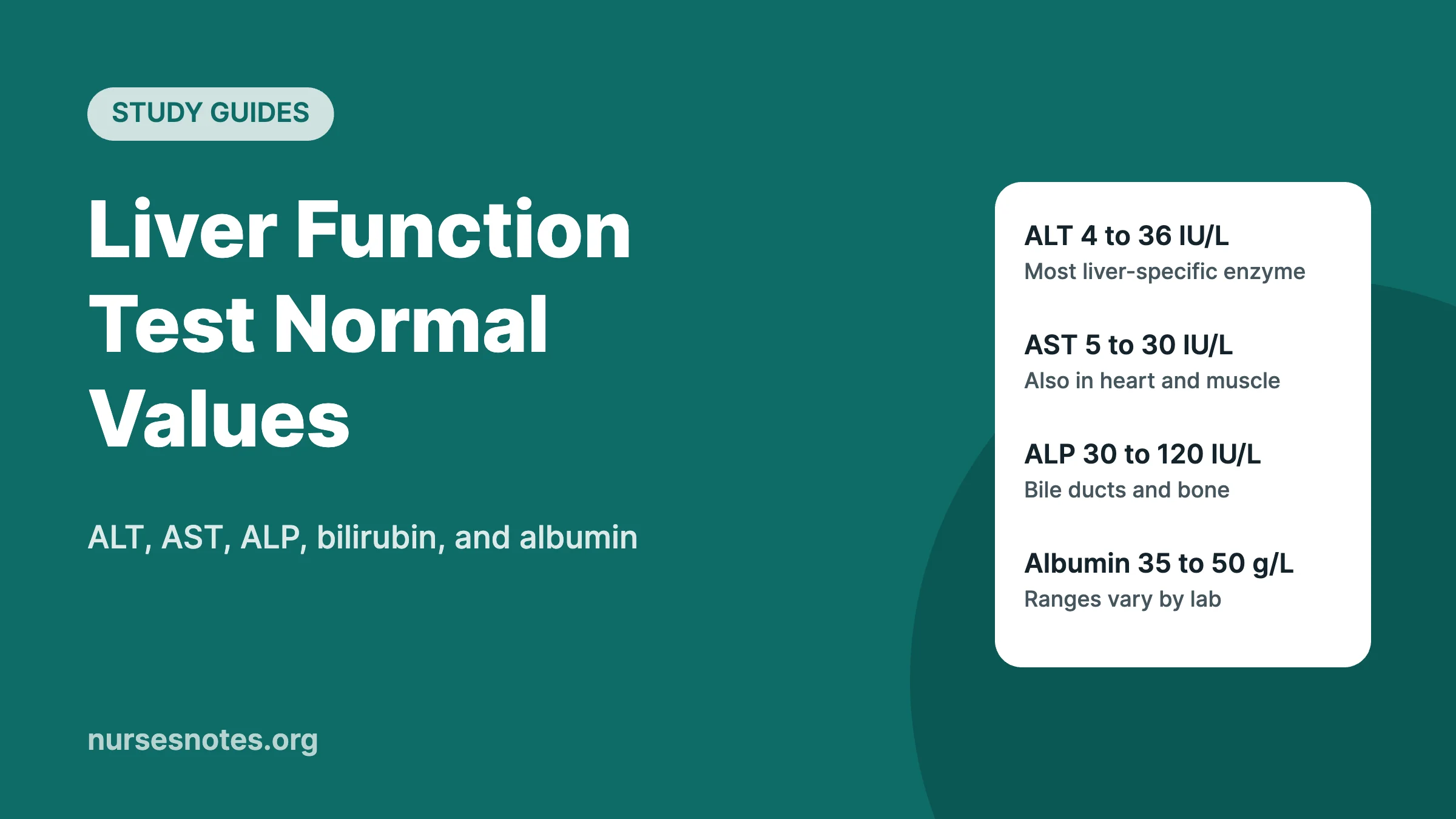
- Typical adult ranges (StatPearls): ALT 4 to 36 IU/L, AST 5 to 30 IU/L, ALP 30 to 120 IU/L, total bilirubin 2 to 17 µmol/L, and albumin 35 to 50 g/L.
- ALT is more liver-specific than AST, because AST is also found in the heart, skeletal muscle, kidney, and red blood cells.
- A rise in AST and ALT points to liver cell (hepatocellular) injury, while a rise in ALP, GGT, and bilirubin points to a cholestatic (bile flow) pattern.
- Ranges vary by laboratory and facility, so always compare results with the reference range printed on your own lab report.
What are liver function tests?
Liver function tests (LFTs) are a group of blood tests that measure liver enzymes, bilirubin, and proteins made by the liver. Many clinicians now call them “liver chemistries,” because some of them (ALT, AST, and ALP) show injury rather than true liver function.
An abnormal result does not always mean liver disease. MedlinePlus notes that even a mild illness can cause temporary changes, and LFTs alone usually cannot diagnose a specific condition, so results are always read alongside the history, examination, and other tests.
Liver function test normal values
The table shows typical adult ranges from two trusted references. Notice that the numbers are not identical, which is exactly why you must use your own laboratory’s reference range.
| Test | What it mainly reflects | StatPearls typical range | MedlinePlus range |
|---|---|---|---|
| ALT (alanine aminotransferase) | Liver cell injury (most liver-specific enzyme) | 4 to 36 IU/L | 4 to 36 U/L |
| AST (aspartate aminotransferase) | Injury to liver, heart, or muscle | 5 to 30 IU/L | 8 to 33 U/L |
| ALP (alkaline phosphatase) | Bile ducts and bone | 30 to 120 IU/L | 40 to 129 IU/L |
| GGT (gamma-glutamyl transferase) | Bile ducts; confirms a liver source of high ALP | 6 to 50 IU/L | Not listed |
| Total bilirubin | Red cell breakdown and bile excretion | 2 to 17 µmol/L | 0.1 to 1.2 mg/dL (1.71 to 20.5 µmol/L) |
| Direct (conjugated) bilirubin | Bilirubin already processed by the liver | 0 to 6 µmol/L | Less than 0.3 mg/dL (less than 5.1 µmol/L) |
| Albumin | Protein synthesis by the liver | 35 to 50 g/L | 3.4 to 5.4 g/dL (34 to 54 g/L) |
| Total protein | Albumin plus globulins | 60 to 80 g/L | Not listed |
| Prothrombin time (PT) | Clotting factors made by the liver | 10.9 to 12.5 seconds | Not listed |
What each liver test tells you
ALT and AST
ALT sits mainly inside liver cells, so a high ALT strongly suggests liver cell injury, for example from hepatitis, fatty liver, or toxic drugs such as acetaminophen or alcohol. AST is less specific: it can also rise after a heart attack, muscle injury, seizures, burns, surgery, or heavy exercise.
StatPearls grades AST and ALT elevation by how many times it exceeds the upper limit of normal (ULN): borderline (under 2 times), mild (2 to 5 times), moderate (5 to 15 times), severe (over 15 times), and massive (over 10,000 IU/L). In mild elevations caused by chronic alcohol use, the AST to ALT ratio is often 2:1 or higher.
ALP and GGT
ALP comes from the bile ducts, bone, placenta, and intestine. A high ALP with a high GGT points to the liver and bile ducts, while a high ALP with a normal GGT suggests another source such as bone.
ALP is normally higher in growing children and in pregnancy, so do not label these results abnormal without checking age-specific ranges.
Bilirubin
Bilirubin is a yellow pigment made when red blood cells break down; the liver conjugates it and excretes it in bile. MedlinePlus notes that jaundice can appear when bilirubin reaches about 2.0 mg/dL.
High unconjugated (indirect) bilirubin suggests increased red cell breakdown, such as hemolysis or a transfusion reaction, or Gilbert syndrome. High conjugated (direct) bilirubin suggests the liver cannot excrete it, as in gallstones, strictures, or tumors blocking the bile ducts. For babies, see our guide to newborn jaundice.
Albumin, total protein, and PT
Albumin and PT show synthetic function, meaning the liver’s ability to make proteins. Albumin has a long half-life, so it falls slowly and is also lowered by poor nutrition, inflammation, kidney losses, and burns.
PT and INR change faster when synthesis fails, but they are also affected by vitamin K deficiency and anticoagulants. Review our PT, INR, and aPTT normal values guide for clotting tests in more detail.
Hepatocellular vs cholestatic pattern
| Feature | Hepatocellular pattern | Cholestatic pattern |
|---|---|---|
| Main change | AST and ALT rise much more than ALP | ALP and GGT rise, with bilirubin high compared with AST and ALT |
| Problem | Damage to liver cells | Blocked or reduced bile flow |
| Examples | Viral hepatitis, fatty liver disease, drug or toxin injury, and alcohol-related liver disease | Bile duct obstruction (for example gallstones), primary biliary cholangitis, and some drug reactions |
Nursing assessment
- Look for jaundice of the skin and sclera, dark urine, pale stools, and itching.
- Check the abdomen for right upper quadrant pain, distension, or ascites, and the limbs for edema.
- Watch for easy bruising, bleeding gums, or prolonged bleeding from puncture sites when PT or INR is prolonged.
- Take a full medication history, including acetaminophen, herbal remedies, vitamins, and supplements, plus alcohol intake.
- Note recent heavy exercise, muscle injury, or chest pain, which can raise AST without liver disease.
Nursing considerations
- Preparation: MedlinePlus says fasting for 10 to 12 hours may be needed for a full LFT panel, while ALT and AST alone need no special preparation. Follow your laboratory’s instructions.
- Medicines: many drugs affect results. Tell the patient not to stop or change any medicine unless the prescriber says so.
- Specimen handling: avoid hemolysis, which can falsely raise AST. Send bilirubin samples promptly and keep them out of direct sunlight.
- Tourniquet: leaving it on too long can falsely raise albumin.
- Tubes: PT and INR need a separate coagulation tube.
- Safety: apply bleeding precautions when PT or INR is prolonged, and report rising values or new jaundice promptly.
Exam tips
- “ALT = Liver” (both have an L) is a quick way to remember that ALT is the more liver-specific enzyme.
- AST twice ALT or more in a mild elevation: think alcohol-related liver injury.
- High ALP with normal GGT: think bone, not liver.
- Common trap: a high ALP in a growing child or a pregnant woman can be normal.
- Albumin is a slow marker; PT and INR show changes in synthetic function sooner.
Frequently asked questions
What are normal ALT and AST levels?
StatPearls lists typical ranges of 4 to 36 IU/L for ALT and 5 to 30 IU/L for AST, while MedlinePlus gives 4 to 36 U/L and 8 to 33 U/L. Values differ slightly between laboratories, so compare the result with the reference range on the lab report and look at the trend over time.
Can liver function tests be abnormal without liver disease?
Yes. Mild illness, heavy exercise, muscle injury, hemolysis, pregnancy, and some medicines can change results. AST can rise after a heart attack, and ALP is normally higher in growing children. Abnormal results are interpreted with the history, examination, repeat tests, and sometimes imaging, not on their own.
Do you need to fast before a liver function test?
It depends on the laboratory and the tests ordered. MedlinePlus says a full liver panel may require fasting for 10 to 12 hours, while ALT or AST alone usually needs no preparation. Patients should follow the instructions given with their request and keep taking medicines unless told otherwise.
Related on Nurses Notes
- BUN and creatinine normal values: nursing study guide
- PT, INR, and aPTT normal values for nurses
- CBC normal values and nursing implications
- All study guides
Sources
- Liver Function Tests, StatPearls (NCBI Bookshelf), updated June 2026
- Liver Function Tests, MedlinePlus, 2023
- Alanine transaminase (ALT) blood test, MedlinePlus, 2025
- Aspartate aminotransferase (AST) blood test, MedlinePlus, 2025
- ALP – blood test, MedlinePlus, 2025
- Bilirubin blood test, MedlinePlus, 2025
- Albumin blood (serum) test, MedlinePlus, 2025
This article is for education only and does not replace advice from your own doctor, nurse, or other qualified health professional. Always follow your facility’s policies and reference ranges.