
On this page
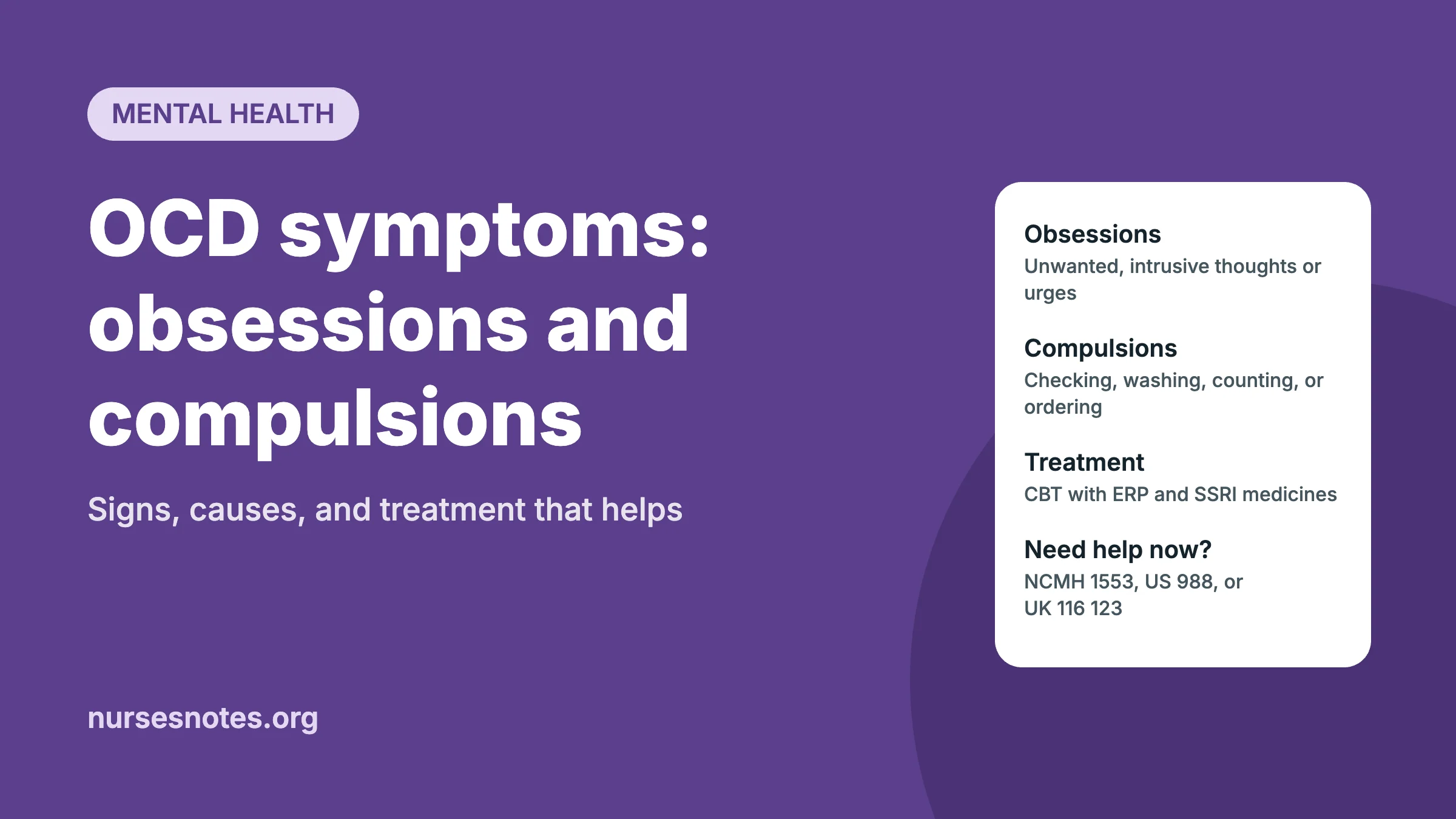
OCD symptoms are unwanted, intrusive thoughts (obsessions) and repeated actions or mental rituals (compulsions) that a person feels driven to do to ease the anxiety those thoughts cause. Obsessive-compulsive disorder is not about being neat or a perfectionist, and with the right treatment most people can reduce its hold on their lives.
Key points
- OCD involves obsessions, compulsions, or both, and they take up a lot of time and cause real distress.
- Common themes include fear of germs, fear of causing harm, and a strong need for order or symmetry.
- Symptoms usually start between late childhood and young adulthood.
- CBT with exposure and response prevention and SSRI medicines are effective treatments.
What is OCD?
Obsessive-compulsive disorder (OCD) is a mental health condition in which a person has recurring, uncontrollable thoughts, repetitive behaviours, or both. NIMH describes the thoughts as obsessions and the behaviours as compulsions.
Most people with OCD know their thoughts or rituals do not make sense, but they still feel unable to stop. The rituals bring short-term relief, yet the anxiety soon returns, creating a cycle that is hard to break alone.
Common obsessions
Obsessions are unwanted thoughts, images, or urges that pop into the mind again and again and cause anxiety, disgust, or unease. Common themes include:
- Fear of germs, dirt, or contamination.
- Fear of harming yourself or someone else, deliberately or by accident.
- A need for things to be in order, balanced, or symmetrical.
- Constant doubt, such as whether the door is locked or the stove is off.
- Unwanted sexual, violent, or religious thoughts that feel deeply upsetting.
- Fear of losing control, or of forgetting or losing things.
Common compulsions
Compulsions are actions or mental acts done to reduce the anxiety or to stop something bad from happening. They include:
- Excessive washing, cleaning, or hand washing.
- Checking doors, appliances, or switches again and again.
- Counting, repeating words, or doing things a set number of times.
- Ordering and arranging items until they feel “just right”.
- Asking others for reassurance.
- Mental rituals, such as silently repeating phrases or “neutralising” a bad thought with a good one.
- Avoiding places, people, or objects that trigger obsessions.
OCD vs everyday habits and perfectionism
| Everyday habits or perfectionism | OCD |
|---|---|
| You choose to double-check something once or keep a tidy desk | Rituals feel compulsory and hard or impossible to stop |
| Habits feel satisfying or useful | Rituals bring no pleasure, only brief relief from anxiety |
| Takes little time | MedlinePlus notes OCD is usually considered when symptoms take at least 1 hour a day |
| Does not disrupt daily life | Causes significant problems at work, school, home, or in relationships |
What causes OCD?
There is no single known cause. Factors that may play a part include:
- A family history of OCD, especially in a parent, brother, or sister.
- Differences in brain activity and chemistry, including serotonin.
- Stressful or traumatic life events, such as bereavement.
- Personality traits, such as being very anxious or holding very high standards.
OCD often appears alongside other conditions, such as anxiety or depression.
How OCD is treated
- Cognitive behavioural therapy (CBT): the main talking therapy for OCD. A type called exposure and response prevention (ERP) helps you face your fears step by step without carrying out the compulsion, so the anxiety gradually fades on its own.
- Medicines: a doctor may prescribe an SSRI antidepressant. The NHS notes SSRIs can take up to 12 weeks to show an effect, so it helps to keep going and talk to your doctor about side effects rather than stopping suddenly.
- Combined or specialist care: some people do best with CBT and medicine together. For severe OCD that has not improved, specialist teams may offer other options, such as brain stimulation therapies.
NIMH notes there is no cure, but treatment helps many people manage symptoms and live full lives. The NHS says OCD is unlikely to get better without proper treatment and support.
Steps you can take
- Talk to a doctor or mental health professional about what you are experiencing. You do not need to share every thought in detail at first.
- Ask about CBT with ERP from a trained therapist.
- Learn about OCD from trusted sources so you can recognise its patterns and not blame yourself.
- Connect with others through OCD support groups, which can reduce shame and isolation.
- Look after your stress levels with sleep, activity, and simple calming techniques like the 5-4-3-2-1 grounding technique.
When to get help
See your doctor or a mental health professional if obsessions or compulsions take up a lot of your time, cause distress, or get in the way of work, study, relationships, or daily life. OCD is treatable, and getting help early can make a real difference.
If you ever feel overwhelmed, unable to cope, or are having thoughts of ending your life, reach out for support straight away. Talking to someone can help, and you do not have to go through this alone.
Where to get help
- Philippines: NCMH Crisis Hotline, 1553 (nationwide landline, toll-free); Globe/TM 0917 899 8727 or 0966 351 4518; Smart/Sun/TNT 0908 639 2672.
- USA: 988 Suicide & Crisis Lifeline, call or text 988, or chat at 988lifeline.org.
- UK: Samaritans, call 116 123 free, any time.
- Anywhere: if you or someone else is in immediate danger, call your local emergency number.
Frequently asked questions
What are the first signs of OCD?
Early signs often include repeated checking, excessive hand washing, needing things arranged a certain way, or frequently asking for reassurance. A person may spend more and more time on these rituals and feel anxious if they cannot do them.
Can OCD go away on its own?
OCD rarely goes away on its own. The NHS says it is unlikely to improve without proper treatment and support. With CBT, medicine, or both, many people gain good control over their symptoms and feel much better. Talking to a doctor is a good first step.
Is being very neat or organised the same as OCD?
No. Many people like order or tidiness and feel good about it. OCD is different: the rituals are driven by intense anxiety or fear, bring no real pleasure, and are hard to stop. They also take up a lot of time, often an hour or more a day, and interfere with daily life.
Related on Nurses Notes
- Signs of anxiety: symptoms to watch for
- Social anxiety disorder symptoms: signs, causes, and help
- Panic attack symptoms and what to do
- How to manage stress: practical tips
- All Mental Health articles on Nurses Notes
Sources
- Obsessive-Compulsive Disorder (OCD). National Institute of Mental Health (NIMH), last reviewed December 2024.
- Overview – Obsessive compulsive disorder (OCD). NHS, page last reviewed 4 April 2023.
- Symptoms – Obsessive compulsive disorder (OCD). NHS, page last reviewed 4 April 2023.
- Obsessive-Compulsive Disorder. MedlinePlus, U.S. National Library of Medicine, updated 29 September 2026.
- Obsessive-compulsive disorder (OCD): Symptoms and causes. Mayo Clinic, 21 December 2023.
- What is OCD?. Mind, October 2023.
- 988 Suicide & Crisis Lifeline. 988 Lifeline, accessed 7 November 2026.
- Contact Samaritans. Samaritans, accessed 7 November 2026.
- World Suicide Prevention Day. Quezon City Government (listing of NCMH Crisis Hotline numbers), accessed 7 November 2026.
This article is for education only and does not replace advice from your own doctor, nurse, or other qualified health professional.