On this page
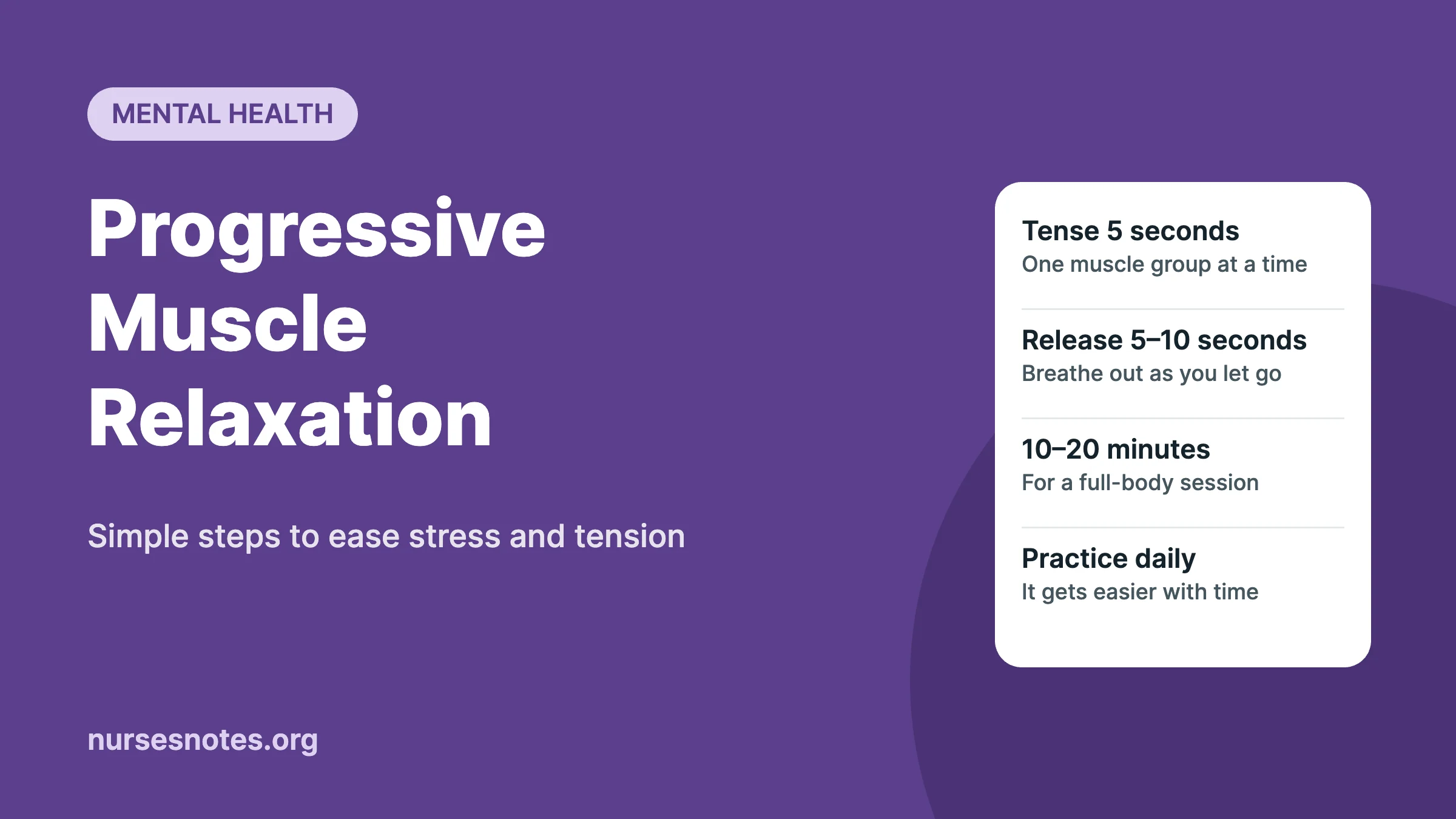
Progressive muscle relaxation (PMR) is a relaxation technique in which you tense one muscle group at a time for about five seconds, then let it go as you breathe out. A full-body session usually takes 10 to 20 minutes and can help ease stress, release muscle tension, and prepare your body for sleep.
Key points
- PMR was introduced by Dr Edmund Jacobson in the 1920s and is also called Jacobson’s relaxation technique.
- Tense each muscle group for about 5 seconds, then relax it for 5 to 10 seconds while you breathe out.
- With regular practice, many people find it easier and quicker to relax when stress builds.
- PMR is a self-help tool, not a replacement for treatment; reach out if stress, worry, or low mood is affecting your daily life.
What is progressive muscle relaxation?
PMR works by squeezing and then releasing your muscles, one small area at a time. The idea is that relaxing your body helps your mind relax too.
Cleveland Clinic explains that PMR helps shift your body out of its stress response and into “rest and digest” mode. The US Human Performance Resources by CHAMP (HPRC) describes the switch between tension and release as a signal to your body that it is safe to let go of stress.
Benefits of progressive muscle relaxation
Cleveland Clinic lists several possible benefits:
- Easing anxiety, especially alongside cognitive behavioral therapy (CBT)
- Better sleep
- Relief from stress and tension headaches
- A possible benefit for blood pressure
HPRC adds that PMR can reduce muscle tension and help you manage stress.
How to do progressive muscle relaxation step by step
Find a quiet place where you can sit or lie down comfortably, and close your eyes if that feels right.
- Take a few slow, deep breaths into your belly.
- Start with your toes and feet. Breathe in and squeeze the muscles firmly, but never to the point of pain, for about 5 seconds.
- Notice how the tension feels.
- Breathe out and release the muscles all at once. Let them stay loose for 5 to 10 seconds and notice the difference.
- Move on to the next muscle group and repeat.
- When you finish, take a few more deep breaths and get up slowly.
| Order | Muscle group | Simple cue |
|---|---|---|
| 1 | Toes and feet | Curl your toes |
| 2 | Calves and thighs | Tighten your leg muscles |
| 3 | Buttocks | Squeeze them together |
| 4 | Stomach | Pull your stomach muscles in |
| 5 | Hands and arms | Make fists and tighten your arms |
| 6 | Shoulders | Lift them up towards your ears |
| 7 | Neck and jaw | Gently clench your jaw |
| 8 | Face and forehead | Scrunch your eyes and forehead |
The Oxford Health NHS version for young people tenses each area to a count of five and repeats it three times before moving on, then finishes with three more deep breaths.
How long and how often?
- A full-body session usually takes 10 to 20 minutes (Cleveland Clinic). HPRC suggests 10 to 15 minutes, and says the time can shorten with regular practice.
- Practice often, ideally every day, so relaxing becomes easier. Cleveland Clinic encourages making relaxation a regular daily habit.
- Give very tense areas, such as the shoulders and jaw, a second round if needed.
- Try it in bed if stress keeps you awake, and pair it with our sleep hygiene tips.
Using PMR on and after a shift
Long shifts, night duty, and exam season can leave your shoulders and jaw tight without you noticing. A 10-minute session in bed, or a shortened version during a break, can help you move from work mode to rest.
For moments when you only have a minute or two, try box breathing or the 5-4-3-2-1 grounding technique instead.
Safety tips
- Tense firmly but never to the point of pain.
- If you have an injury, chronic pain, or a muscle or joint problem, HPRC advises checking with a health professional before you start. Skip any area that hurts, or try breathing exercises or guided imagery instead.
- Get up slowly afterwards, because relaxation can lower your blood pressure. Cleveland Clinic says this matters more if you take blood pressure medicine.
- PMR may feel strange or uncomfortable the first few times. That is normal and usually eases with practice.
When to get help
PMR can help with everyday stress, but it is not a treatment on its own for anxiety, depression, or insomnia. Talk to a doctor, nurse, or mental health professional if:
- Stress, worry, or low mood lasts for weeks or affects your work, studies, or relationships
- You have trouble sleeping most nights
- You are using alcohol or other substances to cope
- You have panic attacks or physical symptoms you cannot explain
If you ever have thoughts of harming yourself or feel you cannot keep yourself safe, contact a crisis line or your local emergency number straight away. Asking for help is a sign of strength, and support is available.
Where to get help
If you are in crisis or worried about your safety, please reach out now. You do not have to face this alone.
- USA: call or text 988, or chat at 988lifeline.org (988 Suicide & Crisis Lifeline: free, confidential, and available 24/7)
- UK and Ireland: call Samaritans free on 116 123, 24 hours a day, 365 days a year (samaritans.org)
- Anywhere: call your local emergency number or go to the nearest emergency department
- Talk to someone you trust, such as a friend, family member, or your own doctor or nurse
Frequently asked questions
Does progressive muscle relaxation help with sleep?
Many people use PMR at bedtime to unwind, and Cleveland Clinic lists better sleep among its possible benefits. Releasing physical tension can help your mind settle too. Try a full-body session in bed with the lights low. If poor sleep continues for weeks or affects your daytime life, talk to a doctor.
How long should you tense each muscle in PMR?
Cleveland Clinic suggests squeezing each muscle group for about five seconds, then relaxing it for five to 10 seconds as you breathe out. HPRC and the Oxford Health NHS guide also use a count of five. Tense firmly but gently enough that it never hurts, and focus on the feeling of release.
Is progressive muscle relaxation safe for everyone?
PMR is low risk for most people. If you have an injury, chronic pain, or a muscle or joint condition, check with a health professional first and skip painful areas. Get up slowly when you finish, especially if you take blood pressure medicine, because deep relaxation can lower your blood pressure.
Related on Nurses Notes
- Box breathing technique for stress and anxiety
- How to manage stress: practical tips
- Sleep hygiene tips for better rest
- What is cognitive behavioral therapy?
- More Mental Health articles
Sources
- Everything You Need To Know About Progressive Muscle Relaxation. Cleveland Clinic, 2022.
- Progressive muscle relaxation. Oxford Health NHS Foundation Trust (CAMHS), reviewed 2024.
- Progressive muscle relaxation. Human Performance Resources by CHAMP (HPRC), Uniformed Services University, 2025.
- 988 Suicide & Crisis Lifeline. 988 Lifeline, accessed November 2026.
- Samaritans. Samaritans, accessed November 2026.
This article is for education only and does not replace advice from your own doctor, nurse, or other qualified health professional.